Bio Shop
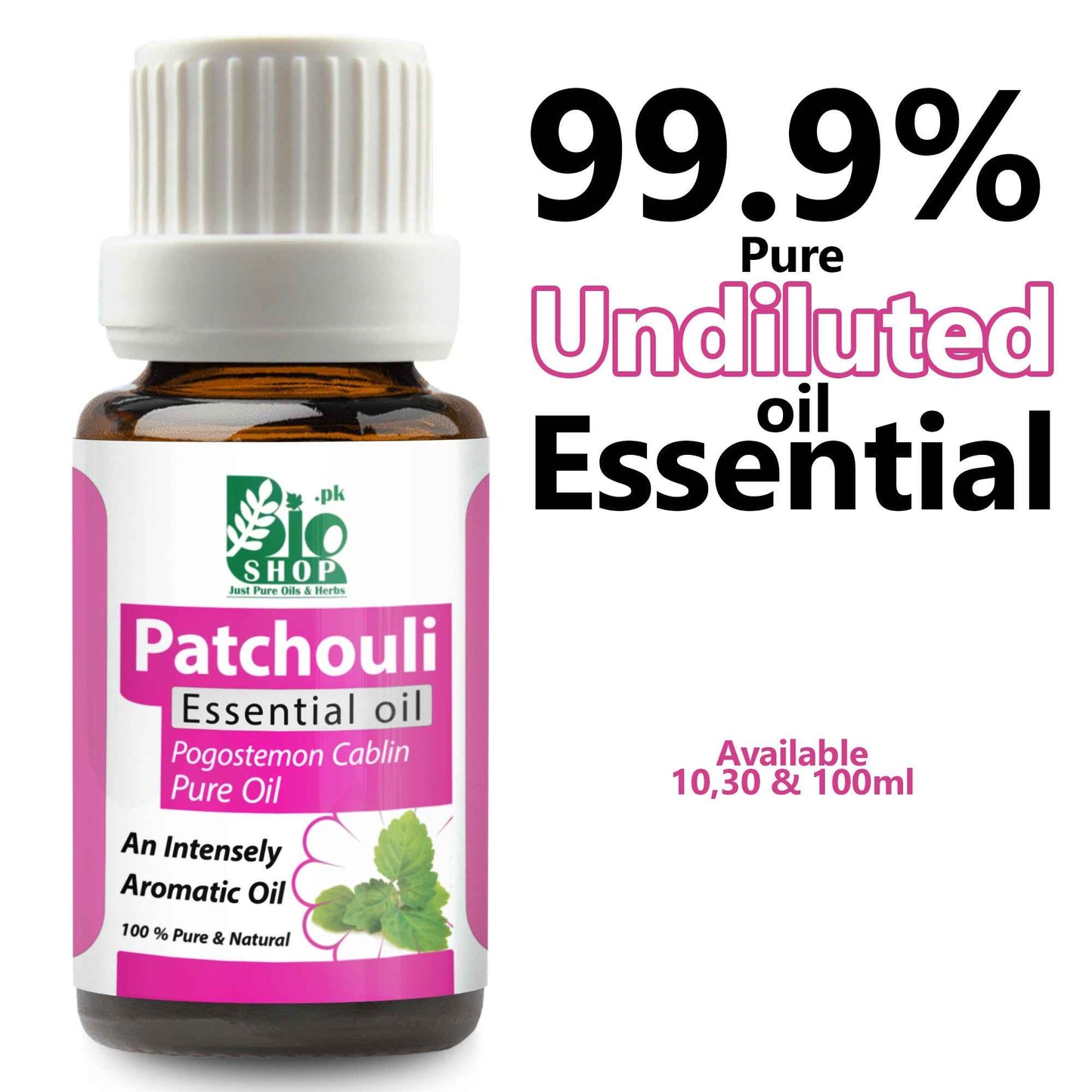
Patchouli Essential Oil
Patchouli Essential Oil
Olfactory Notes: Earthy · Woody · Damp · Sweet · Balsamic · Deep
Couldn't load pickup availability


Explore
Information About Patchouli Essential Oil
Key Features
✦ 100% pure steam-distilled essential oil from Pogostemon cablin dried leaves
✦ Iconic deep earthy, woody, and musky base note — one of perfumery's most powerful fixatives
✦ Rich in patchouli alcohol — the key compound responsible for its signature scent and longevity
✦ Extends fragrance life significantly — widely used as a natural fixative in fine perfumes and attars
✦ Versatile across fine fragrance, soaps, candles, hair care, body care, and incense applications
✦ Vegan, cruelty-free, and free from synthetic additives or carriers
✦ Highly concentrated — a small percentage delivers strong, lasting olfactory impact in any formula
About Patchouli Essential Oil
Patchouli Essential Oil is extracted by steam distillation from the dried and fermented leaves of Pogostemon cablin, a tropical herb native to Southeast Asia. Indonesia remains the world's leading producer, particularly from the Sumatra and Sulawesi regions, where the plant thrives in humid highland conditions. The tradition of using patchouli in fragrance stretches back centuries — it was historically packed with Kashmir shawls and Indian silks to repel moths, which inadvertently introduced its scent to European merchants and traders as a hallmark of authentic, valuable textiles.
What makes patchouli oil uniquely powerful in perfumery is its chemical complexity. Patchouli alcohol, the primary sesquiterpene alcohol, makes up 25 to 35 percent of the oil and is largely responsible for its tenacity and depth. Unlike most aromatic materials, patchouli oil actually improves with age — oxidation over time mellows its initial sharp, camphorous top note and deepens the earthy, smooth base character. This aging quality makes it a prized ingredient in both classic European chypres and traditional South Asian attars. It blends with exceptional synergy with rose, vetiver, sandalwood, labdanum, bergamot, and musks.
Bio Shop Pakistan supplies cosmetic-grade Patchouli Essential Oil suitable for fine fragrance, attar blending, soap making, candle crafting, hair care, body lotion, and home fragrance applications. It is appropriate for both experienced perfumers and serious DIY formulators looking to build depth, tenacity, and naturalness into their work.
Olfactory Profile
SCENT DESCRIPTION : Patchouli opens with a slightly sharp, camphoraceous and herbal facet before settling into its true character — a rich, dense, damp earth note layered with dry wood, subtle sweetness, and a dark musky warmth. At low concentrations it reads as sophisticated and grounding; at higher levels it becomes intensely animalic and soil-like. Aged patchouli develops a smooth, almost chocolatey and wine-like depth that is difficult to replicate synthetically. It is simultaneously raw and refined.
NOTE POSITION : Base Note (occasionally Mid-Base at high dilution)
FRAGRANCE FAMILY : Oriental · Woody · Earthy-Mossy
FACETS : Earthy · Woody · Musky · Sweet-Dark · Herbal-Camphorous
TENACITY : Very High — 12 to 24+ hours on skin; exceptional on fabric and blotter
SILLAGE : Medium to High — close-wearing at low doses, assertive and expansive at higher concentrations
Technical Specifications
CHEMICAL NAME : Pogostemon cablin leaf oil
CAS NUMBER : 8014-09-3
SYNONYMS : Patchouli oil, Patchouly oil, Pogostemon oil, Cablin patchouli oil
PURITY : 100% pure essential oil (verify with supplier CoA)
APPEARANCE : Dark amber to dark brown viscous liquid; colour lightens and deepens with age
ODOR THRESHOLD : Extremely low — detectable at parts per billion in air
SOLUBILITY : Insoluble in water; soluble in ethanol, fixed oils, and most fragrance bases
SPECIFIC GRAVITY : 0.950 – 0.975 at 20°C (verify with supplier CoA)
FLASH POINT : Approximately 99°C – 100°C (verify with supplier CoA)
TYPE : Natural essential oil (steam distilled)
Applications & Usage Guidelines
Fine Fragrance ★★★★★
Patchouli is an absolute cornerstone of fine fragrance formulation. It anchors oriental, chypre, fougère, and gourmand categories as a base note fixative, adding depth and longevity to the entire composition. Iconic perfumes from Chanel No.19 to Thierry Mugler's Angel rely on patchouli as a structural pillar.
Attar & Oriental Blending ★★★★★
In traditional South Asian attar making, patchouli is indispensable. It blends seamlessly with rose, sandalwood, oud, musk, and ambergris materials to create the rich, long-lasting compositions central to Pakistani and Indian fragrance traditions. Its natural origin makes it perfectly suited to alcohol-free, oil-based formats.
Soap & Personal Care ★★★★☆
Patchouli performs well in both cold-process and melt-and-pour soap at modest usage rates. It survives the alkaline saponification process reasonably well and leaves a recognisable earthy character in the finished bar. It is equally effective in body lotions, hair oils, and shampoos.
Home Fragrance ★★★★★
In candles, reed diffusers, and incense, patchouli excels. Its low volatility and high tenacity mean it diffuses slowly and persistently. In incense formulation it has been used for centuries as a base note that grounds and enriches the smoke profile without overpowering other materials.
Cosmetics & Hair Care ★★★★☆
Patchouli is used in facial serums, hair conditioners, and skin-care products both for its fragrance and for its traditionally attributed skin-conditioning properties. It is particularly popular in earthy, botanical, and natural cosmetic ranges targeting consumers who prefer organic and heritage-inspired formulations.
IFRA & Usage Rate
RECOMMENDED USAGE RATES (starting guidance — adjust to formula)
EDP (Eau de Parfum) : 3.0% – 12.0%
EDT (Eau de Toilette) : 2.0% – 8.0%
Body Lotion / Leave-on : 0.5% – 2.0%
Shampoo / Body Wash : 0.5% – 2.0%
Candle (wax weight) : 3.0% – 8.0%
Reed Diffuser : 10.0% – 20.0%
Cold Process Soap : 1.0% – 3.0%
IFRA 51ST AMENDMENT LIMITS (Pogostemon cablin leaf oil)
Verify all limits independently at ifrafragrance.org before production use.
Category 4 (Fine Fragrance) : 15.7% maximum
Category 5a (Face Moisturiser) : 3.4% maximum
Category 5b (Hand & Body Lotion) : 3.4% maximum
Category 6 (Rinse-off Face) : Not restricted under current amendment
Category 9 (Shampoo / Rinse-off Hair): Not specifically restricted
Category 11a (Candles) : Not restricted under current amendment
Category 12 (Air fresheners) : Not restricted under current amendment
⚠️ Patchouli oil contains naturally occurring allergens including eugenol, coumarin, and farnesol. Declare all detectable allergens on EU and UK market-bound cosmetic products in accordance with applicable labelling thresholds.
⚠️ Patch test recommended for leave-on skin applications before full-scale use. Sensitisation risk increases significantly at concentrations above IFRA guideline levels.
⚠️ Confirm flash point with your supplier Certificate of Analysis before candle and reed diffuser safety assessments.
Blending Guide
Method 1 — Anchor Blending
Add patchouli at 2 to 6 percent as the final base anchor after building your top and heart. Allow the blend to macerate for a minimum of 48 hours before evaluation. Patchouli knits disparate notes together and smooths sharp transitions between fragrance layers.
Method 2 — Accord Pre-Build
Create a patchouli-vetiver-sandalwood accord at equal ratios before incorporating it into the larger formula. This pre-blend creates a deeply woody, earthy foundation that behaves as a single olfactive building block and anchors virtually any fragrance direction.
Method 3 — Aged Dilution
For smoother integration, dilute patchouli to 10 percent in DPG or IPM and allow it to rest for 2 to 4 weeks before use. The carrier mellows the raw camphorous top facet and brings forward the richer, deeper earthy character that blends more elegantly in fine fragrance and attar work.
BEST PAIRINGS
Rose Absolute / Rose Otto → Classic rose-patchouli accord; romantic, earthy, feminine depth
Vetiver (Haiti or Java) → Dark, rooty, smoky earth accord; masculine and architectural
Sandalwood (Mysore-type or synth) → Warm, creamy grounding; softens patchouli's rawness
Labdanum Absolute / Cistus → Animalic, ambery darkness; ideal for oriental and chypre work
Bergamot Essential Oil → Citrus brightness lifts and modernises earthy patchouli character
Oud (natural or reconstituted) → Powerfully animalic Middle Eastern base; agarwood complexity
Ylang Ylang Extra → Floral richness with a banana-custard note; vintage oriental effect
Musks (Habanolide, Galaxolide) → Amplifies longevity and skin diffusion; smooths the composition
Oakmoss Absolute / Evernyl ether → Restores classic chypre character around a patchouli core
Benzyl Benzoate / Peru Balsam → Sweet, balsamic depth; adds resinous warmth to oriental blends
AVOID
Using patchouli above 15 percent in leave-on skin products without thorough safety assessment. Pairing raw patchouli at high doses with delicate white florals such as muguet or lily without bridging materials — the earthiness overwhelms without a connecting element.
Perfumer's Note
Patchouli is the material that divides the room — people either reach for it instinctively or walk away from the raw smell entirely. What experienced perfumers understand is that patchouli in isolation is almost never the point. Its true genius reveals itself only in context, within a blend, where it performs structural work that no other single material replicates. I have built oriental attars around a patchouli-rose spine that outlasted 36 hours on fabric and remained recognisable from the first spray to the final drydown. That kind of tenacity is not something you synthesise around — you build with it.
ADVANCED TIP
To eliminate patchouli's sharp, camphorous opening without ageing the oil, blend it in a 4:1 ratio with a high-quality iso E Super or cedarwood atlas at the formulation stage. The woody cedar facet bridges the rough camphor character and accelerates the perception of the smooth, aged patchouli quality within the first 15 to 20 minutes of wear. This technique is particularly effective in EDT-strength oriental fougères and is significantly faster than waiting for batch ageing.
Safety & Storage
PHYSICAL STATE : Dark amber to dark brown viscous liquid; thickens further in cold temperatures
SKIN SAFETY : Dilute before any skin application; do not apply neat to skin; patch test before cosmetic use; IFRA limits apply to all leave-on applications
EYE CONTACT : Avoid any contact with eyes; flush thoroughly with water if contact occurs; seek medical advice if irritation persists
INGESTION : Not for internal use under any circumstances; keep away from children
VENTILATION : Work in a ventilated area when handling concentrated material; avoid prolonged inhalation of vapour
STORAGE : Store in a cool, dark location away from heat, light, and oxygen; 10°C to 20°C ideal
SHELF LIFE : Minimum 3 to 5 years when stored correctly; oil typically improves in character for the first 2 to 3 years with age
CONTAINER : Store in amber glass or dark HDPE; avoid PET plastic for long-term storage; keep lids tightly sealed
FLAMMABILITY : Combustible liquid; flash point approximately 99°C – 100°C (verify with supplier CoA); keep away from open flame
FAQ
Q: Can I use Patchouli Essential Oil directly on my skin?
A: No. Always dilute to a maximum of 1 to 2 percent in a carrier oil or lotion before skin application. Neat application can cause sensitisation or irritation with repeated use.
Q: Will Patchouli Essential Oil discolour my soap or candle?
A: In soap, the dark brown colour can slightly deepen trace or affect pale colour. In candles, it is generally colour-neutral. Test in your specific base and colourant combination before full production.
Q: Why does my Patchouli smell sharp and camphorous — is it bad quality?
A: No. Fresh patchouli naturally has a sharper, more herbal-camphorous top note. This mellows significantly with age and in the bottle after dilution. A smooth, aged patchouli character typically develops within months to a few years of storage.
Q: What is the difference between light and dark patchouli?
A: Light patchouli is typically produced from young leaves or via shorter distillation and is paler in colour with a slightly fresher, cleaner profile. Dark patchouli is distilled longer or aged in iron vessels, developing a deeper, richer, more animalic and earthy character. Both are genuine patchouli oils — the choice is a formulation preference.
Q: How does Patchouli Essential Oil compare to synthetic patchouli materials like Patchouli Coeur?
A: Natural patchouli offers the full chemical complexity — over 40 identified compounds — giving it a multidimensional depth that synthetic isolates or reconstitutions approximate but do not replicate entirely. Patchouli Coeur is a refined fraction or synthetic that captures the cleaner facets without the camphorous roughness, making it more linear. In attar and natural perfumery, the full essential oil is preferred; in fine fragrance, the two are often used together to balance authenticity and control.
Where Can You Safely Use Patchouli Essential Oil?
Discover how Patchouli Essential Oil performs across different applications—rated for safety, stability, and effectiveness.
Already regular user of bioshop's products, this one is costly but real aroma of earthy, woody better than synthetic one half diluted in DPG while other for ethanol
Thank you so much for your continued trust in Bio Shop™ — it truly means a lot to us!
We’re really glad to hear that you appreciated the authentic earthy & woody aroma of this product. As you rightly mentioned, natural materials can feel a bit costly, but they deliver a much richer and more realistic scent compared to synthetic alternatives.
Also great to see you experimenting with both DPG dilution and ethanol blends — that’s exactly the right approach for getting the best performance in different applications
best product
Quality seems good but prices should be lower for bulk orders