


Bio Shop
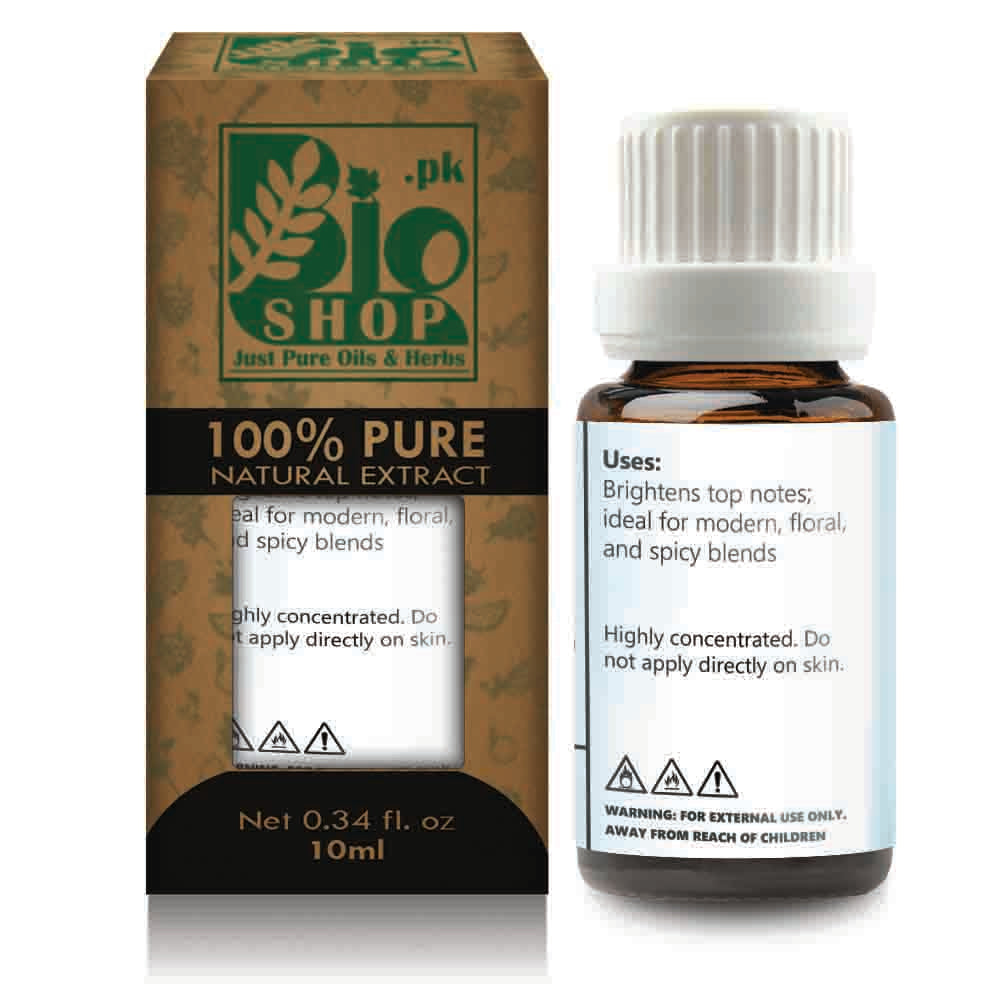
Pink Pepper Essential Oil
Pink Pepper Essential Oil
Olfactory Notes: Fresh · Rosy-Spicy · Slightly Fruity · Bright · Warm · Sparkling
Couldn't load pickup availability

Explore
Information About Pink Pepper Essential Oil
Key Features
✦ Steam-distilled from dried Schinus molle berries — bright, spicy, and citrus-clean in character
✦ Rich in alpha-phellandrene and limonene — key aroma drivers behind its distinctive dry-pepper warmth
✦ Excellent top-to-mid note bridge — opens a fragrance with energy and settles gracefully into the heart
✦ Widely used in niche and designer perfumery — featured in compositions by Dior, Hermès, and Frederic Malle
✦ Multi-use aromatic — suitable for fine fragrance, skin care, beard oils, reed diffusers, and candles
✦ 100% natural, plant-derived, and vegan — no animal-derived components
✦ Cosmetic-grade quality — tested for purity and free from adulteration with synthetic extenders
About Pink Pepper Essential Oil
Pink Pepper Essential Oil is extracted by steam distillation from the sun-dried berries of Schinus molle, a tree native to the Andean regions of South America and now widely cultivated across Peru, Bolivia, and parts of South Asia and Africa. Despite its name, the pink peppercorn is botanically unrelated to black pepper (Piper nigrum), belonging instead to the Anacardiaceae family — the same family as cashew and mango. Its aromatic use in perfumery gained serious momentum in the late 1990s and early 2000s, as perfumers began seeking fresher, more nuanced alternatives to the sharper bite of black pepper.
What sets Pink Pepper apart in the perfumer's palette is its extraordinary complexity for a single natural material. It is simultaneously spicy, citrusy, slightly resinous, and softly woody — all within a single drop. This multidimensional quality makes it exceptionally versatile, functioning as an energetic top note, a transitional mid-note bridge, or a spicy modifier layered into heavier oriental bases. Its dry, almost dusty-pepper facet adds sophistication to masculine compositions, while its bright citrus-rose undertones make it equally at home in feminine and gender-neutral fragrances.
Bio Shop Pakistan supplies cosmetic-grade Pink Pepper Essential Oil suitable for DIY perfumers, attar blenders, independent fragrance formulators, soap makers, and skin care crafters who demand authentic, quality-verified natural aromatic materials.
Olfactory Profile
SCENT DESCRIPTION : Pink Pepper Essential Oil opens with a sharp, crackling burst of dry spice immediately followed by a lifting citrus brightness — lemon zest and crushed green herb — that gives it a clean, airy quality. As it develops, a soft floral-rosy warmth emerges alongside a subtle resinous and lightly woody drydown. It is assertive but never aggressive, carrying a refined, almost powdery pepper finish that lingers elegantly.
NOTE POSITION : Top to Mid
FRAGRANCE FAMILY : Spicy · Citrus · Woody
FACETS : Dry Pepper · Lemon Zest · Rosy · Slightly Resinous · Clean Woody
TENACITY : Medium — 3 to 5 hours in blend; top notes dissipate within 1 to 2 hours, mid-woody facets persist longer
SILLAGE : Medium — projects well on initial application with a well-defined but close-wearing dry spice trail
Technical Specifications
Chemical Name : Schinus molle fruit essential oil
CAS Number : 8023-79-8
Synonyms : Peruvian Pepper Oil · Molle Oil · False Pepper Oil · California Pepper Oil
Purity : 100% pure essential oil (no carrier added)
Appearance : Pale yellow to light amber mobile liquid
Odor Threshold : Very low — detectable at trace concentrations (verify with supplier)
Solubility : Freely soluble in ethanol and fixed oils; insoluble in water
Specific Gravity : 0.855 – 0.880 at 20°C (verify against COA)
Flash Point : Approx. 43 – 50°C (verify against COA)
Type : Natural (steam-distilled)
Main Constituents : Alpha-phellandrene · Limonene · Alpha-pinene · Beta-pinene · Delta-3-carene · Myrcene
Applications & Usage Guidelines
Fine Fragrance : ★★★★★
Pink pepper is a cornerstone ingredient in contemporary fine fragrance. It delivers an instantly recognizable modern-spice opening that perfumers across niche and commercial markets rely on for energy and lift. Use at 2–8% in EDP and EDT to frame a composition's opening character.
Attar & Oriental Blending : ★★★★☆
Pink pepper integrates beautifully with oud, sandalwood, rose absolute, and amber bases, lending a dry, modern spiciness that keeps heavy oriental blends from feeling dense or dated. Use conservatively — 1 to 3% is typically sufficient alongside powerful base notes.
Functional Fragrance : ★★★★☆
Excellent in deodorant, body spray, and aftershave formulations where its clean-spicy character reads as fresh and invigorating. Suitable for masculine and unisex functional products where a natural aromatic note is preferred over synthetic musks.
Cosmetics & Skin Care : ★★★☆☆
Pink pepper EO can be used in beard oils, face serums, and body oils where its aromatic character adds a premium natural appeal. Usage must remain within safe skin application levels and patch testing is recommended due to potential skin sensitization from its phellandrene content.
Home Fragrance : ★★★★☆
Performs well in reed diffusers, room sprays, and wax melts where it delivers a bright, modern-spice ambiance. In candles, top-note volatility limits performance in hot throw; blending with resinous fixatives improves retention.
IFRA & Usage Rate
RECOMMENDED USAGE RATES
EDP (Eau de Parfum) : 2.0 – 8.0%
EDT (Eau de Toilette) : 1.5 – 5.0%
Body Lotion / Cream : 0.5 – 1.5%
Shampoo / Body Wash : 0.5 – 1.0%
Candle (Wax) : 3.0 – 6.0%
Reed Diffuser : 5.0 – 15.0%
Bar Soap : 1.0 – 2.5%
Beard Oil / Face Oil : 0.5 – 1.5%
IFRA 51ST AMENDMENT GUIDANCE
Pink Pepper Essential Oil (Schinus molle) is a natural complex substance subject to IFRA QRA (Quantitative Risk Assessment) guidelines. It is not listed as a prohibited material under the 51st Amendment.
Key sensitization concern: Phellandrene and limonene are present at significant levels and may cause skin sensitization in susceptible individuals. Standard limits apply based on category of use.
⚠️ For leave-on skin products (Category 4 — body lotion, face cream), keep usage at or below 1.5% and verify current IFRA guidance at ifrafragrance.org before finalizing formulas.
⚠️ Undiluted application to skin is not recommended. Always pre-dilute in a carrier before any skin contact.
⚠️ EU Cosmetics Regulation: Limonene must be declared on-label at or above 0.001% in leave-on and 0.01% in rinse-off cosmetic products. Verify exact constituent percentages in your COA for compliance.
Blending Guide
METHOD 1 — DIRECT DILUTION IN ALCOHOL
Dissolve Pink Pepper EO directly in perfumers' alcohol (IPM or DPG can be used as diluent for stability). Prepare a 10% or 20% dilution as your working stock before incorporating into a blend. This ensures even distribution and prevents overloading.
METHOD 2 — LAYERING INTO A BASE ACCORD
Add pink pepper as a modifier to a pre-built heart or base accord. Introduce it last at 2–5% to evaluate its brightening effect on the overall blend without disrupting the accord's core structure. This approach works particularly well with oud-rose, amber-woody, and green-floral bases.
METHOD 3 — TOP NOTE STACK BLENDING
Combine pink pepper with other top notes — bergamot, grapefruit, cardamom, or elemi — to build a layered, multidimensional opening accord. Blending with a small amount of a fixative (ISO E Super, Ambroxan, or a trace of benzyl benzoate) helps extend the top note's longevity.
BEST PAIRINGS
Bergamot → Amplifies citrus-freshness; creates a clean, bright citrus-spice opening
Black Pepper EO → Deepens spice dimension; creates a classic multi-pepper accord
Cardamom EO → Adds green-aromatic warmth; excellent in oriental and masculine blends
Rose Absolute → Softens spice with floral richness; used extensively in niche perfumery
Oud (Natural/Syn.) → Creates a modern-spice oriental with a dry, smoky warmth
Sandalwood → Grounds the blend with creamy wood; balances pepper's assertiveness
Vetiver → Adds earthy depth; together they create a dry, sophisticated woody-spice
Ambroxan → Extends longevity of pink pepper's top notes significantly
Elemi EO → Adds fresh, piney-citrus brightness alongside the pepper; excellent in colognes
Galbanum → Creates a sharp, green-spicy character useful in modern chypre constructions
AVOID
Using at high percentages in leave-on products without IFRA compliance verification.
Combining with known sensitizers at cumulative levels exceeding safe skin dose thresholds.
Perfumer's Note
I reach for Pink Pepper when a composition needs to wake up — when a blend has all the right materials but feels static or heavy. There is an electric quality to this oil that few naturals can replicate synthetically with complete accuracy. It opens like a crack of dry heat, then almost immediately begins to soften, allowing the heart of the fragrance to carry forward on its momentum. What I find most interesting is the rosy-floral ghost that appears at mid-dry: a quiet suggestion of geranium and rose that makes pink pepper the rare spice note that also has genuine floral character. This is why it pairs so naturally with rose absolute and rose oxide — it already shares their vocabulary.
ADVANCED TIP
To extract maximum performance from pink pepper EO in an EDP, try building a two-stage top note: place your pink pepper alongside a small amount of elemi oil (0.5–1.0%) and a trace of coriander seed EO (0.3–0.5%). Elemi contributes a fresh resinous-citrus halo that extends the overall top note's lifespan by several minutes, while coriander adds a spiced-floral bridge that carries the eye of the opening into the heart. Finish with Ambroxan or Iso E Super at 1–2% as a dry fixative anchor — pink pepper's volatile phellandrene fraction will adsorb onto the ambergris-type molecule and project significantly longer without altering character.
Safety & Storage
Physical State : Clear to pale yellow mobile liquid
Skin Safety : Dilute before use; potential sensitizer at high concentrations — patch test recommended
Eye Contact : Irritant — avoid contact; rinse immediately with water if contact occurs
Ingestion : Not for internal use — keep away from children
Ventilation : Use in a well-ventilated space; avoid prolonged inhalation of concentrated vapor
Storage : Store in a cool, dark location away from heat, light, and moisture
Shelf Life : 12 to 24 months from opening if stored correctly; limonene-rich oils oxidize over time
Container : Amber glass bottle, tightly sealed — avoid plastic contact
Flammability : Flammable liquid — flash point approx. 43–50°C; keep away from open flame
FAQ
Q: What does Pink Pepper Essential Oil smell like?
A: It smells dry, spicy, and citrusy with a subtle rosy warmth. Think freshly cracked peppercorn with a hint of lemon zest and a faint floral undertone — not sharp or aggressive but clean and refined.
Q: Is Pink Pepper EO the same as Black Pepper EO?
A: No. They are from completely different plant families. Pink pepper (Schinus molle) is brighter, more citrusy, and softer. Black pepper (Piper nigrum) is hotter, drier, and more assertively spicy. They complement each other well in blends.
Q: Can I apply Pink Pepper EO directly on skin?
A: No. It must be diluted in a carrier oil before any skin application. Undiluted use risks sensitization. A safe starting point is 1% in a carrier for general skin care and 2–3% in rinse-off products.
Q: How do I use it in perfume making?
A: Add it as a top-to-mid note at 2 to 8% in your EDP formula. It blends well with citrus, rose, oud, sandalwood, and woody musks. Combine with a fixative like Ambroxan to extend its projection.
Q: How does Pink Pepper EO compare to synthetic Pink Pepper aroma chemicals?
A: The natural essential oil has far greater complexity — multiple facets including citrus, pepper, floral, and resinous notes that synthetic reconstructions can approximate but rarely replicate fully. Synthetics like Oleanolic Acid-derived pepper molecules deliver a single dominant facet and are better for cost control or targeted accords, while the natural oil is preferred when authenticity and depth are the priority.
Where Can You Safely Use Pink Pepper Essential Oil?
Discover how Pink Pepper Essential Oil performs across different applications—rated for safety, stability, and effectiveness.
Very good
زبردست کرسپی سپائسی روزی ووڈی سپارکلنگ ٹاپ نوٹ ۔۔
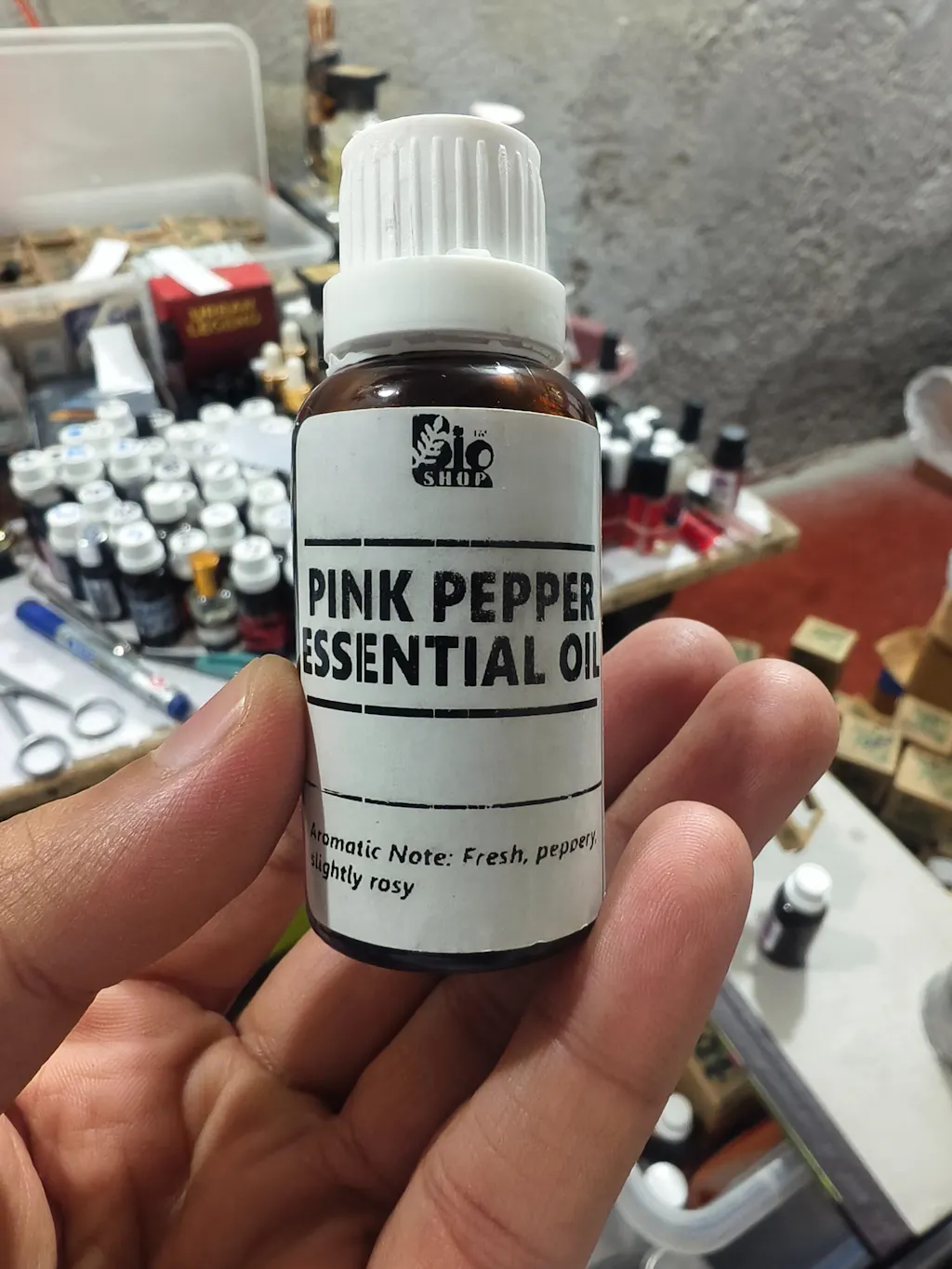
Smell same as original


