Bio Shop
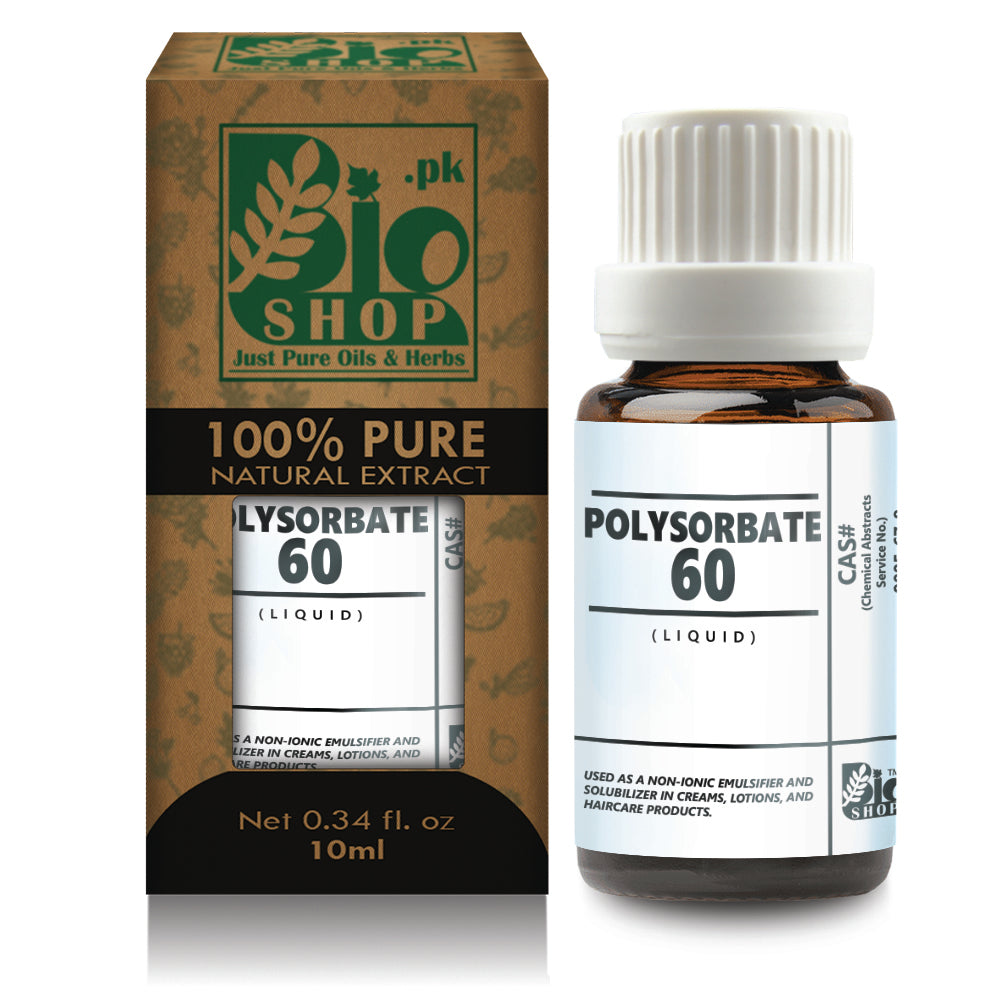
Polysorbate-60
Polysorbate-60
Key Functions: Acts as a non-ionic emulsifier, solubilizer, and dispersing agent in oil-in-water formulations.
Couldn't load pickup availability

Explore
Information About Polysorbate-60
✅ Key Features
- Stable and non-irritating emulsifier
- Solubilizes essential oils, fragrances, and actives
- Ideal for creams, lotions, masks, and scrubs
- Improves texture, stability, and feel of emulsions
- Non-comedogenic and safe for all skin types
🔬 Description
Polysorbate 60 is a non-ionic surfactant derived from sorbitol and stearic acid, commonly used in skincare and personal care products. It functions as a primary emulsifier in oil-in-water systems, especially in creams, lotions, and masks. It also serves as a solubilizer, allowing oil-soluble ingredients like essential oils and fragrances to blend into water-based products. It improves product texture, ensures long-term stability, and reduces the greasy feel of oil-containing formulas. Ideal for beginners and advanced formulators alike.
📊 Technical Data
INCI Name: Polysorbate 60
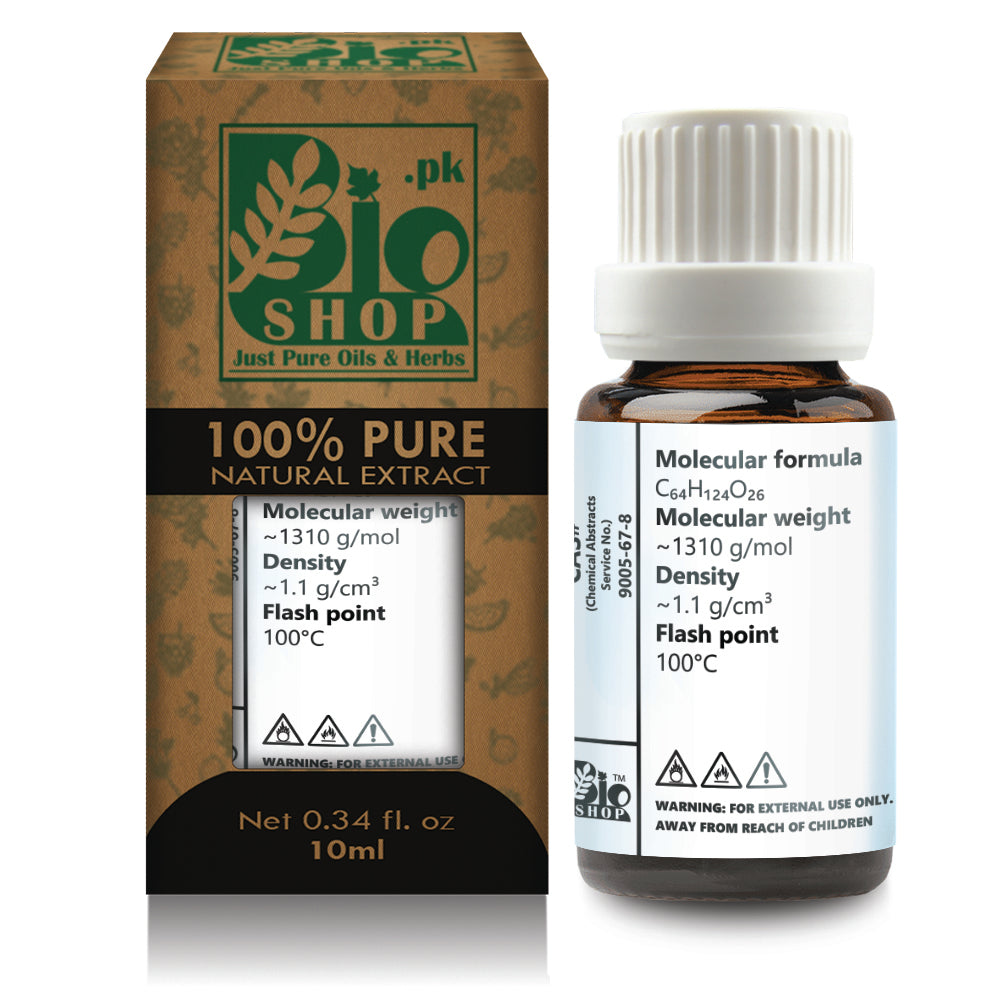
CAS Number: 9005-67-8
Solubility: Water-dispersible, soluble in alcohol
Add Phase: Heated oil or water phase
pH Stability: 4.0 – 7.5
Processing Temperature: 60–75°C
Appearance: Creamy white to pale yellow waxy solid or beads
Odor: Slight fatty odor
Molecular Weight: ~1,300 g/mol
Flash Point: > 200°C
Density: ~1.1 g/cm³
🧪 Recommended Usage
- Usage Rate: 1% – 10%
- Add to heated water or oil phase depending on formulation
- Ideal for: Creams, lotions, scrubs, masks, and emulsified serums
💡 Pro Tip
🌀 For rich, stable creams, combine Polysorbate 60 with Cetyl Alcohol and Stearic Acid for luxurious texture and long-term stability — even without fancy equipment.
👩🔬 Skin Type Compatibility
✔️ Safe for all skin types, including dry, oily, and combination skin
✔️ Non-comedogenic and non-irritating in recommended concentrations
🧴 Formulation Ideas
1. Moisturizing Day Cream
Use Polysorbate 60 as the primary emulsifier with shea butter and panthenol. Creates a light, creamy texture ideal for daily hydration.
2. Cream Cleanser
Formulate a non-foaming, nourishing cleanser using Polysorbate 60, jojoba oil, and glycerin. Gently removes makeup without drying the skin.
3. Hydrating Face Mask
Blend it into a cream-based face mask with aloe vera gel and cucumber extract for improved spreadability and absorption.
4. Body Scrub Emulsion
Use it to emulsify oil and sugar/salt in body scrubs so they rinse off clean, leaving no greasy residue behind.
5. Fragrance Mist Base
Create a base with Polysorbate 60 to disperse essential oils or fragrance oils into water-based sprays.
💧 Cosmetic Suitability:
Performance score based on emulsification ability, stability, and product type compatibility.
Serums
⭐⭐☆☆☆ – Fair
🟧🟧⬜⬜⬜ – Limited use in emulsified or oil-containing serums.
Creams & Lotions
⭐⭐⭐⭐⭐ – Excellent
🟩🟩🟩🟩🟩 – Provides creamy texture and stable emulsification.
Toners
⭐⭐☆☆☆ – Fair
🟧🟧⬜⬜⬜ – Used for solubilizing fragrance oils in water-based mists.
Face Masks
⭐⭐⭐⭐☆ – Good
🟩🟩🟩🟩⬜ – Useful in emulsified cream or gel mask bases.
Cleansers
⭐⭐⭐⭐☆ – Good
🟩🟩🟩🟩⬜ – Ideal in cream or lotion-based cleansers.
Hair Masks
⭐⭐⭐⭐☆ – Good
🟩🟩🟩🟩⬜ – Enhances emulsification and rinseability in rich masks.
Deodorants
⭐⭐☆☆☆ – Fair
🟧🟧⬜⬜⬜ – Can support emulsion stability in cream deodorants.
Eye Creams
⭐⭐⭐⭐☆ – Good
🟩🟩🟩🟩⬜ – Gentle enough for use in emulsified under-eye products.
Shampoos
⭐⭐☆☆☆ – Fair
🟧🟧⬜⬜⬜ – Limited use in scalp cream rinses or oil-based shampoo pre-treatments.
Soaps
⭐☆☆☆☆ – Poor
🟥⬜⬜⬜⬜ – Not used in cold/hot process soaps.
Conditioners
⭐⭐⭐☆☆ – Moderate
🟧🟧🟧⬜⬜ – Can enhance emulsion in thick, rinse-off conditioners.
Lip Balms
⭐☆☆☆☆ – Poor
🟥⬜⬜⬜⬜ – Not suitable for anhydrous balm systems.
Body Butters
⭐⭐☆☆☆ – Fair
🟧🟧⬜⬜⬜ – Works in emulsified body butters but not in oil-only bases.
❓ FAQs
Q1: Can Polysorbate 60 be used as the only emulsifier?
A1: Yes, in many lotion and cream formulas it works well on its own, but pairing with a co-emulsifier like cetyl alcohol can improve stability and feel.
Q2: Is it natural or synthetic?
A2: Polysorbate 60 is semi-synthetic, derived from natural sorbitol and fatty acids, processed for stability and performance.
Q3: Is it safe for sensitive skin?
A3: Yes, it’s non-irritating and suitable for all skin types when used at recommended levels.
Q4: Can it solubilize essential oils in water?
A4: It has limited solubilizing power compared to Polysorbate 20 or 80, but can work in light fragrance sprays.
Q5: Does it affect pH?
A5: No, it is pH-stable and does not alter the pH of your product.
📂 Documentation
Upon request, we will provide.
Where Can You Safely Use Polysorbate-60
Discover how Polysorbate-60 performs across different products — rated for safety, stability, and effectiveness.
