Bio Shop
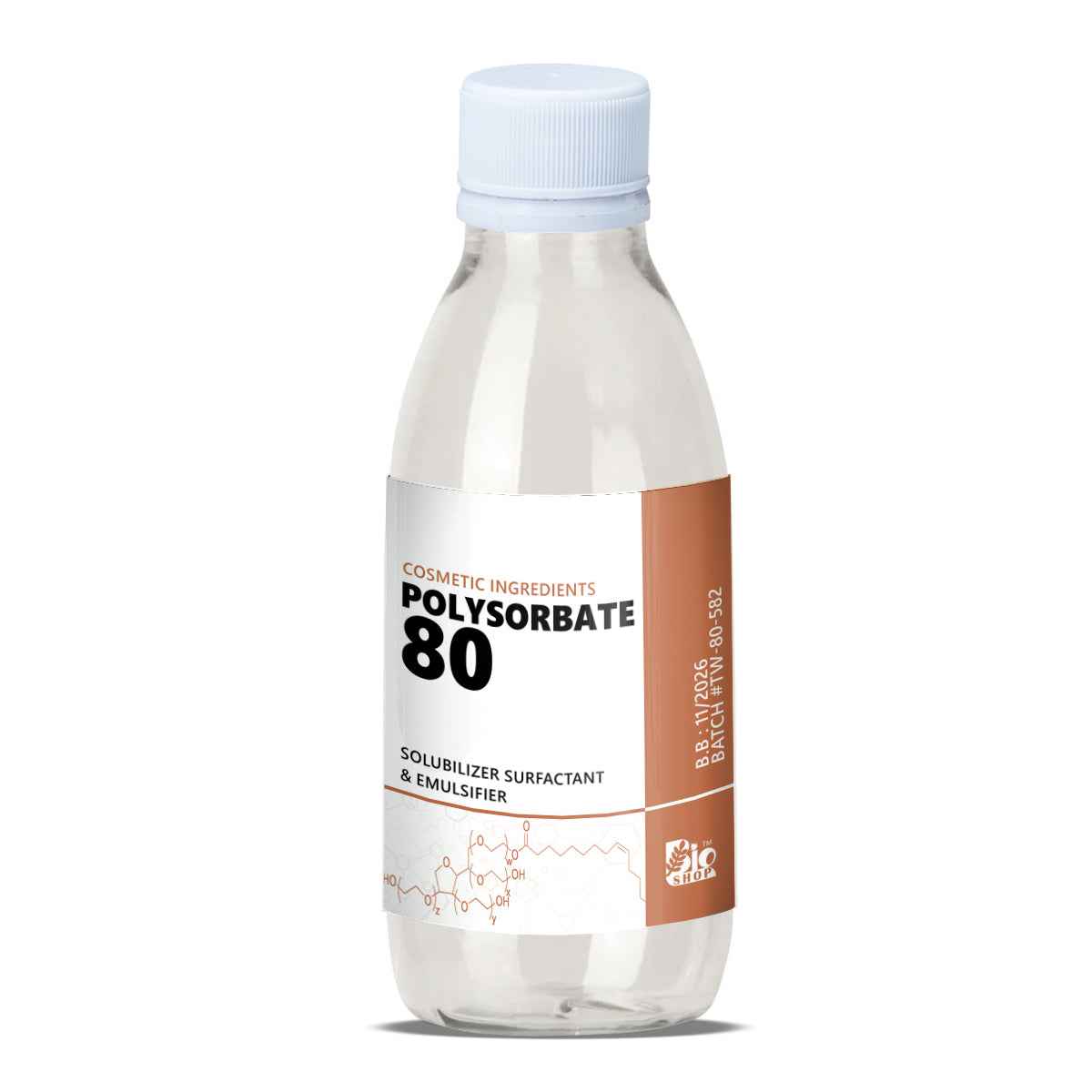
Polysorbate 80 (Tween 80)
Polysorbate 80 (Tween 80)
Key Functions: Emulsifies, solubilizes essential oils, stabilizes O/W systems, and wets pigments.
Couldn't load pickup availability


Explore
Information About Polysorbate 80 (Tween 80)
✅ Key Features
✦ HLB value of 15 makes it highly effective for oil-in-water emulsification and essential oil solubilization in clear aqueous formulas.
✦ Solubilizes essential oils and fragrance oils into water without cloudiness when used at the correct ratio.
✦ Nonionic surfactant — fully compatible with cationic, anionic, and amphoteric cosmetic ingredients.
✦ Suitable for toners, serums, micellar waters, shampoos, conditioners, and O/W emulsions.
✦ Functions as a dispersant and wetting agent for mineral pigments and UV filters in sunscreen applications.
✦ Plant-derived origin from sorbitol and oleic acid with broad cosmetic utility across rinse-off and leave-on formats.
✦ Mild and well-tolerated at recommended use levels, including in sensitive skin formulations.
🔬 Description
Polysorbate 80, chemically known as polyoxyethylene (20) sorbitan monooleate, is a nonionic surfactant and emulsifier produced through the ethoxylation of sorbitan monooleate. It has been used extensively in cosmetic, pharmaceutical, and food applications for decades and remains one of the most widely used members of the polysorbate family. Its amber viscous appearance and mild characteristic odor are consistent across cosmetic-grade batches, and its versatility has made it a staple in global formulation practice.
What sets Polysorbate 80 apart is its HLB value of 15, which positions it as a highly hydrophilic surfactant capable of solubilizing lipophilic materials into aqueous systems with exceptional efficiency. It encapsulates oil droplets and fragrance molecules, integrating them seamlessly into water-based formulas without separation or turbidity. Beyond emulsification, it wets mineral surfaces, improves pigment dispersion, and enhances the delivery of oil-soluble actives in leave-on and rinse-off applications equally.
Bio Shop Pakistan supplies cosmetic-grade Polysorbate 80 suitable for DIY beauty formulators, professional cosmetic manufacturers, haircare producers, and home crafters across Pakistan.
📊 Technical Data
INCI Name : Polysorbate 80
Chemical Name : Polyoxyethylene (20) Sorbitan Monooleate
CAS Number : 9005-65-6
Molecular Formula : C64H124O26 (approximate average; polydisperse mixture)
Appearance : Amber to golden yellow viscous liquid
Odor : Faint, characteristic fatty odor
pH (1% solution) : 6.0 – 8.0
Solubility : Soluble in water and ethanol; dispersible in fixed oils
Specific Gravity : 1.06 – 1.09 at 25°C
Flash Point : >148°C
HLB Value : 15.0
Recommended Use Level : 0.5% – 5% general use; up to 10% as primary solubilizer
Type : Nonionic surfactant, emulsifier, solubilizer
Shelf Life : 24 months from manufacture date under correct storage conditions
🧪 Recommended Usage
Skincare (Creams, Serums, Lotions) ★★★★★
Polysorbate 80 is ideal for O/W emulsions, clear serums, and facial toners where it solubilizes oils and stabilizes the formula. Use at 1% to 3% for solubilization in lightweight serums and up to 5% as a co-emulsifier in richer lotion systems.
Haircare (Shampoo, Conditioner, Masks) ★★★★★
It disperses oils evenly in shampoos and conditioners and improves the delivery of oil-soluble conditioning agents. Incorporate at 1% to 3% to achieve clarity in oil-containing hair rinse and treatment formulas.
Cleansers and Micellar Waters ★★★★★
Polysorbate 80 is a primary functional ingredient in micellar cleansing waters and gentle rinse-off cleansers for its ability to lift and emulsify oils. Use at 2% to 5% for effective makeup removal and oil-cleansing performance in aqueous bases.
Body Care (Scrubs, Butters, Balms) ★★★☆☆
Limited utility in anhydrous formulas like body butters and balms, but effective in emulsified body scrubs and light body sprays. Add at 1% to 2% as a co-emulsifier in water-containing body scrub bases or moisturizing body mists.
Functional Cosmetics (Sunscreen, Deodorants) ★★★★☆
Functions as an effective dispersant for mineral UV filters such as zinc oxide and titanium dioxide in O/W sunscreen formulations. Use at 1% to 3% to improve spreadability and reduce white cast without compromising SPF performance.
💡 Pro Tip
When I formulate clear floral toners, hydrosol sprays, or any aqueous product that requires essential oil incorporation, Polysorbate 80 is the first solubilizer I reach for. The single most important technique is to always pre-mix the Polysorbate 80 directly with the essential or fragrance oil before adding the water phase. This pre-blending step fully encapsulates the oil molecules and guarantees a crystal-clear, stable final product. Skipping this step and adding Polysorbate 80 and oil separately to water is the most common beginner mistake and is the direct cause of cloudy, unstable toners.
ADVANCED TIP: For reliable solubilization of essential oils in clear aqueous formulas, begin with a 3:1 ratio of Polysorbate 80 to essential oil by weight. For heavier or denser oils such as vetiver, sandalwood, or patchouli-dominant blends, increase this to a 4:1 or 5:1 ratio. Pre-dissolve the essential oil completely into the Polysorbate 80 under gentle stirring at room temperature before slowly incorporating the blend into the water phase. Test a small batch before scaling and allow 24 hours observation for any delayed turbidity.
👩🔬 Skin Type Suitability
Normal Skin : ★★★★★ — Performs excellently across all recommended concentrations with no irritation or sensitivity concerns.
Dry Skin : ★★★★☆ — Suitable as an emulsifier in moisturizing formulas, though it contributes minimal direct emolliency and should be combined with richer actives.
Oily Skin : ★★★★☆ — Well suited for lightweight oil-free toners and serums where it solubilizes actives without adding heaviness or greasiness.
Combination : ★★★★☆ — Effective in balanced O/W formulas that deliver hydration to dry zones without overloading oily areas.
Sensitive Skin : ★★★☆☆ — Generally mild, but as an ethoxylated ingredient, some individuals may react at concentrations above 2% in leave-on products; patch test advised.
Mature Skin : ★★★★☆ — Useful in anti-aging serums and rich emulsions where stable delivery of oil-soluble actives such as retinol or vitamin E is required.
Acne-Prone : ★★★☆☆ — Non-comedogenic at low levels, but keep leave-on concentrations at or below 2% to avoid potential sensitivity issues in acne-prone skin.
🧴 Formulation Ideas
CONCEPT 1: Rose and Niacinamide Brightening Toner
Usage Level : 3%
Key Ingredients: Rose hydrosol, Niacinamide 5%, Allantoin 0.5%, Rose essential oil 0.5%
Result : A clear, soothing toner that evenly disperses rose essential oil in a brightening, pore-refining aqueous base with no cloudiness.
CONCEPT 2: Gentle Micellar Cleansing Water
Usage Level : 4%
Key Ingredients: Distilled water, Panthenol 1%, Aloe vera juice 10%, Glycerin 3%
Result : A mild, effective micellar water that lifts oils, sunscreen, and light makeup without stripping the skin barrier.
CONCEPT 3: Lightweight O/W Body Lotion
Usage Level : 2%
Key Ingredients: Emulsifying Wax NF 5%, Sweet Almond Oil 8%, Glycerin 3%, Allantoin 0.3%
Result : A smooth, fast-absorbing body lotion with improved oil dispersion and an elegant non-greasy skin feel.
💧 Safety and Regulatory:
INCI Declared : Yes — must be declared on all cosmetic product labels regardless of concentration
EU Cosmetics Reg : Permitted — no concentration restriction listed under EU Cosmetics Regulation No. 1223/2009; approved for cosmetic use
Rinse-Off Limit : No limit established; typical functional use 0.5% – 5%
Leave-On Limit : No limit established; recommended leave-on use up to 3% for general skin types
Allergen Alert : No — not classified as a contact allergen at recommended use levels
Skin Safety : Safe at recommended use levels; patch test advised for sensitive skin at concentrations above 2% in leave-on formats
Eye Area Use : Use with caution — mild at low levels but avoid high concentrations in direct eye-area leave-on products
Ingestion : Not for internal use
Pregnancy Use : Generally considered safe for topical cosmetic use at recommended levels; consult physician for therapeutic or high-concentration applications
Child Safety : Safe in children's rinse-off products at concentrations below 2%; limit leave-on use to under 1% for infant skin
Ventilation : Not required under normal cosmetic handling and formulation conditions
Storage : Store in a cool, dry place between 15°C and 25°C away from direct sunlight and heat sources
Container : HDPE or glass preferred; avoid prolonged storage in reactive metal containers
⚠️ Warning: Polysorbate 80 is produced via ethoxylation and may contain trace residuals of ethylene oxide or 1,4-dioxane as processing byproducts. Always source cosmetic-grade material from verified suppliers who provide a Certificate of Analysis confirming compliance with applicable cosmetic safety standards. Individuals with ethoxylated ingredient sensitivity may experience mild irritation; keep leave-on concentrations at or below 2% for reactive skin types.
Stability and Compatibility
Working pH Range : 3.0 – 9.0 (stable across the full cosmetic pH range)
Heat Stability : Stable up to 80°C; avoid prolonged exposure above 85°C to prevent degradation
Freeze-Thaw Stable : Yes — does not separate or degrade through typical freeze-thaw cycles
Emulsion Type : O/W — HLB value of 15 strongly favors oil-in-water systems
Emulsification Phase: Either — can be incorporated into hot or cold phase; always pre-blend with oil component before adding to water phase
Compatible With : Nonionic emulsifiers, glycerin, hydrosols, panthenol, niacinamide, aloe vera gel, hyaluronic acid, most cosmetic preservative systems
Incompatible With : High concentrations of electrolytes (salts reduce solubilization efficiency); tannic acid; strong oxidizing agents; phenol-based compounds at high levels
Oxidation Risk : Low — does not oxidize readily under normal storage and formulation conditions
Discoloration Risk : Possible — slight darkening may occur with prolonged UV exposure or temperatures above 85°C; store away from direct light
Formulation Notes : Always pre-blend Polysorbate 80 with the oil or fragrance phase before introducing to the water phase to ensure complete solubilization and prevent turbidity in clear aqueous formulas.
❓ FAQs
Q: What is the correct ratio of Polysorbate 80 to essential oil for a clear toner?
A: The standard starting ratio is 3 parts Polysorbate 80 to 1 part essential oil by weight. For denser or resinous oils such as vetiver, patchouli, or heavy fragrance blends, increase to a 4:1 or 5:1 ratio and always pre-mix before adding to the water phase.
Q: Can Polysorbate 80 be used as the sole emulsifier in a lotion?
A: Polysorbate 80 can function as the primary emulsifier in light O/W emulsions at 3% to 5%, but for richer creams it performs best when combined with a co-emulsifier such as Cetearyl Alcohol or Emulsifying Wax NF. Using it alone in heavy oil-phase formulas may result in emulsions prone to separation over time.
Q: Is Polysorbate 80 safe for sensitive skin formulations?
A: At concentrations of 1% to 2%, Polysorbate 80 is generally mild and well-tolerated by sensitive skin types. As an ethoxylated ingredient, a small number of individuals may experience mild irritation at higher leave-on concentrations; always patch test and keep leave-on use at or below 2% for sensitive skin products.
Q: Can Polysorbate 80 be used in cold process soap?
A: Polysorbate 80 is not suitable for cold process soap making as the highly alkaline saponification environment destroys its surfactant and emulsifying properties. It is better applied in liquid cleansers, bath bombs, melt-and-pour soap bases, and rinse-off body washes where pH is controlled and its solubilizing function is preserved.
Q: How does Polysorbate 80 compare to Polysorbate 20 for cosmetic formulation?
A: Polysorbate 20 has a slightly higher HLB value of 16.7 and is better suited for solubilizing lighter fragrance oils and water-soluble actives in thin, clear toners. Polysorbate 80 with its HLB of 15 and oleate fatty acid chain is more versatile for heavier essential oils and structured O/W emulsification. Choose Polysorbate 20 for maximum clarity in thin aqueous bases and Polysorbate 80 when working with heavier oils or building emulsion systems.
Where Can You Safely Use Polysorbate 80 (Tween 80)
Discover how Polysorbate 80 (Tween 80) performs across different products — rated for safety, stability, and effectiveness.
100 % Recommended ❤️💐