Bio Shop
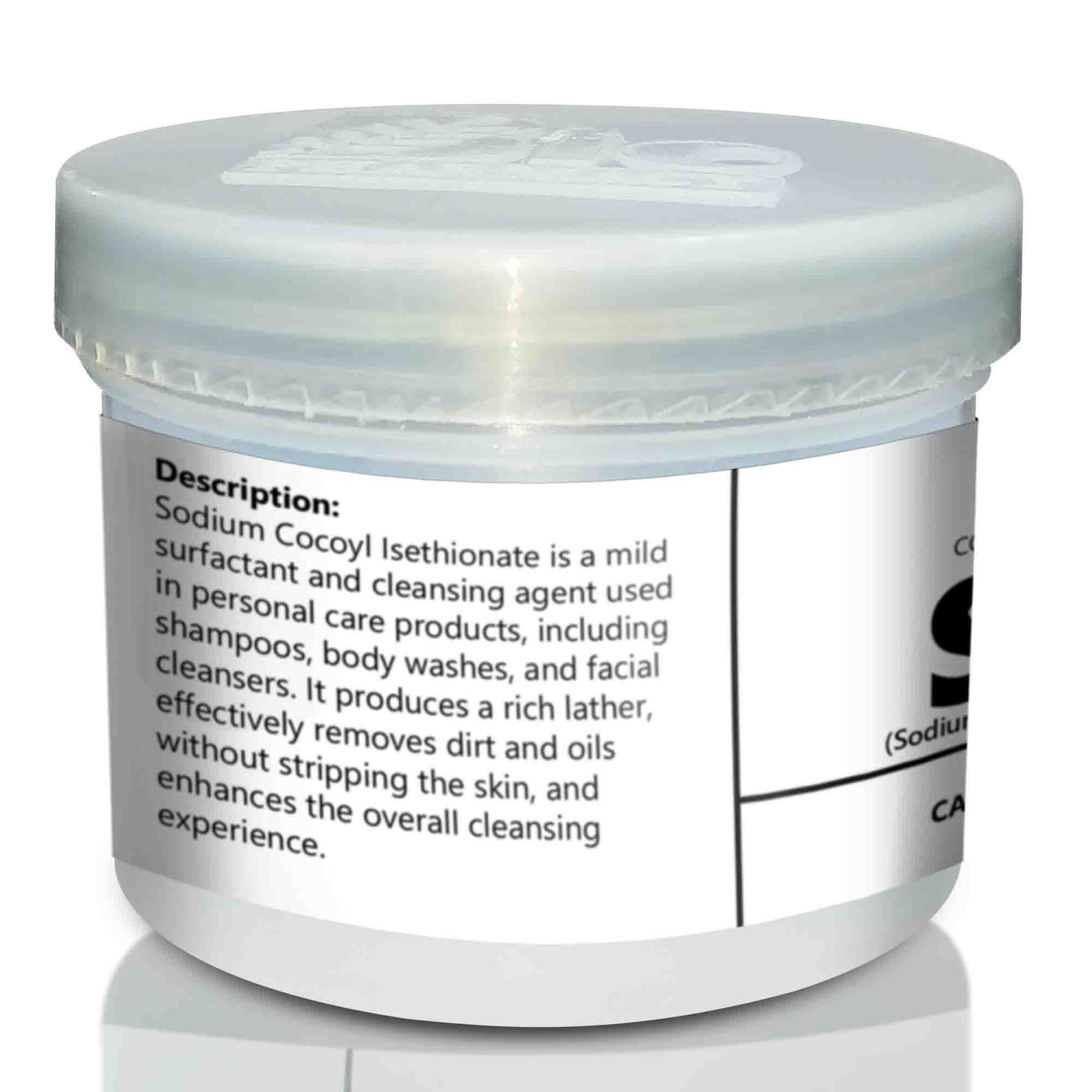
SCI (Sodium Cocoyl Isethionate)
SCI (Sodium Cocoyl Isethionate)
Key Functions: Gentle cleansing, rich lather, skin-conditioning, and low irritation.
Couldn't load pickup availability


Explore
Information About SCI (Sodium Cocoyl Isethionate)
✅ Key Features
✦ Mild coconut-derived anionic surfactant delivering rich, dense, creamy lather with minimal skin irritation
✦ Primary surfactant of choice for syndet bars, solid shampoo bars, and gentle facial cleansing bars
✦ Maintains a skin-compatible pH of 5.5 to 7.0 — significantly gentler than alkaline soap bars
✦ Suitable for sensitive skin, dry skin, baby care, and reactive skin formulations
✦ Biodegradable and derived from renewable coconut oil fatty acids — naturally derived profile
✦ Compatible with amphoteric and nonionic co-surfactants for boosted mildness and improved skin-feel
✦ Self-preserving in solid low-moisture bar format — practical for preservative-free formulation concepts
🔬 Description
Sodium Cocoyl Isethionate, commonly abbreviated as SCI, is a mild anionic surfactant synthesized from coconut oil fatty acids and isethionic acid. First developed in the mid-twentieth century, it became a foundational ingredient in syndetic bar formulation as a gentler alternative to traditional alkaline soap. Its coconut fatty acid origin gives it a naturally derived profile that appeals to both conventional and natural cosmetic formulators, and it has since become one of the most widely used surfactants in solid personal care products globally.
What sets SCI apart from conventional surfactants is its ability to produce an exceptionally dense and creamy lather at skin-compatible pH levels. Unlike sodium lauryl sulfate, SCI has a substantially lower irritation potential and does not strip the skin's natural moisture barrier as aggressively. This property is attributed to its isethionate chemistry, which reduces binding interaction with skin proteins and preserves the integrity of the lipid barrier. The result is a cleansing experience that leaves skin feeling soft, conditioned, and comfortable rather than tight or dry.
Bio Shop Pakistan supplies cosmetic-grade Sodium Cocoyl Isethionate suitable for soap makers, shampoo bar formulators, facial cleanser developers, DIY beauty enthusiasts, and professional cosmetic chemists seeking a gentle and effective primary surfactant base.
📊 Technical Data
INCI Name : Sodium Cocoyl Isethionate
Chemical Name : Sodium salt of coconut fatty acid esters of isethionic acid
CAS Number : 61789-32-0
Molecular Formula : Mixture (C8 to C18 coconut fatty acid chain distribution)
Appearance : White to off-white powder, flakes, or noodles
Odor : Mild, faintly fatty
pH (1% solution) : 5.5–7.0
Solubility : Dispersible in warm water; partially soluble in cold water
Specific Gravity : ~1.02 (10% aqueous solution)
Flash Point : >200°C
HLB Value : Not typically assigned for anionic surfactants
Recommended Use Level : 20–60% in solid bars; 5–20% in liquid and semi-liquid formulations
Type : Anionic surfactant
Shelf Life : 24 months in original sealed packaging under recommended storage conditions
🧪 Recommended Usage
Skincare (Creams, Serums, Lotions)
★★★☆☆
SCI is not suited for leave-on skincare formats but performs well in rinse-off solid and liquid facial cleansers where gentle lather is required. Formulate at 10–20% in cleansing gels or as the base of a solid syndet face bar for best results.
Haircare (Shampoo, Conditioner, Masks)
★★★★★
SCI is the premier primary surfactant for solid shampoo bars, delivering excellent scalp cleansing with dense lather and minimal moisture stripping. Combine with cocamidopropyl betaine and a conditioning agent such as BTMS-50 to balance cleansing with conditioning in a single bar.
Soap Making (Cold Process, Melt and Pour)
★★★★★
SCI is the definitive ingredient for syndet (synthetic detergent) bars, outperforming traditional soap with its neutral pH profile and superior skin compatibility. Incorporate by hot compression or melt processing at 30–60% to produce stable, hard-pressing bars with a rich lather.
Body Care (Scrubs, Butters, Balms)
★★★☆☆
SCI can be effectively used in solid body wash bars and cleansing scrub bars alongside exfoliating agents such as sea salt or sugar. It is not functional in anhydrous butters or balms as it requires water activation to perform its surfactant role.
Functional Cosmetics (Deodorants, Sunscreen, Baby Care)
★★★★☆
SCI is an excellent choice for gentle baby wash bars and sensitive-skin solid deodorant sticks due to its low irritation profile and mild cleansing action. In baby care formulas, use conservatively and ensure final product pH is well-controlled between 5.5 and 6.5.
💡 Pro Tip
When I formulate with Sodium Cocoyl Isethionate in solid bar applications, I always use the hot mix method, melting SCI above 70°C alongside fatty alcohols and skin-softening butters to achieve a homogeneous, workable blend. Temperature control is critical here — overheating SCI above 85°C for extended periods causes yellowing and measurable degradation of lather quality. In liquid syndet systems, I always pair SCI with a secondary amphoteric surfactant such as cocamidopropyl betaine to round out the lather profile, reduce any residual tightness, and improve the sensory after-feel on skin.
ADVANCED TIP: For a premium solid shampoo bar, combine 50% SCI with 15% SLSA, 10% cocamidopropyl betaine (70% active), 5% cetyl alcohol, 3% BTMS-50, 2% panthenol, and up to 2% fragrance. Melt the SCI and fatty alcohol blend at 75 to 78°C, incorporate the betaine and conditioning agents below 60°C, pour into molds, and allow to cure for 48 hours minimum. This ratio delivers a dense, conditioning lather with a bar hardness suitable for retail packaging without crumbling.
👩🔬 Skin Type Suitability
Normal Skin : ★★★★★ — Excellent daily cleanser that effectively removes impurities without disrupting the skin's natural balance.
Dry Skin : ★★★★☆ — Gentler than sulfate surfactants; best paired with moisturizing co-ingredients like glycerin or sodium PCA to prevent any residual dryness.
Oily Skin : ★★★☆☆ — Adequate for gentle daily cleansing but may lack the stronger degreasing capacity required by very oily or sebum-heavy skin types.
Combination : ★★★★☆ — Effective at balanced cleansing across T-zone and dry areas without over-stripping when used at moderate levels.
Sensitive Skin : ★★★★★ — One of the most skin-compatible surfactants available for cosmetic formulation; low irritation potential makes it a first-choice for reactive skin.
Mature Skin : ★★★★★ — Preserves the skin's delicate lipid balance far better than traditional soap bars, actively supporting barrier health in aging skin.
Acne-Prone : ★★★☆☆ — Suitable for gentle daily cleansing but may need to be paired with a secondary active for adequate pore cleansing in congested or acne-prone conditions.
🧴 Formulation Ideas
CONCEPT 1: Gentle Solid Facial Cleanser Bar
Usage Level : 45%
Key Ingredients: Cocamidopropyl Betaine (10%), Glycerin (5%), Kaolin Clay (5%), Shea Butter (3%)
Result : A mild, creamy face wash bar that removes impurities without tightness, suitable for sensitive, normal, and dry skin types.
CONCEPT 2: Solid Shampoo Bar for Normal to Oily Hair
Usage Level : 50%
Key Ingredients: SLSA (15%), Cocamidopropyl Betaine (10%), BTMS-50 (5%), Panthenol (2%)
Result : A rich-lathering solid shampoo bar that cleanses the scalp effectively while leaving hair conditioned, manageable, and free of residue after rinsing.
CONCEPT 3: Ultra-Gentle Baby Wash Bar
Usage Level : 35%
Key Ingredients: Cocamidopropyl Betaine (12%), Glycerin (8%), Allantoin (0.5%), Chamomile Extract (1%)
Result : An ultra-mild syndet bar formulated for delicate baby skin, delivering tear-free cleansing with a controlled final pH between 5.5 and 6.5.
💧 Safety and Regulatory:
INCI Declared : Yes — all ingredients must be declared on product label per EU Cosmetics Regulation 1223/2009
EU Cosmetics Reg : Permitted — not listed in Annex II (prohibited) or Annex III (restricted); freely used at functional levels in rinse-off and leave-on cosmetics
Rinse-Off Limit : No specific limit established; functional levels of 20–60% in solid bars are widely accepted industry practice
Leave-On Limit : Not typically used in leave-on formulations; exercise caution if incorporating at low levels in leave-on products
Allergen Alert : No — not classified as a known cosmetic allergen under EU Cosmetics Regulation
Skin Safety : Safe at recommended levels; patch test advised for highly reactive or sensitized individuals
Eye Area Use : Use with caution — avoid direct contact with eyes; ensure rinse-off formulations are properly pH-controlled
Ingestion : Not for internal use
Pregnancy Use : Safe for topical rinse-off use; consult physician if any specific concerns arise
Child Safety : Safe for use in gentle baby formulations when final product pH is controlled between 5.5 and 6.5
Ventilation : Recommended when handling fine powder in bulk quantities to avoid respiratory irritation from airborne dust
Storage : Cool, dry place away from moisture and heat; avoid humid storage conditions that cause clumping
Container : HDPE or glass preferred; avoid iron or uncoated steel containers
⚠️ Fine powder form may cause mild respiratory irritation upon inhalation during handling. Use a dust mask or respirator when working with SCI powder in open or bulk quantities. Keep powdered and molten SCI away from eyes and mucous membranes during processing.
Stability and Compatibility
Working pH Range : 5.5–7.5 (optimal performance at 6.0–7.0)
Heat Stability : Stable up to 80°C; avoid prolonged exposure above 85°C to prevent yellowing and lather quality loss
Freeze-Thaw Stable : Yes in solid bar format; formulation-dependent in liquid or semi-solid systems
Emulsion Type : O/W (oil-in-water cleansing systems)
Emulsification Phase: Hot (process above 70°C for solid bar and hot-process incorporation)
Compatible With : Amphoteric surfactants (cocamidopropyl betaine), nonionic surfactants, fatty alcohols (cetyl, cetearyl), humectants (glycerin, panthenol, sodium PCA), botanical extracts
Incompatible With : High concentrations of cationic surfactants (may form insoluble precipitates), very low pH environments below 4.5, high salt concentrations that may suppress lather performance
Oxidation Risk : Low — no significant unsaturated bonds prone to autoxidation
Discoloration Risk : Possible — may develop a yellow tint at temperatures above 85°C or during extended storage without UV protection
Formulation Notes : Always melt SCI with fatty phase ingredients above 70°C for solid bar systems; add heat-sensitive actives and conditioning agents below 60°C to protect their integrity and activity.
❓ FAQs
Q: What is Sodium Cocoyl Isethionate and why is it used in cleansers?
A: Sodium Cocoyl Isethionate (SCI) is a mild coconut-derived anionic surfactant that generates rich, creamy lather at skin-friendly pH levels. It is preferred over soap and sulfate surfactants because it causes significantly less irritation and does not strip the skin's natural moisture barrier as aggressively.
Q: Can I use SCI to make a solid shampoo bar?
A: Yes, SCI is the most widely used primary surfactant for solid shampoo bars due to its excellent lather, low irritation profile, and natural bar-forming properties. Combine it with a secondary surfactant such as SLSA or cocamidopropyl betaine for a more balanced cleansing and sensory result.
Q: At what temperature should I melt SCI for solid bar formulation?
A: SCI should be melted between 70°C and 80°C, ideally blended alongside fatty alcohols or butters that help reduce the working temperature of the mass. Avoid holding the blend above 85°C for extended periods as this causes yellowing and measurable lather degradation in the finished bar.
Q: Is SCI safe for sensitive skin and baby care formulations?
A: Yes, SCI is one of the gentlest primary surfactants available and is considered safe for sensitive skin and baby care when formulated at a final product pH between 5.5 and 6.5. Always conduct full stability testing and a safety assessment on the finished formulation before use on infants or highly reactive skin.
Q: How does Sodium Cocoyl Isethionate compare to Sodium Lauryl Sulfate?
A: SCI is significantly milder than SLS, with a much lower skin irritation and sensitization potential, making it suitable for sensitive, dry, and baby skin where SLS would be too harsh. While SLS produces abundant lather rapidly, SCI delivers a creamier and denser foam with a conditioning after-feel that leaves the skin noticeably less stripped and more comfortable after rinsing.
Where Can You Safely Use SCI (Sodium Cocoyl Isethionate)
Discover how SCI (Sodium Cocoyl Isethionate) performs across different products — rated for safety, stability, and effectiveness.
Great product in workable packing size l trust Bioshop because of quality and customer service