Bio Shop
Sodium Lauroyl Sarcosinate
Sodium Lauroyl Sarcosinate
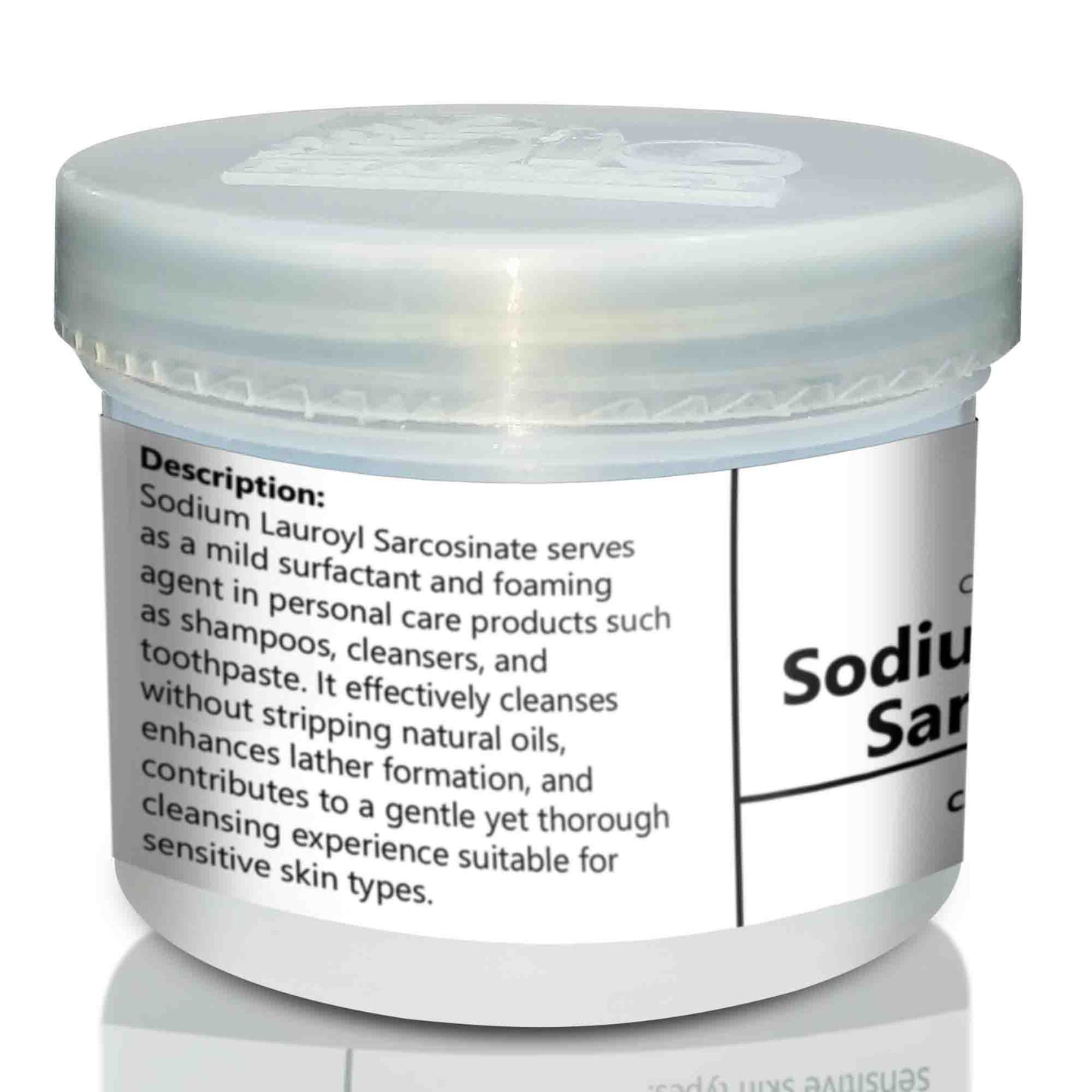
Key Functions: Acts as a mild surfactant and foaming agent, perfect for sulfate-free shampoos, cleansers, and sensitive-skin products.
Couldn't load pickup availability


Explore
Information About Sodium Lauroyl Sarcosinate
✅ Key Features
✦ Amino acid-derived anionic surfactant significantly milder than conventional sulfate cleansers, making it suitable for sensitive and reactive skin types
✦ Produces a rich, creamy, and stable lather well suited to facial cleansers, shampoos, and syndet bar formulations
✦ Substantially reduces skin and eye irritation potential when used as a primary or co-surfactant in rinse-off systems
✦ Biodegradable and free from sulfates, supporting eco-conscious and clean beauty positioning on product labels
✦ Demonstrates mild conditioning activity on the hair shaft, leaving strands smoother after rinse-off
✦ Performs effectively across a broad working pH range of 4.5 to 8.5, offering wide formulation flexibility
✦ Vegan-friendly with natural amino acid origin — compatible with both synthetic and naturally positioned cosmetic lines
🔬 Description
Sodium Lauroyl Sarcosinate is an anionic surfactant in the N-acyl sarcosinate family, produced through the condensation of lauroyl chloride with sarcosine (N-methylglycine), an amino acid naturally found in muscle tissue and biological fluids. First developed in the mid-twentieth century, it became widely adopted across premium personal care as a gentler alternative to sulfate surfactants. It is commercially available in both powder and liquid form, offering flexible integration across aqueous and semi-aqueous systems.
Its cleansing mechanism relies on surface activity — reducing interfacial tension between oil and water to lift impurities, sebum, and product residue from skin and hair surfaces. What distinguishes it from conventional anionic surfactants is its amino acid backbone, which confers a significantly reduced irritation profile, particularly in the eye and dermal challenge tests used by cosmetic safety assessors. It also exhibits mild antimicrobial activity and a secondary conditioning effect on hair, both of which add functional value beyond simple cleansing.
Bio Shop Pakistan supplies cosmetic-grade Sodium Lauroyl Sarcosinate suitable for professional formulators, DIY beauty crafters, soap makers, and home cosmetic enthusiasts.
📊 Technical Data
INCI Name : Sodium Lauroyl Sarcosinate
Chemical Name : Sodium N-methyl-N-(1-oxododecyl)glycinate
CAS Number : 137-16-6
Molecular Formula : C15H28NNaO3
Appearance : White to off-white free-flowing powder (liquid grade: pale yellow clear liquid)
Odor : Mild, faint characteristic odor
pH (1% solution) : 7.5 – 8.5
Solubility : Freely soluble in water
Specific Gravity : 1.02 – 1.05 (liquid grade); bulk density approx. 0.4–0.6 g/cm3 (powder grade)
Flash Point : Not Applicable (aqueous solution and powder form)
HLB Value : Approximately 15 – 17 (estimated for anionic surfactant class; verify with supplier)
Recommended Use Level : 1% – 10% (2% – 8% typical in most finished formulations)
Type : Anionic surfactant, amino acid-derived (N-acyl sarcosinate class)
Shelf Life : 24 months from manufacture date when stored correctly
🧪 Recommended Usage
Skincare (Creams, Serums, Cleansers) ★★★★☆
An excellent primary surfactant in foaming facial cleansers, cleansing gels, and micellar-style wash-off formulas where skin mildness is the priority. Use at 3–6% and pair with a carbomer or hydroxyethyl cellulose to achieve a smooth, non-stripping gel texture.
Haircare (Shampoo, Conditioner, Scalp Treatments) ★★★★★
One of the top choices for sulfate-free shampoos, baby shampoos, and mild scalp treatment formulas. Use at 5–10% as a primary or booster surfactant and combine with Cocamidopropyl Betaine at 3–5% for enhanced foam density and a conditioning rinse feel.
Soap Making (Syndet Bars, Melt and Pour) ★★★★☆
Well suited to syndet bar formulations where soap-free, pH-controlled cleansing is required for sensitive skin positioning. Use at 20–40% alongside Sodium Cocoyl Isethionate and a binder such as stearic acid for a firm, mild cleansing bar with a creamy lather.
Body Care (Foaming Scrubs, Body Wash) ★★★☆☆
A functional inclusion in foaming body scrub bases and liquid body washes, though limited value in anhydrous butters or balms. Keep usage at 3–6% in wash-off body care applications and balance with a humectant such as glycerin to prevent any residual tightness.
Functional Cosmetics (Baby Care, Intimate Wash, Deodorants) ★★★★☆
A preferred surfactant for pH-balanced intimate cleansing washes and ultra-gentle baby cleansers due to its low irritation and strong safety profile. Formulate at 2–5% in systems buffered to pH 4.5–6.0 for intimate care, or pH 6.0–7.0 for baby wash applications.
💡 Pro Tip
I rely on Sodium Lauroyl Sarcosinate as my first-choice mild surfactant when developing formulas for sensitive skin, reactive scalps, or baby care lines. Unlike sulfate-based cleansers, it does not aggressively disrupt the skin barrier at typical use levels, which is why it appears consistently in dermatologist-recommended and clinically tested cleansing products. I often deploy it as a co-surfactant to soften the irritation profile of higher-performing cleansing bases rather than using it in isolation — this approach gives me simultaneous control over foam density, mildness index, and viscosity response. Its amino acid origin also supports clean-label positioning that resonates strongly with today's ingredient-literate consumer.
ADVANCED TIP: For a professional-grade sulfate-free shampoo, combine Sodium Lauroyl Sarcosinate at 7% with Cocamidopropyl Betaine at 5% and Sodium Cocoyl Glutamate at 4%. Heat the aqueous phase to 60°C to fully dissolve, cool to 40°C, then adjust pH to 6.0–6.5 using a 10% citric acid solution before adding heat-sensitive actives such as panthenol or biotin. This three-surfactant system delivers excellent foam volume, a low irritation profile, and a cosmetically elegant rinse feel that rivals conventional sulfate-based systems without the sensitization risk.
👩🔬 Skin Type Suitability
Normal Skin : ★★★★★ — Provides thorough, balanced cleansing without disturbing the skin barrier or leaving any residual tightness.
Dry Skin : ★★★★☆ — Gentle enough for dry skin but combine with a humectant or skin-identical lipid at higher concentrations to prevent post-wash tightness.
Oily Skin : ★★★★★ — Effectively removes excess sebum and surface debris without the aggressive stripping that triggers rebound oil production.
Combination : ★★★★☆ — Cleanses oily zones without over-drying drier areas, making it a reliable and adaptable choice in combination skin formulations.
Sensitive Skin : ★★★★★ — Among the mildest anionic surfactants commercially available, consistently outperforming sulfate options in ocular and dermal tolerability tests.
Mature Skin : ★★★★☆ — Safe and non-abrasive for aging and barrier-compromised skin; pairing with a nourishing emollient is advisable to support overall skin comfort.
Acne-Prone : ★★★★☆ — Removes pore-clogging oils and surface residue effectively without the over-drying and irritation that commonly aggravates acne-prone conditions.
🧴 Formulation Ideas
CONCEPT 1: Sulfate-Free Gentle Foaming Face Wash
Usage Level : 5%
Key Ingredients: Cocamidopropyl Betaine, Panthenol, Allantoin, Glycerin
Result : A soft, skin-compatible foaming cleanser that removes impurities without disrupting the moisture barrier, leaving the face calm, smooth, and comfortable after rinsing.
CONCEPT 2: Ultra-Mild Baby Shampoo and Body Wash
Usage Level : 7%
Key Ingredients: Cocamidopropyl Betaine, Sodium PCA, Chamomile Extract, Citric Acid
Result : A tear-free, pH-balanced cleansing wash designed for delicate infant skin and scalp with minimal irritation potential and an effortless, clear rinse.
CONCEPT 3: Clarifying Scalp Treatment Shampoo
Usage Level : 8%
Key Ingredients: Sodium Cocoyl Glutamate, Zinc PCA, Salicylic Acid, Panthenol
Result : A targeted cleansing shampoo that effectively removes excess oil and scalp buildup while maintaining scalp comfort and moisture balance with each wash.
💧 Safety and Regulatory:
INCI Declared : Yes — required on all finished cosmetic products sold in the EU, UK, and most regulated markets
EU Cosmetics Reg : Permitted — no specific concentration restriction listed; subject to general cosmetic safety assessment requirements
Rinse-Off Limit : No regulatory maximum established; industry practice is up to 10% in rinse-off products
Leave-On Limit : Up to 3% in leave-on applications; patch testing recommended at the upper range
Allergen Alert : No — not classified as a known fragrance allergen under EU Regulation 1223/2009
Skin Safety : Safe at recommended use levels; patch test advised for individuals with severely compromised skin barriers
Eye Area Use : Use with caution — milder than sulfates but avoid direct eye contact at concentrations above 5%
Ingestion : Not for internal use
Pregnancy Use : Generally considered safe for topical cosmetic use; consult a physician if uncertain
Child Safety : Safe for use in baby and children's products at appropriate concentrations; keep all finished products out of reach of children
Ventilation : Not required under normal handling conditions for cosmetic formulation use
Storage : Cool, dry place away from direct sunlight; liquid grade should be stored between 10°C and 30°C; avoid freezing liquid form
Container : HDPE or PET containers recommended; avoid prolonged storage in reactive metal containers
⚠️ At concentrations exceeding 10%, mild irritation may occur in individuals with compromised or sensitized skin barriers. Always formulate within recommended use levels and conduct full stability and cosmetic safety testing on finished products prior to commercial release.
Stability and Compatibility
Working pH Range : 4.5 – 8.5 (optimal cleansing and stability performance at pH 5.5 – 7.5)
Heat Stability : Stable up to 80°C; incorporate heat-sensitive actives below 40°C after surfactant phase is complete
Freeze-Thaw Stable : Yes — powder form unaffected; liquid grade may require gentle agitation to restore homogeneity after thawing
Emulsion Type : Not applicable as a primary emulsifier; can contribute mild interfacial stabilization in O/W systems
Emulsification Phase: Cold or Hot — dissolves readily in warm water above 40°C; dispersible in cold-process liquid blends at low concentrations
Compatible With : Amphoteric surfactants (e.g., Cocamidopropyl Betaine), nonionic surfactants, humectants (Glycerin, Hyaluronic Acid, Sodium PCA), botanical extracts, most preservative systems (parabens, phenoxyethanol, sodium benzoate)
Incompatible With : High concentrations of cationic surfactants (anionic-cationic interaction reduces foam and activity); strongly acidic systems below pH 4.0; high levels of cationic conditioning polymers without charge balancing
Oxidation Risk : Low — does not contain unsaturated fatty acid bonds; antioxidant addition is not required
Discoloration Risk : None under normal storage conditions; prolonged UV exposure of the liquid grade may cause faint yellowing
Formulation Notes : When combining with cationic polymers such as Polyquaternium-7 or Guar Hydroxypropyltrimonium Chloride, maintain a charge-balanced ratio and monitor for flocculation. Always finalize pH adjustment after all surfactants are fully incorporated and the batch has cooled.
❓ FAQs
Q: What is Sodium Lauroyl Sarcosinate and is it the same as Sodium Lauryl Sulfate?
A: Sodium Lauroyl Sarcosinate is an amino acid-derived anionic surfactant, while Sodium Lauryl Sulfate is a petrochemical-derived sulfate — the shared abbreviation SLS is a common source of confusion between the two. Sarcosinate is significantly milder, less irritating, and better suited for sensitive skin and scalp formulations than its sulfate counterpart.
Q: What is the correct usage percentage for a foaming facial cleanser?
A: For a standard foaming face wash, use Sodium Lauroyl Sarcosinate at 3–6% as a primary surfactant. Pairing it with Cocamidopropyl Betaine at 2–4% improves foam quality and mildness while allowing you to hit your target foam volume without increasing sarcosinate concentration.
Q: Can Sodium Lauroyl Sarcosinate be used in leave-on products?
A: Yes, it can be included in leave-on formulas at low concentrations of up to 2–3%, such as in leave-on conditioning sprays or clarifying scalp serums. At these levels it contributes mild antimicrobial activity and residual surfactancy without causing irritation or disrupting the skin barrier.
Q: Is it safe to use in baby products and intimate wash formulas?
A: Yes — its low ocular and dermal irritation profile makes it one of the most suitable surfactants for baby cleansers and pH-balanced intimate wash products. Formulate baby washes at 5–8% and maintain pH 6.0–7.0; for intimate hygiene products, target pH 4.5–5.5 to align with natural mucosal pH.
Q: How does Sodium Lauroyl Sarcosinate compare to Sodium Cocoyl Glutamate as a mild surfactant?
A: Both are amino acid-based mild anionic surfactants, but Sodium Cocoyl Glutamate performs better in low-pH acidic formulations (pH 4.5–6.0) and is preferred where strict skin-barrier compatibility is required. Sodium Lauroyl Sarcosinate offers a broader working pH range and slightly stronger foaming performance, making it more versatile across shampoo and body wash applications. The two work exceptionally well as a paired co-surfactant system.
Where Can You Safely Use Sodium Lauroyl Sarcosinate
Discover how Sodium Lauroyl Sarcosinate performs across different products — rated for safety, stability, and effectiveness.