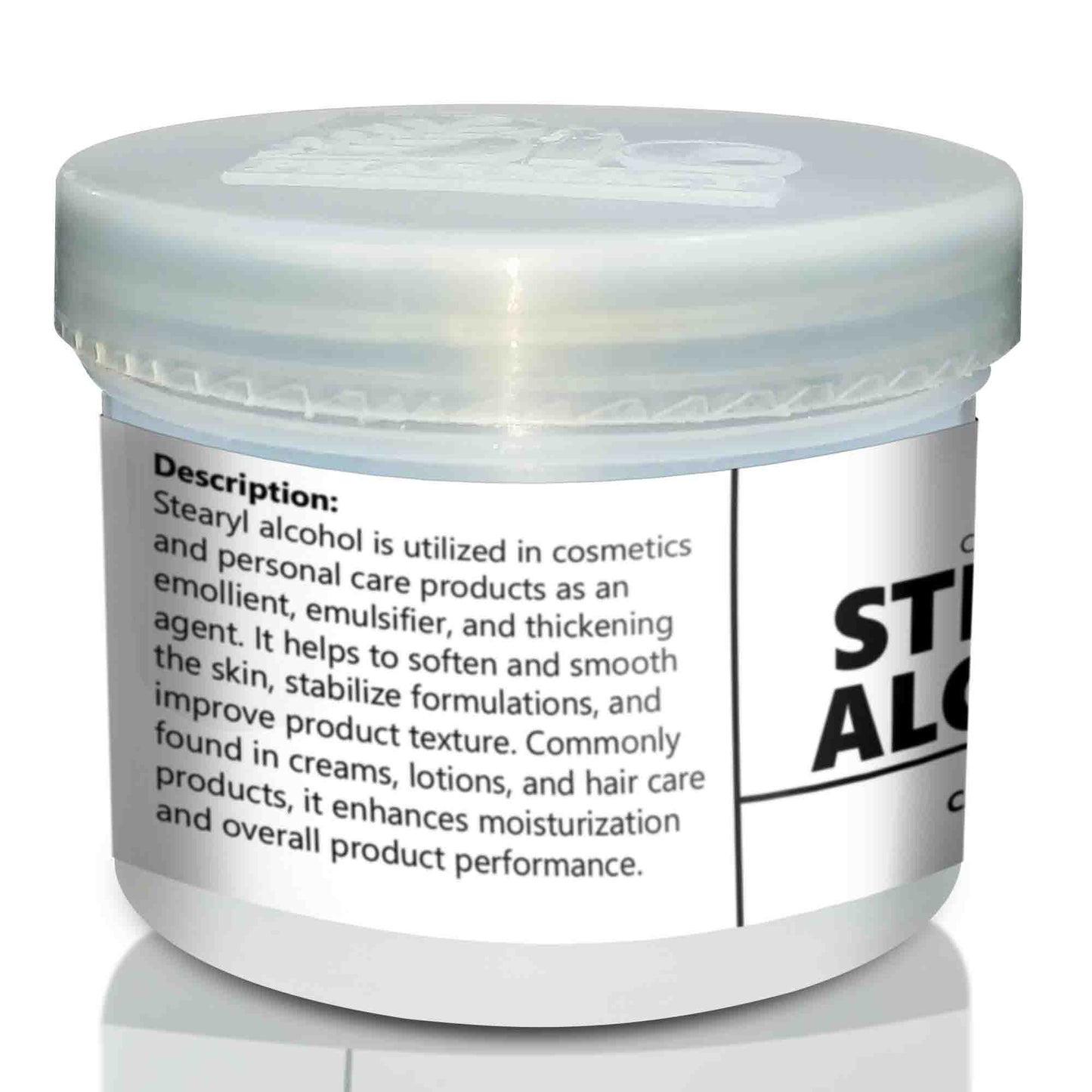
Skip to product information
1 of 3

Bio Shop

Stearyl Alcohol

Stearyl Alcohol

Regular price Rs.200.00
Regular price Sale price Rs.200.00
Sale Sold out
Shipping calculated at checkout.

Key Functions: Thickens formulas, conditions skin, stabilizes emulsions, and enhances texture.

Weight
Quantity
🚚 Estimated delivery time:
Learn More About This Ingredient View full details

Explore

Information About Stearyl Alcohol

✅ Key Features

✦ Waxy fatty alcohol that builds texture, viscosity, and stability in creams, lotions, conditioners, and balms.
✦ Excellent emollient that softens both skin and hair by forming a light, protective, moisture-retaining surface film.
✦ Functions as a co-emulsifier and structural agent, improving emulsion stability across both O/W and W/O systems.
✦ Outstanding performer in haircare where it detangles, conditions, and improves shine in masks and conditioners.
✦ Plant-derived from palm or coconut oil; suitable for use in vegan and natural cosmetic formulations.
✦ Well-tolerated by most skin types including sensitive skin at recommended use levels with low irritation potential.
✦ Broadly compatible with emulsifiers, actives, silicones, waxes, and plant butters across a wide pH range.

🔬 Description

Stearyl Alcohol is a saturated C18 fatty alcohol produced commercially by the catalytic reduction of stearic acid, primarily sourced from palm kernel and coconut oil. It has been a cornerstone ingredient in cosmetic manufacturing for decades, appearing in everything from pharmaceutical-grade skin creams to everyday hair conditioners. Its safety profile is well-established, and it remains one of the most trusted structural and functional ingredients across the global cosmetics industry.

What distinguishes Stearyl Alcohol in formulation is its dual contribution as both a sensory modifier and a functional stabilizer. When added to emulsions, it increases interfacial viscosity and slows droplet coalescence, extending product shelf life. On the skin, it delivers a soft, smooth after-feel without greasiness, and its occlusive nature helps the skin retain hydration. In rinse-off haircare, it conditions the cuticle and improves manageability, working synergistically with cationic emulsifiers to maximize deposition.

Bio Shop Pakistan supplies cosmetic-grade Stearyl Alcohol suitable for skincare formulators, haircare product developers, soap makers, and DIY beauty crafters across Pakistan.

📊 Technical Data

INCI Name : Stearyl Alcohol
Chemical Name : 1-Octadecanol
CAS Number : 112-92-5
Molecular Formula : C18H38O
Appearance : White waxy flakes or pellets
Odor : Faint, characteristic waxy odor
pH (1% solution) : Not Applicable (insoluble in water)
Solubility : Insoluble in water; soluble in ethanol, oils, and most organic solvents
Specific Gravity : 0.812 at 60°C
Flash Point : Approximately 185°C
HLB Value : Not Applicable
Recommended Use Level : 2% to 25% depending on application
Type : Fatty alcohol, emollient, thickener, co-emulsifier
Shelf Life : 2 to 3 years when stored in a cool, dry place

🧪 Recommended Usage

Skincare (Creams, Serums, Lotions) : ★★★★★
Stearyl Alcohol is a foundational ingredient in cream and lotion formulations, delivering thickening, emolliency, and improved stability. Use at 2 to 10% in the hot oil phase to build body and enhance skin feel.

Haircare (Shampoo, Conditioner, Masks) : ★★★★★
It excels in conditioners and hair masks where it deposits directly onto the hair shaft to improve softness, detangling, and shine. Use at 3 to 8% alongside a cationic emulsifier such as BTMS-50 or Cetrimonium Chloride for optimal deposition.

Soap Making (Cold Process, Melt and Pour) : ★★★★☆
Stearyl Alcohol adds mild hardness and a creamy skin feel to cold process and melt and pour soap formulations. Use at 3 to 5% as a conditioning and hardening additive for a smoother bar with a richer lather.

Body Care (Scrubs, Butters, Balms) : ★★★★★
It provides excellent structure to body butters, lip balms, and anhydrous stick formulations without a greasy finish. Use at 5 to 20% to achieve firm, scoopable butters or solid stick formats with smooth application.

Functional Cosmetics (Deodorants, Sunscreen, Baby Care) : ★★★★☆
Stearyl Alcohol is used in stick deodorants and sunscreen sticks as a structuring wax and is gentle enough for sensitive baby care emulsions. Keep use levels below 5% in baby products and confirm final formula tolerance before production.

💡 Pro Tip

When I formulate conditioners and rinse-off hair masks, Stearyl Alcohol is a near-constant in my hot oil phase. Its synergy with cationic emulsifiers gives me both the structural body the product needs and the slip and detangling performance clients expect. In skin creams, I choose Stearyl Alcohol over Cetyl Alcohol when the target is a richer, more occlusive texture — particularly in formulations aimed at dry or mature skin during winter months.

ADVANCED TIP: For a high-slip, conditioning hair cream, combine Stearyl Alcohol at 6% with BTMS-50 at 4% and Behentrimonium Chloride at 0.5% in the hot oil phase. Melt all three together at 75°C before combining with the water phase at the same temperature. This creates a positively charged emulsion matrix that deposits evenly on hair fibers, delivering exceptional softness and manageability without product buildup over repeated use.

👩‍🔬 Skin Type Suitability

Normal Skin : ★★★★★ — Provides balanced emolliency and smooth texture with no risk of heaviness or congestion.
Dry Skin : ★★★★★ — Forms a light occlusive layer that locks in moisture and visibly reduces dryness and tightness.
Oily Skin : ★★★☆☆ — Can feel slightly heavy on oily skin; keep concentrations below 4% and pair with lighter, fast-absorbing esters.
Combination : ★★★★☆ — Works well in light lotion formats at moderate levels to address dry zones without overloading oily areas.
Sensitive Skin : ★★★★☆ — Generally well-tolerated with low irritation potential; a patch test is still advisable for leave-on applications.
Mature Skin : ★★★★★ — Ideal for mature skin where a richer, film-forming emollient supports barrier repair, hydration, and a plumper appearance.
Acne-Prone : ★★★☆☆ — Mildly comedogenic risk exists at high concentrations; limit to 3% or below in leave-on products for acne-prone skin.

🧴 Formulation Ideas

CONCEPT 1: Rich Moisturizing Body Butter
Usage Level : 12%
Key Ingredients: Shea Butter, Sweet Almond Oil, Tocopherol (Vitamin E), Fragrance Oil
Result : A non-greasy, structured body butter that melts on contact with skin, delivering deep moisture and a silky, non-tacky after-feel.

CONCEPT 2: Intensive Hair Conditioning Mask
Usage Level : 6%
Key Ingredients: BTMS-50, Panthenol (Vitamin B5), Argan Oil, Hydrolyzed Keratin
Result : A creamy, salon-quality hair mask that deeply conditions, reduces frizz, and improves combability and shine across all hair types.

CONCEPT 3: Nourishing Night Cream
Usage Level : 5%
Key Ingredients: Glycerin, Niacinamide, Cetearyl Alcohol, Rosehip Seed Oil
Result : A stable, rich night cream with a luxurious whipped texture that supports skin barrier repair and delivers visible overnight hydration.

💧 Safety and Regulatory:

INCI Declared : Yes — required above 1% in EU cosmetic products
EU Cosmetics Reg : Permitted — no restriction listed in Annexes I through VI; approved for all rinse-off and leave-on cosmetic categories
Rinse-Off Limit : No limit established
Leave-On Limit : No limit established
Allergen Alert : No — not a listed contact allergen under EU Cosmetics Regulation
Skin Safety : Safe at recommended levels
Eye Area Use : Use with caution — avoid direct eye contact in high-concentration formulations
Ingestion : Not for internal use
Pregnancy Use : Safe for topical cosmetic use; no contraindications established at normal use levels
Child Safety : Safe in diluted formulations; suitable for baby care products at concentrations below 5%
Ventilation : Not required under normal handling and formulation conditions
Storage : Store in a cool, dry place away from direct sunlight and heat sources above 30°C
Container : HDPE or glass preferred; avoid reactive metals

⚠️ Note: Although sensitization to Stearyl Alcohol alone is uncommon, individuals with known sensitivity to related fatty alcohols such as Cetyl Alcohol or Cetearyl Alcohol may experience cross-reactivity. Patch testing is recommended when developing leave-on formulations for sensitive skin.

Stability and Compatibility

Working pH Range : 4.0 to 9.0 (stable across a wide cosmetic pH range)
Heat Stability : Stable up to 120°C; melting point approximately 58 to 60°C
Freeze-Thaw Stable : Yes
Emulsion Type : Both O/W and W/O
Emulsification Phase: Hot phase
Compatible With : Emulsifiers (BTMS-50, Polawax, Emulsifying Wax NF), fatty acids, esters, silicones, plant waxes, plant butters
Incompatible With : Strong oxidizing agents; highly alkaline systems above pH 10
Oxidation Risk : Low — no antioxidant addition required under normal storage conditions
Discoloration Risk : None under normal conditions; prolonged UV exposure may cause slight yellowing over time
Formulation Notes : Always melt Stearyl Alcohol in the hot oil phase above 65°C before combining with the water phase. Adding it to cold or partially cooled systems will cause premature solidification and result in a grainy, unstable emulsion.

❓ FAQs

Q: What is Stearyl Alcohol and is it safe for skin?
A: Stearyl Alcohol is a plant-derived fatty alcohol used as an emollient, thickener, and emulsion stabilizer in cosmetics. Despite the word alcohol in its name, it does not dry out or irritate the skin — it is non-volatile, non-drying, and actually conditions and softens both skin and hair.

Q: How much Stearyl Alcohol should I use in a lotion or cream?
A: For light lotions, a range of 2 to 4% is sufficient to improve texture and skin feel. For rich creams, body butters, or stick formulations, you can use 8 to 20% depending on the firmness and richness you want to achieve.

Q: Can Stearyl Alcohol be used in hair conditioners and masks?
A: Yes, it is one of the best-performing ingredients in conditioners and hair masks. Use it at 3 to 8% in the hot oil phase alongside a cationic emulsifier such as BTMS-50 or Cetrimonium Chloride for superior conditioning, detangling, and a smooth, silky finish.

Q: Is Stearyl Alcohol vegan and suitable for natural formulations?
A: Cosmetic-grade Stearyl Alcohol is typically derived from plant sources such as palm kernel or coconut oil and is considered suitable for vegan formulations. Always confirm the source with your supplier to ensure no animal-derived raw materials were used in processing.

Q: How does Stearyl Alcohol compare to Cetyl Alcohol?
A: Both are fatty alcohols with overlapping functions, but Stearyl Alcohol has an 18-carbon chain versus Cetyl Alcohol's 16 carbons, making it slightly heavier, firmer, and more occlusive. Cetyl Alcohol delivers a lighter, silkier skin feel while Stearyl Alcohol produces a richer, more protective texture. The two are commonly blended together in the form of Cetearyl Alcohol to achieve a balanced combination of both properties.

Where Can You Safely Use Stearyl Alcohol

Discover how Stearyl Alcohol performs across different products — rated for safety, stability, and effectiveness.

Skincare
Serums
5
Mediocre
Creams & Lotions
9
Very Good
Eye Creams
7
Reasonable
Face Masks
7
Reasonable
Cleansers
5
Mediocre
Toners
2
Stability Issues
Lip Balms
9
Very Good
Ointments
9
Very Good
Body & Hair Care
Body Butters
9
Very Good
Shampoos
5
Mediocre
Conditioners
9
Very Good
Hair Masks
9
Very Good
Soap & Specialty
Soaps
7
Reasonable
Deodorants
8
Good