Bio Shop
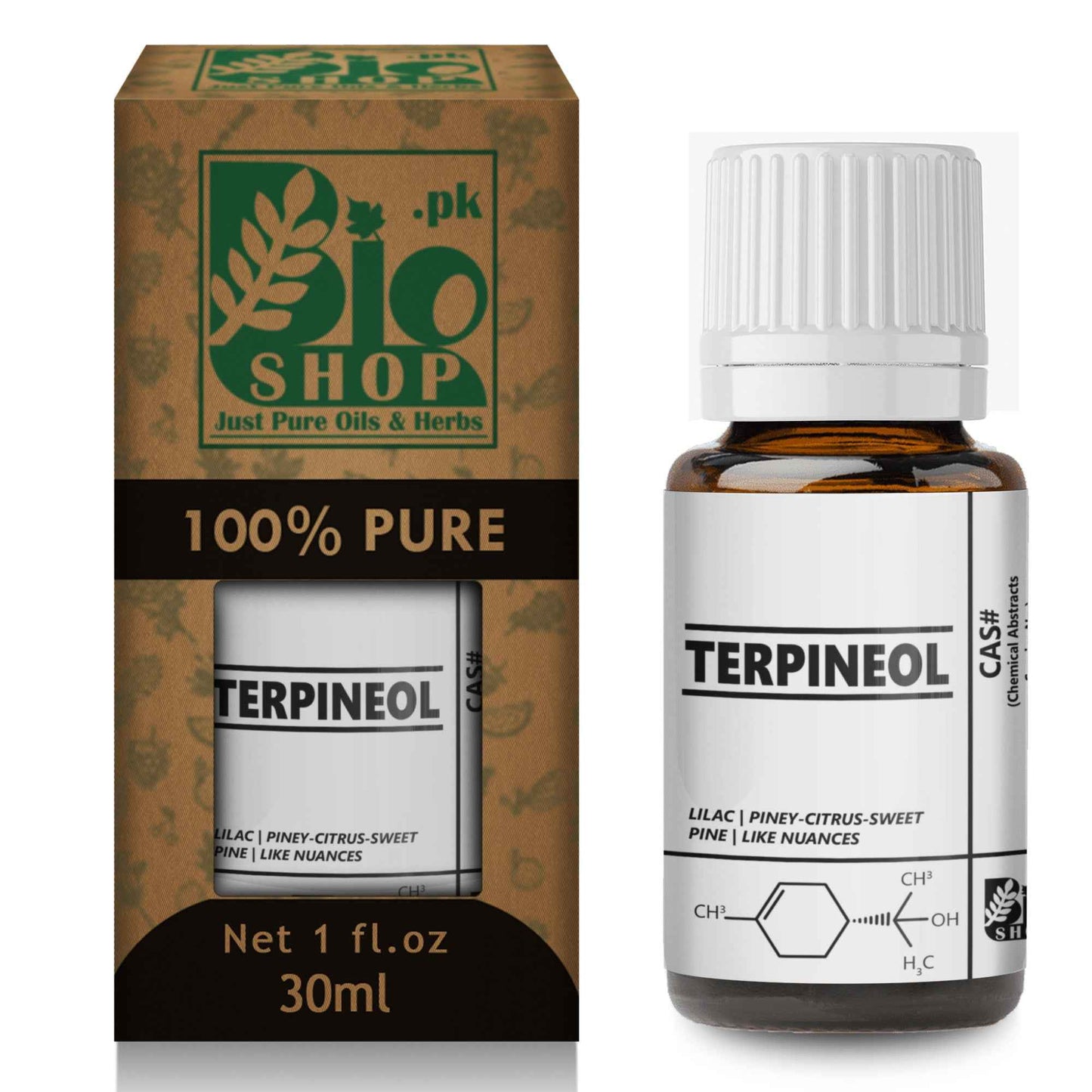
Terpineol
Terpineol
Olfactory Notes: Lilac · Floral · Fresh · Green · Slightly Woody · Clean
Couldn't load pickup availability
Explore
Information About Terpineol
Key Features
✦ Alpha-terpineol is a monoterpenoid alcohol with a clean, fresh, floral lilac and pine aroma used globally in fragrance and cosmetic formulation
✦ Delivers excellent diffusion and lift in both alcohol-based and functional fragrance applications
✦ Commonly found in pine oil, petitgrain, and eucalyptus; also produced synthetically with high consistency
✦ Widely used in detergents, shampoos, fabric softeners, soaps, and fine perfumery — a true multi-application ingredient
✦ Offers mild antimicrobial properties making it suitable for functional and personal care formulations
✦ Vegan, not animal-derived; synthetic version is palm-neutral and cruelty free
✦ Recognised and used in iconic floral, fougere, chypre, and fresh fragrance families across mainstream and prestige perfumery
About Terpineol
Terpineol is a naturally occurring monocyclic monoterpenoid alcohol that exists in several isomeric forms, with alpha-terpineol being the most commercially significant. It is found in nature within pine oil, petitgrain, cajeput, eucalyptus, and many other essential oils. Its use in fragrance dates back over a century, where it became one of the earliest aroma chemicals adopted by perfumers seeking a stable and affordable floral modifier with fresh green and pine character. Today it remains one of the most produced and consumed aroma chemicals in the world.
What makes terpineol particularly valuable is its versatility. It functions as both a primary fragrance note and a supporting modifier that enhances and lifts other materials around it. Its lilac, pine, and sweet floral character blends harmoniously with a vast array of naturals and synthetics. In functional fragrance, it is prized for masking unpleasant base odors in cleaning products and personal care formulations while contributing a universally appealing clean scent.
Bio Shop Pakistan supplies cosmetic-grade terpineol suitable for DIY perfumers, fragrance blenders, cosmetic formulators, and home crafters who require a reliable, consistent, and high-quality source of this essential aroma chemical.
Olfactory Profile
SCENT DESCRIPTION : Terpineol opens with a bright, clean burst of lilac blossom and fresh pine needles. The heart reveals a soft, sweet floral roundness with faint woody and earthy depth. It carries a recognisable clean, slightly soapy quality that reads as fresh and approachable. The overall impression is airy, green-floral, and universally pleasing with a gentle herbaceous undertone.
NOTE POSITION : Top-Mid
FRAGRANCE FAMILY : Fresh Floral, Green, Woody
FACETS : Lilac · Pine · Floral · Clean · Sweet
TENACITY : Medium — approximately 4 to 6 hours on skin
SILLAGE : Medium — projects well in the opening, settles to a soft skin-close character in the dry-down
Technical Specifications
Chemical Name : alpha-Terpineol (2-(4-Methylcyclohex-3-en-1-yl)propan-2-ol)
CAS Number : 98-55-5 (alpha-terpineol); 8000-41-7 (mixed terpineol)
Synonyms : p-Menth-1-en-8-ol, Alpha Terpineol, Terpineol Alpha, 1-p-Menthen-8-ol
Purity : 95% minimum (alpha-terpineol isolate)
Appearance : Colourless to pale yellow liquid
Odor Threshold : Approximately 0.33 ppm
Solubility : Slightly soluble in water; freely soluble in ethanol, oils, and most fragrance solvents
Specific Gravity : 0.930 – 0.936 at 20°C
Flash Point : Approximately 90°C (194°F)
Type : Semi-synthetic (derived from pine oil or turpentine via chemical processing)
Applications & Usage Guidelines
Fine Fragrance ★★★★★
Terpineol is a cornerstone material in floral, fougere, chypre, and fresh fragrance construction. It contributes clean lift and floral character while blending seamlessly with aldehydes, musks, and green materials. It is present in hundreds of commercial fine fragrance formulas worldwide.
Attar & Oriental Blending ★★★☆☆
Terpineol adds a refreshing, airy contrast when used sparingly in heavier oriental and attar compositions. It lifts dense woody and resinous bases and introduces a clean floral dimension. Use at low percentages to avoid dominating the overall character.
Functional Fragrance ★★★★★
One of the most important ingredients in household and personal care fragrance, terpineol is widely used to mask base odors in detergents, cleaners, and disinfectants. Its clean, pine-floral character is associated with hygiene and freshness, making it ideal for soaps, shampoos, and cleaning products.
Cosmetics ★★★★☆
Terpineol functions well in body lotions, creams, and shower products as both a fragrance contributor and a mild antimicrobial agent. It is skin-compatible at recommended usage levels and has a long history of safe use in cosmetic formulations.
Home Fragrance ★★★★☆
In candles, reed diffusers, and room sprays, terpineol delivers a clean, fresh, and floral top note with reasonable throw. It pairs well with citrus, eucalyptus, lavender, and pine materials for spa, fresh linen, and clean home fragrance concepts.
IFRA & Usage Rate
RECOMMENDED USAGE RATES
EDP : 2 – 5%
EDT : 3 – 8%
Body Lotion : 0.5 – 2%
Shampoo / Body Wash : 0.5 – 1.5%
Candle : 3 – 8%
Reed Diffuser : 10 – 20%
Soap (bar) : 1 – 3%
IFRA 51ST AMENDMENT LIMITS (alpha-Terpineol, CAS 98-55-5)
IFRA Category 4 (Fine Fragrance) : No specific restriction listed — use at standard industry levels
IFRA Category 5 (Body Lotion) : No specific restriction listed
IFRA Category 9 (Soap / Detergent) : No specific restriction listed
IFRA Category 11 (Candle) : No specific restriction listed
⚠️ Terpineol is not listed as a restricted or prohibited material under IFRA 51st Amendment. However, always perform a full safety assessment for your final formulation.
⚠️ For leave-on skin products, conduct patch testing and observe general cosmetic safety regulations applicable in your market.
⚠️ Verify current IFRA standards at ifrafragrance.org before commercial production.
Blending Guide
METHOD 1 — Floral Modifier
Use terpineol at 2 to 5% in a floral or fresh accord to add lift and a lilac-like character. It works exceptionally well with rose, jasmine, geranium, and violet. It opens up synthetic florals and gives them a more natural, airy quality.
METHOD 2 — Clean Accord Builder
Combine terpineol with linalool, hydroxycitronellal, and white musks to build a clean, fresh, laundry-style accord. This is a proven functional fragrance technique used in fabric softeners, shampoos, and body washes.
METHOD 3 — Pine and Forest Accord
Pair terpineol with alpha-pinene, cedarwood, fir balsam, and a touch of eucalyptus to create a fresh pine forest note. The floral softness of terpineol prevents the accord from smelling purely medicinal or harsh.
BEST PAIRINGS
Linalool → Amplifies the clean floral character; creates smooth, rounded freshness
Geranium EO → Adds green rosy depth; excellent for natural-style compositions
Lavender EO → Classic fougere pairing; clean, herbal, and universally appealing
Alpha-Pinene → Sharpens the pine facets; ideal for fresh and forest accords
Citronellol → Brightens and adds rosy lift; useful in floral and chypre bases
White Musk → Grounds and extends terpineol in clean, modern fragrance formulas
Cedarwood → Adds warmth and dry woody depth to balance the bright topnote
Eugenol → Introduces spicy, clove-like contrast in oriental-leaning blends
AVOID : Avoid very high concentrations alongside heavy, dark resins such as raw labdanum or castoreum as terpineol's freshness will clash rather than complement. Also avoid combining at high levels with other terpene alcohols unless carefully balanced, as the composition may read as overly medicinal.
Perfumer's Note
I reach for terpineol almost automatically whenever a formula needs that precise quality I describe internally as organised freshness — not the sharp brightness of a citrus nor the powdery softness of a musk, but something in between that ties both worlds together. It has an almost democratic quality as a blending material: it cooperates with nearly everything, asks for very little, and gives back generously. The lilac facet is genuinely beautiful at moderate concentrations, and in functional work it is simply irreplaceable for creating the perception of clean and hygiene without smelling clinical.
ADVANCED TIP : Try pre-dissolving terpineol with a small quantity of iso e super or ambroxan before adding it to your base. This technique anchors terpineol's otherwise ephemeral top note to the woody-amber skeleton of the formula, significantly extending its perceptible presence on skin and textile while maintaining its characteristic clean-floral freshness throughout the dry-down.
Safety & Storage
Physical State : Liquid at room temperature
Skin Safety : Generally safe at recommended usage rates; may cause mild irritation at high concentrations; dilute before skin application
Eye Contact : Avoid direct contact; rinse thoroughly with water if contact occurs; seek medical advice if irritation persists
Ingestion : Not for internal use; keep away from children; seek immediate medical attention if swallowed
Ventilation : Use in a well-ventilated workspace; avoid prolonged inhalation of concentrated vapour
Storage : Store in a cool, dry place away from direct sunlight and heat sources; keep container tightly sealed
Shelf Life : 12 to 24 months from date of manufacture when stored correctly; terpene alcohols can oxidise over time
Container : Store in original amber glass or HDPE container; avoid reactive metals and PVC
Flammability : Combustible liquid; flash point approximately 90°C; keep away from open flames and heat sources
FAQ
Q: What does terpineol smell like?
A: Terpineol has a clean, fresh, floral scent with lilac, pine, and faintly sweet character. It is one of the most recognisable clean-floral aroma chemicals in perfumery.
Q: Can I use terpineol directly on skin?
A: No. Always dilute terpineol to the appropriate usage level in your final formulation before any skin contact. Direct undiluted application may cause irritation.
Q: What products can I make with terpineol?
A: Terpineol is suitable for perfumes, body washes, shampoos, soaps, candles, reed diffusers, fabric softeners, and household cleaning fragrances. It is one of the most versatile aroma chemicals available.
Q: Is terpineol natural or synthetic?
A: Commercial terpineol is typically semi-synthetic, produced from pine oil or turpentine-derived alpha-pinene. It is chemically identical to the terpineol found in nature but manufactured at scale for consistency and cost efficiency.
Q: How does terpineol compare to natural pine oil?
A: Natural pine oil contains terpineol as a major component alongside other terpenes and impurities. Isolated terpineol is cleaner, more consistent, and significantly more floral than raw pine oil. It offers greater precision in formulation and performs more predictably across applications than whole pine oil.
Where Can You Safely Use Terpineol?
Discover how Terpineol performs across different applications—rated for safety, stability, and effectiveness.