Skip to product information
1 of 3

Bio Shop

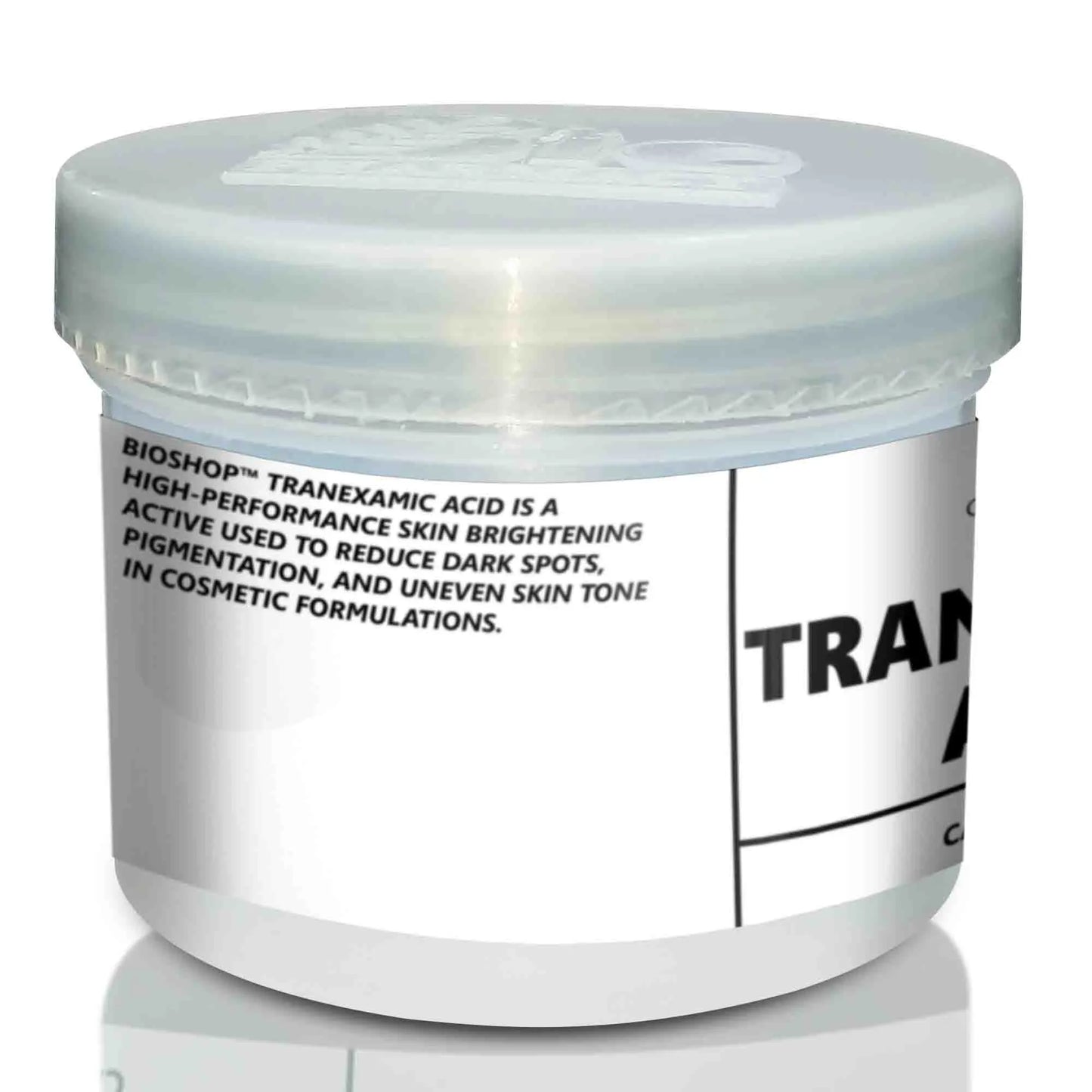
Tranexamic Acid

Tranexamic Acid

Regular price Rs.800.00
Regular price Sale price Rs.800.00
Sale Sold out
Shipping calculated at checkout.

Key Functions: Reduces hyperpigmentation, brightens skin, fades melasma, and calms redness.

Volume
Quantity
🚚 Estimated delivery time:
View full details

Explore

Information About Tranexamic Acid

✅ Key Features

✦ Clinically proven anti-pigmentation active that targets melasma and stubborn dark spots
✦ Inhibits the plasmin pathway to reduce melanin overproduction at the source
✦ Brightens uneven skin tone without irritation or photosensitivity
✦ Suitable for serums, creams, melasma treatments, post-acne lotions, and toners
✦ Vegan, synthetic origin, cruelty-free, and free from animal-derived components
✦ Highly water soluble, pH stable, and easy to incorporate into cold-process formulations
✦ Synergistic with niacinamide, alpha arbutin, vitamin C derivatives, and azelaic acid

🔬 Description

Tranexamic Acid is a synthetic derivative of the amino acid lysine, originally developed in the 1960s by Japanese researchers Shosuke and Utako Okamoto as an antifibrinolytic medication to control bleeding. Its skin-brightening properties were discovered incidentally when patients receiving oral tranexamic acid reported visible lightening of melasma patches. Since then it has become one of the most studied and trusted anti-pigmentation actives in modern dermatology and cosmetic science.

What makes Tranexamic Acid special is its unique mechanism of action. Unlike tyrosinase inhibitors such as kojic acid or arbutin, it works upstream by blocking the plasmin–plasminogen interaction between keratinocytes and melanocytes, which suppresses UV-induced and inflammation-induced melanin overproduction. This results in visible reduction of melasma, sun spots, and post-inflammatory hyperpigmentation while remaining non-irritating, photo-stable, and safe for long-term daily use.

Bio Shop Pakistan supplies cosmetic-grade Tranexamic Acid suitable for indie skincare brands, professional cosmetic chemists, dermatology compounders, DIY beauty formulators, and serious home crafters.

📊 Technical Data

INCI Name : Tranexamic Acid
Chemical Name : trans-4-(Aminomethyl)cyclohexanecarboxylic acid
CAS Number : 1197-18-8
Molecular Formula : C8H15NO2
Appearance : White crystalline powder
Odor : Odorless
pH (1% solution) : 7.0 to 8.0
Solubility : Highly water soluble, insoluble in oils
Specific Gravity : Not Applicable (solid)
Flash Point : Not Applicable
HLB Value : Not Applicable
Recommended Use Level : 2% to 5%
Type : Cosmetic active, brightening agent
Shelf Life : 24 to 36 months in sealed container

🧪 Recommended Usage

Brightening Serums (Melasma, Dark Spots, Even Tone)
Rating: ★★★★★
Tranexamic Acid is the gold-standard active for targeted brightening serums and is exceptionally effective at 3 to 5% in water-based formulations. Pair it with 4% niacinamide for clinically proven synergy on melasma.

Face Creams and Moisturizers
Rating: ★★★★★
Performs excellently in emulsions for daily anti-pigmentation creams, especially when added to the cool-down phase. Use 2 to 3% for daily wear and 5% for intensive corrector creams.

Toners and Essences
Rating: ★★★★☆
Highly suitable for lightweight watery toners due to full water solubility and neutral pH. Use 1 to 2% for gentle daily brightening, ideally layered before niacinamide essences.

Post-Acne and Spot Correctors
Rating: ★★★★★
Excellent for fading post-inflammatory hyperpigmentation left behind by acne, especially on darker skin tones common in South Asia. Combine with azelaic acid or alpha arbutin for accelerated spot fading.

Sunscreen and Daytime Boosters
Rating: ★★★★☆
Stable under daylight and compatible with most UV filters, making it valuable in daytime brightening sunscreens. Use 2 to 3% to enhance daily anti-melasma protection.

💡 Pro Tip

As a formulator, I treat Tranexamic Acid as a workhorse brightener that quietly outperforms trendier actives over a 60 to 90 day cycle. It does not give the instant glow of vitamin C, but its effect on stubborn melasma and post-inflammatory marks is far more reliable and far gentler on sensitive Pakistani skin tones. The trick is consistent use at the right percentage rather than chasing higher and higher doses.

ADVANCED TIP: For a clinical-strength brightening serum, dissolve 3% Tranexamic Acid in the water phase along with 4% Niacinamide and 0.5% Alpha Arbutin, adjust pH to 5.5 to 6.0, and finish with 0.5% Sodium Hyaluronate and a broad-spectrum preservative such as 1% Optiphen Plus. This combination delivers visible melasma reduction within 8 to 12 weeks of twice-daily use.

👩‍🔬 Skin Type Suitability

Normal Skin : ★★★★★ — Brightens evenly without disrupting barrier function or causing dryness.
Dry Skin : ★★★★★ — Non-stripping, non-acidic, and pairs beautifully with humectants and ceramides.
Oily Skin : ★★★★★ — Lightweight, water-based, and leaves no residue or congestion.
Combination : ★★★★★ — Works uniformly across drier and oilier zones without irritation.
Sensitive Skin : ★★★★★ — One of the gentlest brightening actives available, ideal for reactive skin.
Mature Skin : ★★★★★ — Targets age spots and sun-induced pigmentation without irritation.
Acne-Prone : ★★★★★ — Calms redness and fades post-acne marks while remaining non-comedogenic.

🧴 Formulation Ideas

CONCEPT 1: Anti-Melasma Brightening Serum
Usage Level : 5%
Key Ingredients: Niacinamide 4%, Alpha Arbutin 1%, Sodium Hyaluronate 0.5%
Result : A clinical-strength water-based serum that visibly reduces melasma and uneven tone within 8 to 12 weeks.

CONCEPT 2: Post-Acne Spot Corrector Gel
Usage Level : 3%
Key Ingredients: Azelaic Acid Derivative 5%, Allantoin 0.5%, Panthenol 2%
Result : A targeted gel that fades acne marks and post-inflammatory hyperpigmentation without irritation.

CONCEPT 3: Daily Brightening Day Cream
Usage Level : 2%
Key Ingredients: Niacinamide 3%, Vitamin E 0.5%, Light Emulsifying Wax, Squalane 3%
Result : A daily moisturizing cream that gradually evens skin tone while supporting barrier health.

💧 Safety and Regulatory:

INCI Declared : Yes — required to be listed per EU labeling rules
EU Cosmetics Reg : Permitted — not restricted under Annex III at typical cosmetic levels
Rinse-Off Limit : No specific limit established for cosmetic use
Leave-On Limit : Typically used up to 5% in leave-on cosmetics
Allergen Alert : No — not classified as a fragrance allergen
Skin Safety : Safe at recommended levels, patch test advised for sensitive skin
Eye Area Use : Use with caution, avoid direct contact with eyes
Ingestion : Not for internal use in cosmetic form
Pregnancy Use : Topical cosmetic use considered low risk, consult physician for medical use
Child Safety : Avoid in children under 12 unless directed by a dermatologist
Ventilation : Not required for cosmetic handling
Storage : Cool, dry place away from direct sunlight and moisture
Container : HDPE, glass, or PET — avoid reactive metals and prolonged metal contact

⚠️ WARNING: Although topical Tranexamic Acid is well tolerated, it is a pharmacologically active compound. Avoid use alongside oral tranexamic acid therapy without medical advice, and discontinue if irritation occurs.

Stability and Compatibility

Working pH Range : 3.0 to 8.0 (most stable between 5.0 and 7.0)
Heat Stability : Stable up to 70°C, but ideally added in the cool-down phase below 45°C
Freeze-Thaw Stable : Yes
Emulsion Type : O/W preferred, also suitable for water-based gels and serums
Emulsification Phase: Cold or post-emulsion cool-down
Compatible With : Niacinamide, Alpha Arbutin, Azelaic Acid, Hyaluronic Acid, Panthenol, Allantoin
Incompatible With : Strong oxidizers, very low pH formulas (below 3), and high concentrations of cationic surfactants
Oxidation Risk : Low — antioxidant not strictly required but Vitamin E may extend shelf life
Discoloration Risk : None under normal storage; possible yellowing if exposed to prolonged heat
Formulation Notes : Always pre-dissolve in the water phase with gentle stirring; avoid combining with very acidic exfoliating acids in the same step.

❓ FAQs

Q: What concentration of Tranexamic Acid should I use in a brightening serum?
A: For most home and indie formulations, 3% is the sweet spot for visible results without irritation. Clinical-strength serums typically use up to 5%, while sensitive-skin formulas can start at 2%.

Q: Can Tranexamic Acid be combined with Vitamin C or Niacinamide?
A: Yes, it pairs excellently with both. Niacinamide is the most studied combination for melasma, while Vitamin C derivatives like SAP or MAP work well in the same serum without stability issues.

Q: How long does it take to see results from topical Tranexamic Acid?
A: Visible improvement in melasma and dark spots typically appears after 8 to 12 weeks of consistent twice-daily use. Deeper or hormonal pigmentation may require 4 to 6 months.

Q: Is Tranexamic Acid safe for daily long-term use?
A: Yes, topical Tranexamic Acid is considered one of the safest brightening actives for long-term daily use. It is non-photosensitizing and does not thin the skin like hydroquinone.

Q: How does Tranexamic Acid compare to Hydroquinone?
A: Hydroquinone is more aggressive and faster acting but carries risks of ochronosis, irritation, and rebound pigmentation with long-term use. Tranexamic Acid works more gradually but is far safer, non-irritating, and suitable for indefinite daily use, making it the preferred modern alternative.

Where Can You Safely Use Tranexamic Acid

Discover how Tranexamic Acid performs across different products — rated for safety, stability, and effectiveness.

Skincare
Serums
9
Very Good
Creams & Lotions
9
Very Good
Eye Creams
7
Reasonable
Face Masks
8
Good
Cleansers
5
Mediocre
Toners
8
Good
Lip Balms
3
Discoloration
Ointments
6
Fair
Body & Hair Care
Body Butters
5
Mediocre
Shampoos
2
Stability Issues
Conditioners
2
Stability Issues
Hair Masks
2
Stability Issues
Soap & Specialty
Soaps
2
Stability Issues
Deodorants
3
Discoloration