


Bio Shop
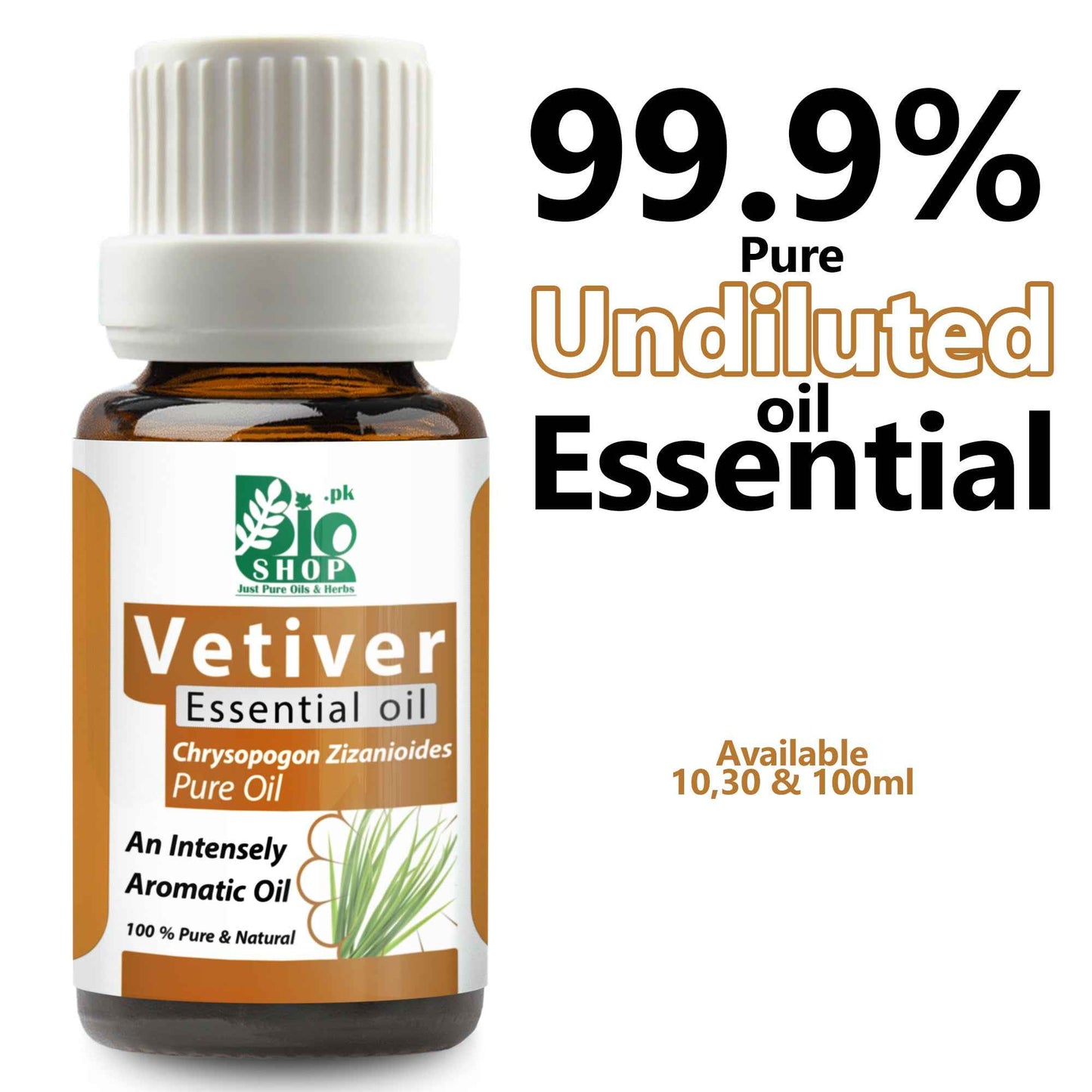
Vetiver Essential Oil
Vetiver Essential Oil
Olfactory Notes: Woody · Earthy · Smoky · Dry · Green · Rooty
Couldn't load pickup availability


Explore
Information About Vetiver Essential Oil
Key Features
✦ 100% natural essential oil steam distilled from Vetiveria zizanioides roots — uncut, cosmetic-grade
✦ Iconic Khus fragrance: deep earthy, smoky, woody, and faintly sweet with exceptional depth
✦ One of perfumery's most powerful natural fixatives — dramatically extends the life of blends
✦ Cornerstone of South Asian attar tradition and a staple base note in fine fragrance globally
✦ Thick, resinous viscosity — a small quantity goes a long way in formulations
✦ Vegan and cruelty-free — 100% plant-derived from sustainably harvested root material
✦ Suitable for fine fragrance, attars, hair oils, body care, incense, and aromatherapy applications
About Vetiver Essential Oil
Vetiver essential oil is extracted from the roots of Vetiveria zizanioides, a perennial grass native to South Asia and widely cultivated in India, Sri Lanka, Haiti, Java, and Réunion. Known across the Indian subcontinent as Khus or Khas-Khas, vetiver holds a central place in traditional perfumery, Ayurvedic practice, and artisan craft. The oil is produced by steam distilling dried, aged, and sometimes fermented roots — a process that yields a thick, viscous, amber to dark brown oil with extraordinary olfactive complexity. The longer the roots age before distillation, the richer and smoother the resulting oil. Each origin produces a subtly distinct profile: Indian vetiver leans earthy and rooty, Haitian vetiver is smokier with floral undertones, and Javanese vetiver is sweeter and woodier.
What sets vetiver apart from nearly every other natural ingredient is the sheer density of its aroma chemical composition. The oil contains over 150 identified sesquiterpene alcohols, acids, and ketones — including vetiverol, khusimol, isovalencenol, and vetivone — that collectively produce an odor profile no synthetic can fully replicate. This complexity is precisely why vetiver remains irreplaceable in classic oriental, chypre, and fougère compositions. It does not simply add a note; it fundamentally deepens, anchors, and extends every element of a blend it touches. Perfumers often describe vetiver as the soil from which a fragrance grows.
Bio Shop Pakistan supplies cosmetic-grade vetiver essential oil suitable for fine fragrance construction, traditional attar blending, DIY hair and body care formulation, artisan incense, and aromatherapy applications.
Olfactory Profile
SCENT DESCRIPTION : Vetiver opens with a raw, rooty earthiness carrying hints of damp soil and dried grass. As it settles, a rich smoky-woody character emerges, layered with subtle green, leather, and faintly sweet balsamic nuances. The drydown is profoundly deep and long-lasting — clean yet primal, grounding, and unmistakably distinctive. It is one of the few naturals with enough character to function as a complete fragrance on its own.
NOTE POSITION : Base Note
FRAGRANCE FAMILY : Woody · Earthy · Oriental
FACETS : Smoky · Rooty · Earthy · Balsamic · Leathery
TENACITY : Very High — 24 to 72+ hours on skin and materials
SILLAGE : Medium to High — rich and enveloping when applied; becomes a quiet but persistent skin scent during drydown
Technical Specifications
Chemical Name : Vetiveria zizanioides Root Oil
CAS Number : 8016-96-4
Synonyms : Khus Oil, Khus-Khus Oil, Vetiver Root Oil, Vetivert Oil
Purity : 100% pure essential oil — no diluents or carriers
Appearance : Thick viscous liquid, amber to dark brown
Odor Threshold : Approximately 0.001 ppm — extremely potent
Solubility : Soluble in alcohol and fixed oils; practically insoluble in water
Specific Gravity : 0.990 – 1.020 at 20°C (verify with supplier CoA)
Flash Point : Approximately 100°C / 212°F (verify with supplier CoA)
Type : Natural — steam distilled essential oil
Applications & Usage Guidelines
Fine Fragrance : ★★★★★
Vetiver is a cornerstone base note in fine perfumery, used across oriental, chypre, fougère, and woody fragrance families. It anchors volatile top notes, extends the life of heart materials, and adds a naturalistic earthiness that elevates sophisticated compositions. Many iconic masculines and unisex fragrances are built around vetiver as a structural pillar.
Attar & Oriental Blending : ★★★★★
In South Asian attar tradition, Khus is one of the most revered ingredients. Vetiver attar — often aged in pure vetiver oil — is a traditional product in its own right. It pairs beautifully with rose, sandalwood, oud, and musk in classical oriental formulations, adding grounding depth that defines the character of the blend.
Hair & Body Care : ★★★★☆
Vetiver has a long history in traditional hair oils and scalp treatments where it is valued for its cooling and tonifying properties. In body lotions and creams, it functions both as a fragrance ingredient and a skin-conditioning agent. Its deep scent profile gives hair and body products a luxurious, natural richness.
Incense & Ceremonial Use : ★★★★★
Vetiver root and its oil are foundational materials in incense traditions across South Asia, the Middle East, and Japan. When incorporated into stick, cone, or resin incense, it produces a rich, deeply meditative smoke note. It is also used in dhoop, bakhoor, and room fragrance formulations.
Aromatherapy : ★★★★☆
Vetiver is considered a deeply grounding, calming, and centering oil in aromatherapy practice. It is often used in diffuser blends and massage oils aimed at stress relief, anxiety reduction, and promoting focus. Its heavy viscosity means it is almost always blended with lighter carrier or essential oils.
IFRA & Usage Rate
RECOMMENDED USAGE RATES
EDP / Parfum : 3.0% – 8.0%
EDT : 1.5% – 4.0%
Body Lotion / Cream : 0.5% – 1.5%
Shampoo / Body Wash : 0.5% – 1.0%
Hair Oil : 1.0% – 3.0%
Reed Diffuser : 5.0% – 15.0% (dilute thoroughly — very viscous)
Incense / Bakhoor : 5.0% – 20.0%
Soap (Cold Process) : 1.0% – 3.0%
IFRA 51ST AMENDMENT LIMITS
Vetiver oil (Vetiveria zizanioides, 8016-96-4) is an IFRA-regulated natural ingredient. The following limits are indicative — always verify current standards at ifrafragrance.org.
IFRA Category 4 (Body Lotion, Cream) : 0.46%
IFRA Category 5A (Fine Fragrance) : No established restriction at standard usage
IFRA Category 8A (Rinse-off, Shampoo) : 3.7%
IFRA Category 9 (Soap) : 3.7%
IFRA Category 11A (Textile) : No restriction
IFRA Category 12 (Candle, Non-skin) : No restriction
⚠️ Always check the IFRA 51st Amendment certificate for your specific origin and batch. Potency and restricted component levels can vary by geographic origin of the oil.
⚠️ Vetiver oil is thick and viscous at room temperature. Warm gently in a water bath before measuring to ensure accurate dosing.
⚠️ Patch test recommended for leave-on skin applications — individual sensitivity to natural root oils varies.
Blending Guide
METHOD 1 — DISSOLVING FOR ALCOHOL-BASED PERFUME
Vetiver's extreme viscosity requires careful handling. Warm the vetiver oil gently in a sealed container using a water bath at 35–40°C before measuring. Once fluid, add it to the perfumer's alcohol first before incorporating other materials. This prevents the oil from clumping or adhering to container walls. Always filter the final blend through a fine mesh or coffee filter before bottling to ensure clarity.
METHOD 2 — PREMIXING IN A CARRIER OIL BASE
For body oils, hair oils, and lotions, pre-dissolve vetiver oil in a light carrier such as fractionated coconut oil or jojoba at a 1:10 ratio before adding to the formulation batch. This ensures even dispersion, eliminates the risk of unsightly dark spots, and makes measuring much easier for small-batch work.
METHOD 3 — BLENDING FOR INCENSE AND BAKHOOR
In solid incense and bakhoor applications, vetiver pairs naturally with dry base powders such as sandalwood powder, benzoin resin, and makko (tabunoki) binder. Absorb the vetiver oil into a dry powder carrier first, allow it to rest for 24 hours to equalize, then blend with remaining materials. This prevents oil concentration spots and produces a more uniform, even-burning product.
BEST PAIRINGS
Sandalwood (Mysore or Australian) → Creates classic woody-earthy accord; deeply grounding
Rose Absolute / Rose Otto → Earthy-floral contrast; timeless oriental richness
Patchouli → Amplifies dark earthy depth; intensifies tenacity
Oud / Agarwood → Deep oriental powerhouse; core of many khus-oud attars
Bergamot / Lemon → Bright citrus lifts vetiver's heaviness; fresh-woody balance
Geranium → Adds green rosy clarity to vetiver's darkness
Jasmine Absolute → Rich floral against earthy base; complex and sensual
Cedarwood (Atlas or Virginia) → Warm dry wood structure complements vetiver's smokiness
Ylang Ylang → Creamy exotic flower tames vetiver's rawness
Black Pepper Essential Oil → Spicy sharpness cuts through and animates the earthy base
Labdanum / Cistus → Adds animalic, ambery warmth; deepens oriental facets
Benzoin Resinoid → Vanilla-balsamic sweetness rounds vetiver's rough edges
AVOID
Vetiver can overwhelm delicate light florals such as muguet, violet, or delicate aquatics if overused. Keep vetiver concentrations measured in these contexts. Avoid combining with synthetic musks that have sharp synthetic character at high ratios — the contrast can produce an unpleasant dissonance rather than harmony.
Perfumer's Note
Working with vetiver is one of the most humbling and rewarding experiences in natural perfumery. It is not a polite ingredient — it does not blend softly into the background. Vetiver announces itself, insists on presence, and then slowly transforms everything around it. I have seen a single percentage point of vetiver shift an entire fragrance from thin and forgettable to dense, complex, and memorable. The earthy smokiness reads differently on every person who wears it, which is one of the properties I find most fascinating. It interacts with skin chemistry in an unusually dynamic way, making vetiver-forward fragrances feel genuinely personal and almost bespoke in character.
ADVANCED TIP : To extract the smoother, more refined facets of vetiver and reduce the sharp raw-root harshness that can read as medicinal, try an extended maceration technique. Combine your vetiver oil with a small quantity of benzyl benzoate (a natural isolate and common carrier) at a 1:3 ratio and allow the mixture to rest sealed for two weeks at room temperature. The benzyl benzoate acts as a selective solvent and modifier — it softens the harsher vetivone-family compounds while allowing the smooth woody-earthy sesquiterpene alcohols to dominate. The result is a noticeably more refined, polished vetiver note that sits more easily in fine fragrance compositions without losing its characteristic depth.
Safety & Storage
Physical State : Thick viscous liquid; may semi-solidify in cold conditions — warm before use
Skin Safety : Dilute before all skin applications — do not apply undiluted to skin
Eye Contact : Avoid contact — flush with clean water immediately if contact occurs
Ingestion : Not for internal use — keep away from children
Ventilation : Use in a well-ventilated space — concentrated vapor can cause headache
Storage : Store in a cool, dark location away from heat, light, and humidity
Shelf Life : 3 to 5 years when properly stored; vetiver actually improves with age
Container : Store in original amber glass or dark HDPE bottles; tightly sealed
Flammability : Flash point approximately 100°C — combustible; keep away from open flame
FAQ
Q: What is vetiver essential oil and where does it come from?
A: Vetiver is a natural essential oil steam distilled from the dried roots of the grass Vetiveria zizanioides. It is grown primarily in India, Haiti, Java, and Sri Lanka. The South Asian variety is also known as Khus oil and has been used in traditional perfumery and Ayurvedic practice for thousands of years.
Q: Why is my vetiver oil so thick and dark? Is it normal?
A: Yes, completely normal. Vetiver essential oil is naturally one of the thickest and darkest essential oils available. Its high viscosity comes from a dense concentration of sesquiterpene compounds. Warm the bottle gently in a water bath before measuring to make it easier to work with.
Q: Can I use vetiver oil directly on my skin?
A: No — vetiver should always be diluted before skin contact. Typical dilution is 1–3% in a carrier oil for body application and 0.5% or below in leave-on cosmetics. Always perform a patch test first as individual sensitivity to natural root oils can vary.
Q: How much vetiver should I use in a perfume blend?
A: Vetiver is highly potent — a little goes a long way. In an EDP, 3–8% is standard for a vetiver-forward effect; 1–3% works as a supporting base note without dominating. Start low, evaluate the blend over 24–48 hours, and increase only if needed. It continues to unfold well beyond the initial blending session.
Q: How does vetiver essential oil compare to vetiver aroma chemicals like Vetiverol or Vetiveryl Acetate?
A: Natural vetiver oil contains over 150 identified compounds that collectively produce its complex, irreplaceable character — no single aroma chemical can replicate this. Vetiverol and Vetiveryl Acetate are natural isolates derived from vetiver that offer specific facets (clean woody, soft earthy) in a more controlled, predictable form. Perfumers often use both — the natural oil for richness and character, and the isolates for fine-tuning specific aspects of the woody-earthy accord or improving stability in challenging applications.
Where Can You Safely Use Vetiver Essential Oil?
Discover how Vetiver Essential Oil performs across different applications—rated for safety, stability, and effectiveness.
Wonderful pleasant aroma mix of deep earthiness with woody character
Rich EOs - (Essential oils) Perfect for any use and highly potent
Good quality. Seems pure and real essential oil
Quality good


