Skip to product information
1 of 3

Bio Shop

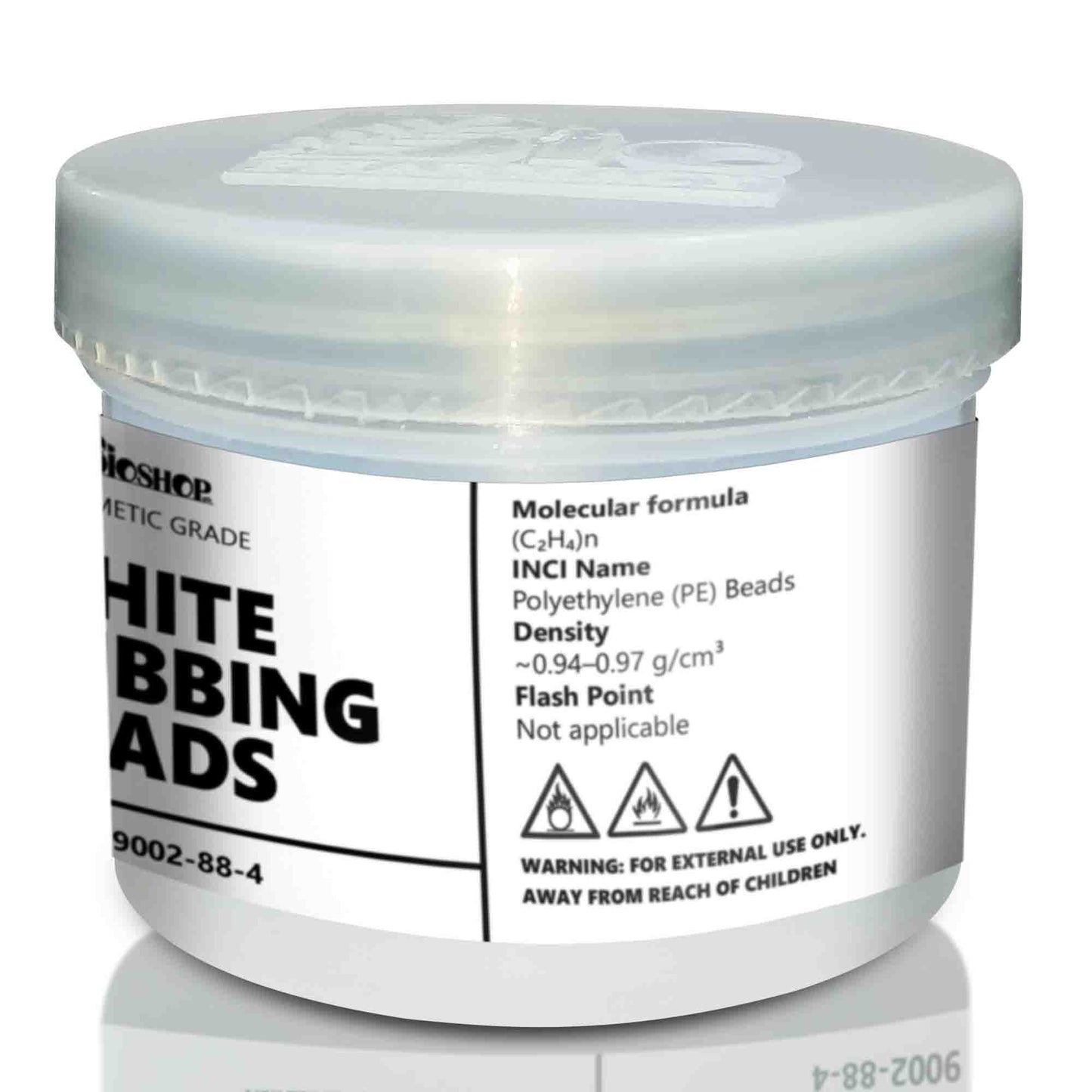
White Scrubbing Beads

White Scrubbing Beads

Regular price Rs.250.00
Regular price Sale price Rs.250.00
Sale Sold out
Shipping calculated at checkout.

Key Functions: Physically exfoliates, smooths skin texture, enhances cleansing, and improves product aesthetics.

Weight
Quantity
🚚 Estimated delivery time:
Learn More About This Ingredient View full details

Explore

Information About White Scrubbing Beads

✅ Key Features

✦ Provides uniform, controlled physical exfoliation without micro-tears or irritation
✦ Chemically inert spherical beads that do not react with other cosmetic ingredients
✦ Ideal for face scrubs, body polishes, exfoliating cleansers, and foot care formulations
✦ Available in multiple particle sizes allowing formulators to customize exfoliation intensity
✦ Maintains shape and integrity during mixing, filling, and end-use application
✦ Compatible with anionic, nonionic, cationic, and amphoteric surfactant systems
✦ White opaque appearance adds visual appeal and professional finish to scrub products

🔬 Description

White scrubbing beads are spherical polyethylene particles developed specifically for use as physical exfoliants in personal care and cosmetic products. Polyethylene beads have been used in the cosmetics industry for decades as a reliable mechanical exfoliant, valued for their perfectly round shape that buffs away dead skin cells without causing micro-abrasions. They became a standard ingredient in commercial scrubs, cleansers, and polishing treatments due to their consistency, safety, and ease of formulation.

What makes white scrubbing beads particularly useful to formulators is their complete chemical inertness. Unlike natural exfoliants such as walnut shell powder or apricot kernel fragments, polyethylene beads have no sharp edges, no enzymatic activity, and no interaction with the surrounding formula matrix. This means they can be incorporated into virtually any cosmetic base — from surfactant-rich cleansers to emulsion-based creams — without affecting pH, viscosity, or preservative efficacy. Their uniform particle size distribution ensures a predictable and repeatable sensory experience batch after batch.

Bio Shop Pakistan supplies cosmetic-grade white scrubbing beads suitable for DIY beauty enthusiasts, independent skincare brand owners, and professional cosmetic formulators.

📊 Technical Data

INCI Name : Polyethylene
Chemical Name : Polyethylene (low-density or high-density homopolymer)
CAS Number : 9002-88-4
Molecular Formula : (C2H4)n
Appearance : White to off-white spherical beads
Odor : Odorless
pH (1% solution) : Not applicable (insoluble solid)
Solubility : Insoluble in water; resistant to most solvents at room temperature
Specific Gravity : 0.91 to 0.96
Flash Point : Not applicable under normal cosmetic use conditions
HLB Value : Not applicable
Recommended Use Level : 1% to 10% depending on product type and desired exfoliation
Type : Physical exfoliant / Mechanical abrasive
Shelf Life : Indefinite when stored properly (chemically stable polymer)

🧪 Recommended Usage

Skincare (Creams, Serums, Lotions)
★★★★★
White scrubbing beads are a core ingredient in exfoliating face creams and cleansing lotions where gentle yet effective dead-skin removal is needed. Use at 2% to 5% in cream-based facial exfoliants, adding beads to the cooled formula after emulsification to preserve bead integrity.

Body Care (Scrubs, Butters, Balms)
★★★★★
Body scrubs are the primary application for these beads, where higher concentrations deliver satisfying exfoliation on thicker skin. Incorporate at 5% to 10% in sugar or oil-based body polish formulations for a luxurious dual-texture scrub.

Cleansing Products (Face Wash, Shower Gel)
★★★★☆
Polyethylene beads suspend well in surfactant-based cleansers and provide visible exfoliating action during use. Add at 1% to 4% to gel or cream cleansers, ensuring the base viscosity is sufficient to prevent bead settling.

Foot Care (Scrubs, Exfoliating Soaks)
★★★★★
The durable bead structure handles the aggressive scrubbing required for callused or rough foot skin. Use at 5% to 10% combined with pumice powder or urea for intensive foot exfoliation treatments.

Soap Making (Melt and Pour)
★★★☆☆
Beads can be stirred into melt-and-pour soap bases for decorative and mild exfoliating effect, though they tend to sink during setting. Add beads at trace temperature and pour quickly into molds, or layer thin pours to keep beads distributed.

💡 Pro Tip

In my formulation work, the single biggest mistake I see with scrubbing beads is adding them to a base that is too hot or too thin. Heat above 70°C can deform polyethylene beads, and a low-viscosity base lets them settle to the bottom of the container within days. I always add beads as the very last step in production, once the base has cooled below 40°C, and I ensure the base viscosity is high enough to suspend the particles permanently. The visual distribution of beads throughout the product is half the consumer appeal — nobody wants to unscrew a jar and see all the beads sitting at the bottom.

ADVANCED TIP: To achieve uniform bead suspension in emulsion-based scrubs, thicken your base to a minimum viscosity of 15,000 to 25,000 cP using a combination of Carbomer 940 at 0.3% and Xanthan Gum at 0.2% before folding in the beads at 35°C to 40°C with gentle paddle mixing at 50 to 80 RPM. This prevents air incorporation while locking beads in place.

👩‍🔬 Skin Type Suitability

Normal Skin : ★★★★★ — Provides effective exfoliation without disrupting the skin barrier.
Dry Skin : ★★★★☆ — Removes flaky buildup to improve moisturizer absorption, but use in hydrating bases only.
Oily Skin : ★★★★★ — Helps clear pore-clogging dead cells and improves skin texture when used regularly.
Combination : ★★★★☆ — Best used on the T-zone or oilier areas with lighter pressure on drier zones.
Sensitive Skin : ★★☆☆☆ — Physical exfoliation can trigger irritation and redness in reactive skin types.
Mature Skin : ★★★☆☆ — Use at low concentrations only as aged skin is thinner and more prone to mechanical damage.
Acne-Prone : ★★☆☆☆ — Over-exfoliation can worsen inflammation and spread bacteria across active breakouts.

🧴 Formulation Ideas

CONCEPT 1: Brightening Papaya Face Scrub
Usage Level : 3%
Key Ingredients: Papaya Enzyme Extract, Glycerin, Cetearyl Alcohol, Niacinamide
Result : A cream-based facial scrub that combines enzymatic and physical exfoliation for visibly brighter, smoother skin after one use.

CONCEPT 2: Coconut Vanilla Body Polish
Usage Level : 8%
Key Ingredients: Coconut Oil, Shea Butter, Vitamin E, Vanilla Fragrance Oil
Result : A rich oil-based body scrub that buffs away rough skin while leaving a deeply moisturized, lightly scented finish.

CONCEPT 3: Charcoal Deep Cleansing Face Wash
Usage Level : 2%
Key Ingredients: Activated Charcoal, Cocamidopropyl Betaine, Sodium Cocoyl Isethionate, Aloe Vera Extract
Result : A daily charcoal cleanser with mild scrubbing action that unclogs pores and removes excess oil without stripping the skin.

💧 Safety and Regulatory:

INCI Declared : Yes — Polyethylene must be listed on product labels
EU Cosmetics Reg : Permitted — no concentration limit for cosmetic use as exfoliant
Rinse-Off Limit : No specific limit established (typically 1% to 10%)
Leave-On Limit : Not recommended for leave-on products (no exfoliation benefit without rinsing)
Allergen Alert : No — polyethylene is non-allergenic and non-sensitizing
Skin Safety : Safe at recommended levels when used in rinse-off formulations
Eye Area Use : Avoid — beads can cause mechanical irritation to the eye area
Ingestion : Not for internal use
Pregnancy Use : Safe for external cosmetic use
Child Safety : Avoid for children under 3 years; use diluted for ages 3 and above
Ventilation : Not required (non-volatile solid)
Storage : Cool dry place away from direct sunlight and heat sources above 60°C
Container : HDPE, PET, or glass — no special container requirements

⚠️ Environmental Note: Polyethylene microbeads have been banned or restricted in rinse-off cosmetics in several markets including the EU, UK, USA, Canada, and others due to microplastic pollution concerns. Formulators selling internationally should verify current regulations in their target market and consider biodegradable alternatives such as cellulose beads, jojoba esters, or rice bran wax beads for export products.

Stability and Compatibility

Working pH Range : 2.0 to 12.0 (chemically inert across the full cosmetic pH range)
Heat Stability : Stable up to 70°C; add below 45°C to prevent bead deformation
Freeze-Thaw Stable : Yes — beads are unaffected, though the surrounding base may separate
Emulsion Type : Compatible with O/W, W/O, and anhydrous systems
Emulsification Phase: Add to cooled phase after emulsification is complete
Compatible With : Surfactants (all types), emollients, humectants, preservatives, thickeners
Incompatible With : No known chemical incompatibilities; avoid prolonged contact with strong organic solvents
Oxidation Risk : None — polyethylene does not oxidize under cosmetic storage conditions
Discoloration Risk : None under normal conditions; may yellow if exposed to prolonged UV light in clear packaging
Formulation Notes : Always add beads post-emulsification below 45°C with gentle mixing to avoid air entrapment and bead damage. Ensure base viscosity supports long-term suspension to prevent settling during shelf life.

❓ FAQs

Q: What particle size of white scrubbing beads should I use for facial scrubs versus body scrubs?
A: For facial scrubs, use fine beads in the 200 to 500 micron range for gentle exfoliation. For body scrubs, larger beads in the 500 to 1000 micron range provide more aggressive buffing suitable for thicker skin on the body.

Q: Will scrubbing beads affect the pH or preservative system of my formula?
A: No. Polyethylene is completely chemically inert and does not interact with acids, bases, preservatives, or actives. Your existing preservative system and pH will remain unchanged after adding beads.

Q: How do I prevent the beads from sinking to the bottom of my product?
A: Increase your base viscosity to at least 15,000 cP using thickeners like Carbomer or Xanthan Gum before adding beads. A thicker base traps the beads in a suspended matrix and prevents migration during storage.

Q: Can I use white scrubbing beads in cold process soap?
A: It is not recommended. The high pH of raw cold process soap batter is not an issue for polyethylene, but the beads tend to migrate during saponification and gel phase. Melt-and-pour soap with quick pours works better for bead distribution.

Q: How do white scrubbing beads compare to natural exfoliants like walnut shell powder?
A: Polyethylene beads are perfectly spherical, providing uniform exfoliation without micro-tears, while walnut shell powder has jagged irregular edges that can scratch and damage skin. However, natural exfoliants are biodegradable, making them environmentally preferable for rinse-off products in markets with microplastic restrictions.

Where Can You Safely Use White Scrubbing Beads

Discover how White Scrubbing Beads performs across different products — rated for safety, stability, and effectiveness.

Skincare
Serums
0
Not Recommended
Creams & Lotions
7
Reasonable
Eye Creams
0
Not Recommended
Face Masks
8
Good
Cleansers
9
Very Good
Toners
0
Not Recommended
Lip Balms
0
Not Recommended
Ointments
0
Not Recommended
Body & Hair Care
Body Butters
8
Good
Shampoos
6
Fair
Conditioners
0
Not Recommended
Hair Masks
0
Not Recommended
Soap & Specialty
Soaps
5
Mediocre
Deodorants
0
Not Recommended