


Bio Shop
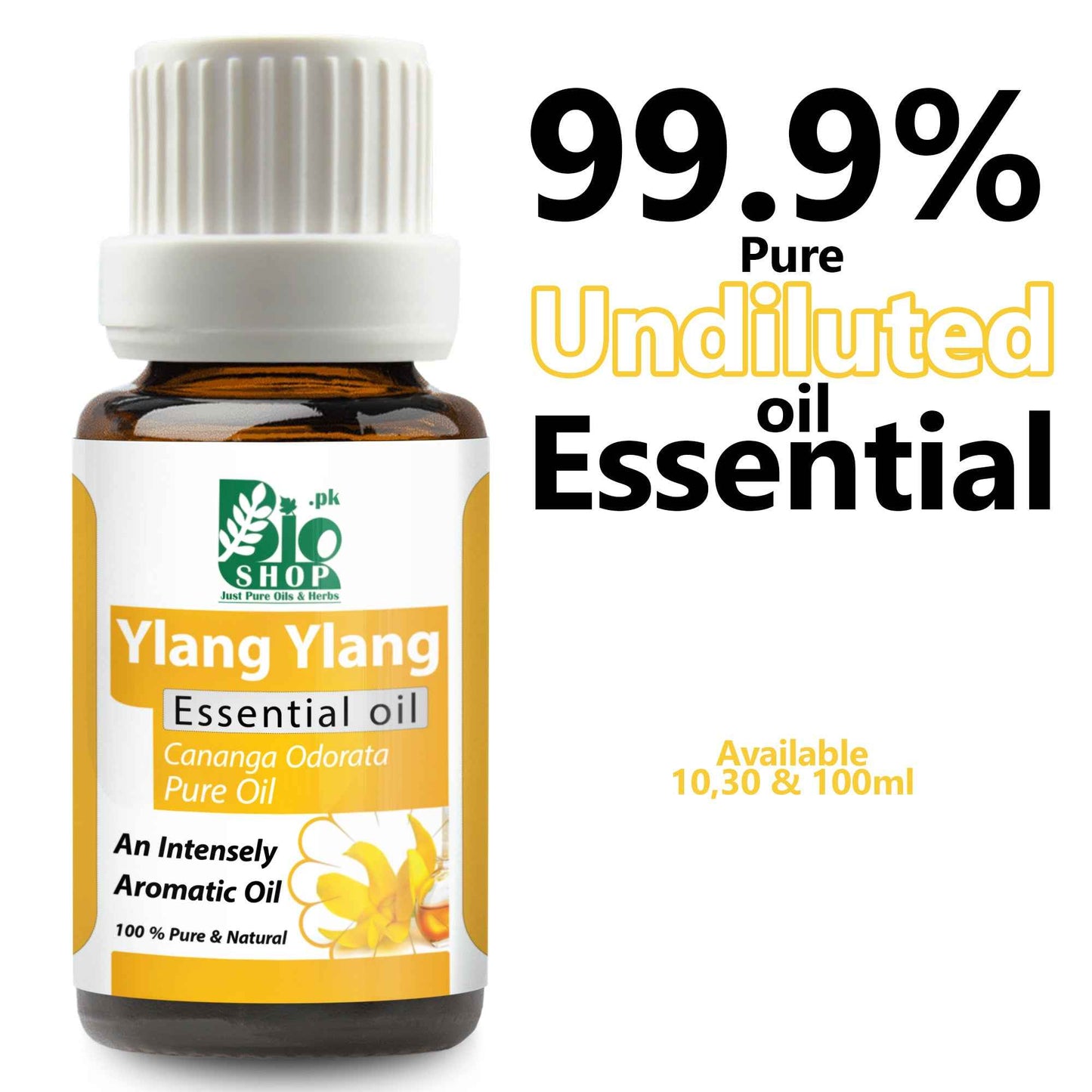
Ylang Ylang Essential oil
Ylang Ylang Essential oil
Olfactory Notes: Exotic · Floral · Sweet · Creamy · Slightly Spicy · Rich
Couldn't load pickup availability


Explore
Information About Ylang Ylang Essential oil
Key Features
✦ Pure steam-distilled essential oil from Cananga odorata flowers — uncut, undiluted, cosmetic grade
✦ Iconic floral heart note used in classic fine fragrances, oriental attars, and modern chypre compositions
✦ Naturally rich in linalool, benzyl acetate, and farnesol for complex, long-lasting floral depth
✦ Valued in hair care formulations for its traditional use in promoting scalp health and adding shine
✦ Skin-compatible at correct dilutions — widely used in facial oils, body butters, and massage blends
✦ 100% natural, vegan, and cruelty-free with no synthetic additives or carriers
✦ Suitable for soap making, candles, reed diffusers, and functional home fragrance applications
About Ylang Ylang Essential oil
Ylang Ylang Essential Oil is obtained by steam distillation of the flowers of Cananga odorata, a fast-growing tropical tree belonging to the Annonaceae family. The name "ylang ylang" derives from a Tagalog phrase meaning "flower of flowers," and the oil has been used for centuries in Southeast Asian traditions — most famously in Makassar oil, a hair treatment used by Indonesian and Filipino women. In the Western fragrance world, it gained iconic status in the early twentieth century when it became a central component of classic French perfumes and continues to define the floral oriental genre to this day.
What sets Ylang Ylang apart from other floral oils is its extraordinary complexity. Unlike single-molecule florals, it contains dozens of naturally occurring aromatic compounds spanning creamy esters, fresh terpenols, spicy phenols, and waxy green facets, all layered within a single oil. The distillation process is fractioned into grades — Extra, Grade I, Grade II, Grade III, and Complete — each offering a different aromatic emphasis. Extra is the most refined and top-note dominant, while Complete is the full distillation and carries the greatest complexity and depth. This versatility makes it one of the most adaptable natural raw materials available to formulators.
Bio Shop Pakistan supplies cosmetic-grade Ylang Ylang Essential Oil suitable for DIY perfumers, attar blenders, soap makers, candle crafters, hair care formulators, and independent cosmetic developers seeking a premium natural floral ingredient for their product lines.
Olfactory Profile
SCENT DESCRIPTION : Ylang Ylang opens with a heady, narcotic sweetness that is simultaneously creamy and fruity — evoking ripe banana and fresh tropical flowers. As it unfolds, a rich jasmine-like floral core emerges, edged with subtle rubber, spice, and a powdery green transparency. The dry-down settles into a warm, slightly balsamic, and deeply sensual base that lingers on skin for hours. It is one of the most recognizable and complex natural floral materials in existence.
NOTE POSITION : Top-Mid (the freshest facets register as top notes; the creamy floral heart persists well into the mid stage)
FRAGRANCE FAMILY : Floral · Oriental · Tropical
FACETS : Creamy · Narcotic · Banana-like · Jasmine-adjacent · Spicy-sweet
TENACITY : High — 8 to 12 hours on skin; significantly longer on fabric
SILLAGE : High — projects prominently and fills the room at normal perfumery usage rates; should be used with restraint in skin-applied formulas
Technical Specifications
CHEMICAL NAME : Cananga odorata flower oil
CAS NUMBER : 8006-81-3
SYNONYMS : Ylang oil, cananga oil, ylang ylang oil complete, flower of flowers oil
PURITY : 100% pure essential oil — no carrier, no dilution
APPEARANCE : Clear to pale yellow mobile liquid
ODOR THRESHOLD : Extremely low — detectable at trace concentrations; use with precision
SOLUBILITY : Soluble in alcohol and fixed oils; not soluble in water
SPECIFIC GRAVITY : 0.906 – 0.932 at 20°C (verify with supplier CoA)
FLASH POINT : Approximately 77°C (verify with supplier CoA)
TYPE : Natural — steam distilled from fresh Cananga odorata flowers
Applications & Usage Guidelines
Fine Fragrance : ★★★★★
Ylang Ylang is a classic fine fragrance ingredient found in oriental, floral oriental, chypre, and tropical composition families. It provides a natural, narcotic floral heart that synthetic materials struggle to fully replicate. Use at controlled rates as it can dominate an accord very quickly.
Attar & Oriental Blending : ★★★★★
One of the most important ingredients in traditional attar and mukhallat construction. It blends seamlessly with oud, rose, musk, sandalwood, and spice accords. It is widely used in South Asian and Middle Eastern perfumery as a central floral pillar.
Hair Care Formulation : ★★★★☆
Ylang Ylang has a long tradition of use in hair oils, scalp treatments, and conditioning blends. At low dilutions in carrier oils such as coconut or argan, it contributes both fragrance and a reputation for scalp-balancing activity. It is a standard ingredient in artisan hair care lines.
Cosmetics & Skincare : ★★★☆☆
Usable in body butters, facial oils, massage blends, and bath products at low dilutions. Skin sensitization potential at higher concentrations requires strict adherence to IFRA limits. Avoid use on broken, reactive, or hypersensitive skin.
Home Fragrance : ★★★★☆
Performs well in reed diffusers, wax melts, and incense blends. Candles require testing as the oil's natural complexity can morph unpredictably under heat. Adds a lush tropical floral character to home fragrance compositions.
IFRA & Usage Rate
EDP (Eau de Parfum) : 2.0 – 4.0%
EDT (Eau de Toilette) : 1.0 – 2.5%
Body Lotion / Cream : 0.5 – 0.8% (IFRA-guided)
Shampoo / Body Wash : 0.8 – 1.5%
Bar Soap : 0.8 – 1.5%
Candle : 3.0 – 6.0%
Reed Diffuser : 10.0 – 20.0%
IFRA 51ST AMENDMENT LIMITS
(Cananga odorata flower oil — verify current version at ifrafragrance.org)
Category 1 (Lip products) : 0.02%
Category 4 (Fine fragrance) : No quantitative limit listed — use responsibly
Category 5 (Leave-on body, face) : 0.8%
Category 7 (Rinse-off hair products) : 1.1%
Category 8 (Shampoo, body wash) : 1.5%
Category 9 (Soap, bar soap) : 1.5%
Category 10 (Fabric conditioner) : 1.4%
Category 11 (Candle, non-skin contact) : No restriction listed
⚠️ Ylang Ylang Essential Oil is a known skin sensitizer at elevated concentrations. Always dilute to recommended levels before skin application. Conduct patch testing before use in any leave-on formulation. Do not apply undiluted to skin.
⚠️ IFRA limits provided are indicative. Always verify the latest 51st Amendment certificate at ifrafragrance.org before commercial formulation. Isoeugenol content in natural ylang ylang oil is subject to regulatory attention.
Blending Guide
USAGE METHOD 1 — DIRECT DILUTION IN CARRIER OIL
For hair and body applications, dilute Ylang Ylang at 0.5 to 1.0% in a lightweight carrier such as fractionated coconut oil, jojoba, or argan oil. This is the most traditional method and the safest for skin-contact formulas. Mix thoroughly and allow the blend to rest for 24 hours before final assessment.
USAGE METHOD 2 — ACCORD BUILDING IN ALCOHOL
When constructing perfume accords, introduce Ylang Ylang as a heart note material after fixing the base. Start at 0.5% of the total formula and scale up incrementally. Because of its strong sillage and low odor threshold, over-addition is one of the most common formulation errors with this ingredient. Build slowly.
USAGE METHOD 3 — BLENDING INTO WAX OR DIFFUSER BASE
For candles and reed diffusers, add Ylang Ylang at the final blending stage after the base wax has cooled to around 60°C, or blend directly into a dipropylene glycol or isopropyl myristate diffuser base. Combine with lighter citrus or woody notes to balance its intensity.
BEST PAIRINGS
Rose Absolute / Rose Otto → Creates a classic romantic floral accord with depth and naturality
Jasmine Absolute → Amplifies the narcotic floral character; use sparingly with both
Sandalwood (Mysore / Australian) → Adds creamy warmth and smooths the sharper spicy facets
Vetiver → Grounds the sweetness and creates a sophisticated earthy contrast
Patchouli → Oriental anchor that balances the tropical sweetness
Bergamot → Brightens the top and lifts the overall freshness of the blend
Oud / Agarwood → Classic attar combination; both materials share a rich animalic depth
Clove Bud EO → Reinforces the natural spicy phenolic facet already present in ylang
Cedarwood (Atlas / Virginia) → Adds a dry woody frame that prevents the blend from becoming too sweet
Linalool → Smooths transitions and adds a clean soapy-floral bridge
AVOID
Using Ylang Ylang at high concentrations alongside other strong narcotic florals such as tuberose absolute or narcissus absolute — the combination can become overwhelming and headache-inducing in wearable quantities. Also avoid high-temperature processing above 80°C in candle applications as the oil's more delicate top facets will be lost.
Perfumer's Note
Ylang Ylang is one of those raw materials that beginning formulators routinely overuse and experienced perfumers treat with the deepest respect. The first time you smell it, the temptation is to add more — it is intoxicating, lush, and immediately beautiful. But this oil is deceptive. At 3% it is a gorgeous tropical floral. At 6% it starts to dominate the entire composition. At 10% it becomes something close to nauseating for most people. The true skill with Ylang Ylang is learning how little of it you actually need. In many of the great classic fragrances where it plays a starring role, it sits between 1% and 3% of the total formula — enough to define the composition without overwhelming it.
ADVANCED TIP : Try micro-dosing Ylang Ylang at 0.1 to 0.3% in fresh citrus or aquatic accords where you have no intention of creating a floral note at all. At these trace levels it acts as a natural blender and softener — smoothing harsh edges, adding a subtle warmth and sillage, and preventing synthetic accords from smelling flat or sharp. This technique is used in many commercial fresh masculines to add depth without the wearer or even many trained noses identifying any floral presence.
Safety & Storage
PHYSICAL STATE : Liquid
SKIN SAFETY : Dilute before any skin application. Maximum concentration as per IFRA 51st Amendment by product category. Not for undiluted skin application. Patch test recommended.
EYE CONTACT : Avoid contact with eyes. In case of contact rinse thoroughly with water for 15 minutes and seek medical advice.
INGESTION : Not for internal use. If ingested accidentally seek immediate medical attention.
VENTILATION : Use in a well-ventilated area. Avoid prolonged direct inhalation of undiluted oil.
STORAGE : Store in a cool, dark location away from heat and direct sunlight. Ideal temperature 10–20°C.
SHELF LIFE : 2 to 3 years when stored correctly in sealed container. Natural oils oxidize over time and oxidized oil has increased sensitization potential.
CONTAINER : Store in dark glass (amber or violet) or stainless steel. Avoid plastic containers for long-term storage.
FLAMMABILITY : Combustible liquid. Flash point approximately 77°C. Keep away from open flame during handling and blending.
FAQ
Q: What grade of Ylang Ylang Essential Oil is this?
A: Bio Shop Pakistan supplies Ylang Ylang Complete unless otherwise stated. Complete grade contains the full distillation profile and offers the most balanced and complex aromatic character for both perfumery and cosmetic use.
Q: Can I apply Ylang Ylang directly to my skin or hair?
A: No. Always dilute before skin application. For hair oils dilute at 0.5 to 1.0% in a carrier oil such as coconut or jojoba. Undiluted application can cause sensitization and skin reactions.
Q: How much should I use in an attar or mukhallat blend?
A: Start at 1 to 2% of your total formula and evaluate after 24 hours of maceration. Ylang Ylang has very strong projection and can quickly dominate a blend. Build incrementally rather than adding large quantities upfront.
Q: Is Ylang Ylang Essential Oil safe for candles?
A: Yes, it can be used in candles and is not restricted by IFRA for non-skin-contact applications. Use at 3 to 6% in wax. Add it at low temperature during blending to preserve the lighter top facets of the oil.
Q: How does Ylang Ylang Essential Oil compare to Cananga Oil?
A: Both come from Cananga odorata but Cananga oil is typically produced in bulk from lower-grade or later distillate fractions and has a coarser, more rubbery, and less refined scent profile. Ylang Ylang Extra and Complete grades are more refined, smoother, and significantly more complex — and are the standard for fine fragrance and cosmetic applications. Cananga oil is typically used in industrial fragrance and household products where cost outweighs quality.
Where Can You Safely Use Ylang Ylang Essential oil?
Discover how Ylang Ylang Essential oil performs across different applications—rated for safety, stability, and effectiveness.
Such a great fragrance I love this fragrance and also remove depression and get a fresh breath in ever drop
Garmi wali oil lagti hai but sardiyon mein bhi diffuser mein ekdum cozy aur warm feel deta hai. Versatile oil hai. Pure aur genuine quality. Bio Shop se dobara zaroor lunga.
Ylang ylang tuberose accord aur musk ko DPG mein blend kiya. Ek stunning feminine attar bana. Khushbu bohot unique aur long lasting thi on skin. Bio Shop oils ki quality se ab regular customer hoon.
Exotic aur floral. Pasand aaya.
Surprisingly ylang ylang oily skin ke liye bhi helpful hai. Diluted use karne se sebum production balance hoti hai. Jojoba mein 1% use kiya. Skin better feel karti hai. Bio Shop quality pe full confidence.


