Bio Shop
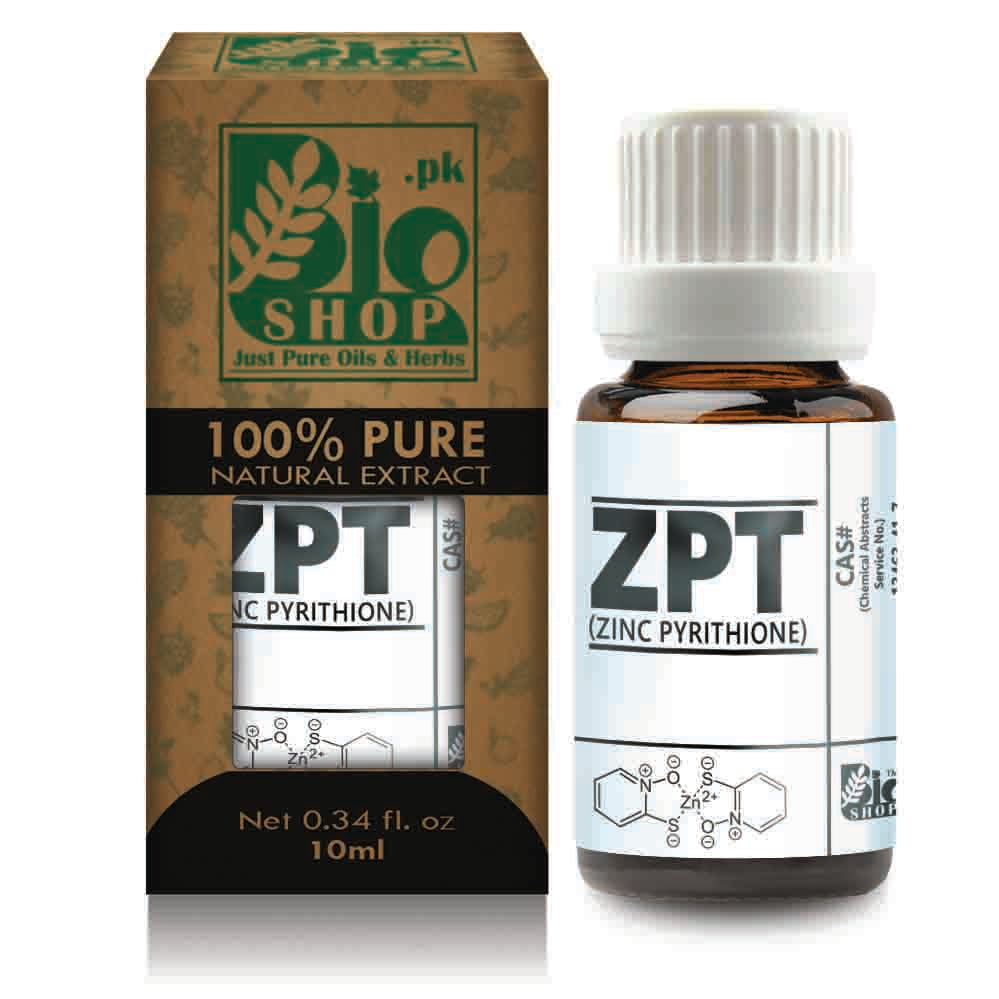
Zinc Pyrithione
Zinc Pyrithione
Key Functions: Acts as an antimicrobial, antifungal, and anti-dandruff agent in cosmetic formulations.
Couldn't load pickup availability
Explore
Information About Zinc Pyrithione
✅ Key Features
✦ Clinically proven anti-dandruff active that targets Malassezia fungi — the primary cause of scalp flaking and seborrheic dermatitis.
✦ Broad-spectrum antimicrobial efficacy against both fungi and gram-positive and gram-negative bacteria in rinse-off systems.
✦ Regulates sebum overproduction on the scalp, reducing greasiness and buildup between washes.
✦ Suitable for rinse-off shampoos, scalp treatments, antifungal body washes, and medicated bar soaps.
✦ Effective at low concentrations of 0.3% to 1.0% in rinse-off formulations — cost-efficient active.
✦ Synthetically derived and not animal-derived — compatible with vegan cosmetic formulations.
✦ White fine powder with negligible odor, easy to disperse into aqueous and surfactant-based systems.
🔬 Description
Zinc Pyrithione (INCI: Zinc Pyrithione; CAS 13463-41-7) is a clinically proven antimicrobial and antifungal active with decades of use in cosmetic formulations targeting dandruff, seborrheic dermatitis, and scalp fungal conditions. Chemically classified as a zinc complex of pyrithione, it works by disrupting the membrane function and ion transport mechanisms of Malassezia species — the primary fungi responsible for scalp flaking and greasiness. Its key cosmetic applications include anti-dandruff shampoos, rinse-off scalp treatments, antifungal body washes, and medicated cleansing formulations. Zinc pyrithione is effective at concentrations between 0.3% and 1.0% in rinse-off products and delivers secondary sebum-regulating benefits alongside its core antifungal action. It is one of the most extensively studied actives in professional hair care formulation, valued for its dual antifungal and antibacterial spectrum. Its fine powder form allows straightforward incorporation into aqueous and surfactant-based systems when pre-dispersed correctly. Bio Shop Pakistan supplies cosmetic-grade Zinc Pyrithione to professional formulators, cosmetic chemists, and advanced DIY creators developing anti-dandruff and medicated rinse-off hair and body care products.
📊 Technical Data
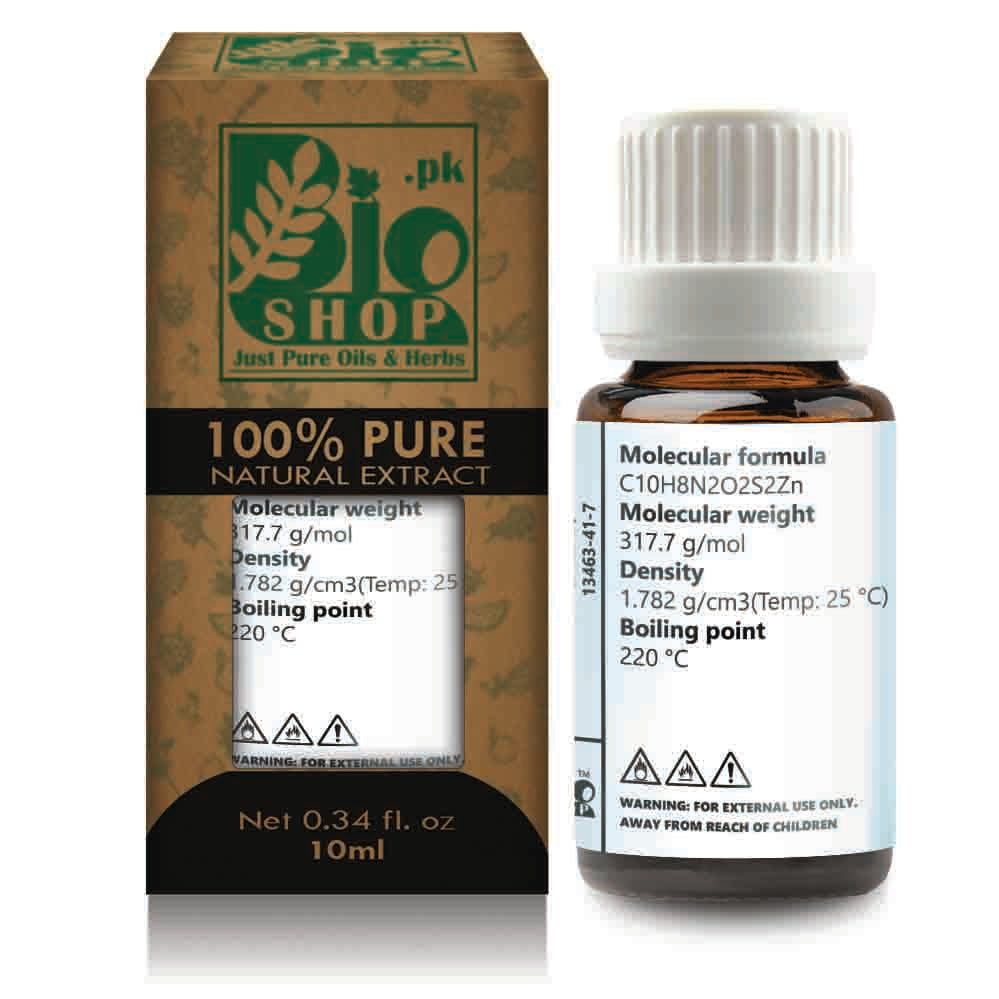
INCI Name : Zinc Pyrithione
Chemical Name : Bis(2-pyridinethiol 1-oxide) zinc
CAS Number : 13463-41-7
Molecular Formula : C10H8N2O2S2Zn
Appearance : White to off-white fine crystalline powder
Odor : Odorless to faint characteristic odor
pH (1% solution) : 6.0 to 7.5 (aqueous dispersion)
Solubility : Very slightly soluble in water; dispersible with agitation; soluble in DMF and DMSO
Specific Gravity : Approximately 1.78 g/cm³
Flash Point : Not applicable (solid)
HLB Value : Not applicable
Recommended Use Level : 0.3% to 1.0% rinse-off (EU); up to 2.0% OTC anti-dandruff (US FDA monograph)
Type : Antimicrobial active / Antifungal active
Shelf Life : 2 years in sealed original packaging under recommended storage conditions
🧪 Recommended Usage
Haircare (Shampoo, Conditioner, Rinse-Off Masks) : ★★★★★
Zinc Pyrithione is the definitive active for anti-dandruff shampoos and performs equally well in rinse-off conditioning masks targeting flaky scalp conditions. Pre-disperse the powder in warm water with a non-ionic dispersant before adding to the surfactant base to ensure uniform distribution.
Anti-Dandruff Scalp Rinse Treatments : ★★★★★
Rinse-off scalp treatments and pre-shampoo scalp preparations targeting dandruff and seborrheic dermatitis represent an excellent application for ZPT at 0.5% to 1.0%. Always ensure the formulation is classified as rinse-off and complies with applicable regulations for your market before launching.
Antibacterial Body Wash and Cleansers : ★★★★☆
ZPT is effective in rinse-off body washes targeting fungal skin conditions such as tinea versicolor and bacterial skin imbalances. Use at 0.5% in a compatible anionic or amphoteric surfactant base and confirm final pH is within the 5.5 to 7.0 stability window.
Soap Making (Cold Process, Melt and Pour) : ★★★☆☆
ZPT can be incorporated into rinse-off soap bars to produce antibacterial and antifungal cleansing products. Melt-and-pour systems with a near-neutral pH are more suitable than cold process, where high alkalinity may reduce antimicrobial efficacy over shelf life.
Functional Cosmetics (Anti-Fungal and Medicated Rinse-Off Formulations) : ★★★★☆
ZPT is well-suited as the active ingredient in targeted rinse-off formulations for seborrheic dermatitis, tinea versicolor, and fungal acne. Ensure clear rinse-off labeling, regulatory compliance for the target market, and appropriate active concentration based on intended claim.
💡 Pro Tip
When I work with Zinc Pyrithione, I treat it as a performance active that demands process discipline. The most common beginner error I see is adding ZPT directly to the finished shampoo base without pre-dispersion, resulting in visible white specks in the final product and inconsistent antimicrobial coverage. My standard approach is to create a 10% pre-dispersion of ZPT in warm distilled water with 1% Polysorbate 20, stir until fully wetted, then blend that dispersion into the bulk during the water phase assembly. pH control is equally critical — ZPT is most stable and most active between pH 5.5 and 7.0. Any formulation that drifts above pH 8.0 risks gradual decomposition and measurable loss of anti-dandruff efficacy before the product reaches its labelled shelf life.
ADVANCED TIP: For enhanced anti-dandruff performance, combine ZPT at 0.5% with Piroctone Olamine at 0.3% in the same rinse-off formulation. These two actives operate through distinct mechanisms — ZPT disrupts fungal ion transport while Piroctone Olamine inhibits iron-dependent enzyme activity in Malassezia cells. The dual-active approach delivers broader spectrum coverage, allows reduction of total ZPT load without sacrificing efficacy, and reduces potential scalp sensitivity at higher single-active concentrations. Prepare each active as a separate pre-dispersion, combine before adding to bulk, and adjust final pH to 5.5 to 6.0 for optimal synergy.
👩🔬 Skin Type Suitability
Normal Skin : ★★★☆☆ — Applicable only in rinse-off cleansers or shampoos; provides no added benefit in standard leave-on formulations for normal skin.
Dry Skin : ★★☆☆☆ — Repeated antifungal active exposure can exacerbate dryness; not recommended for dry skin without pairing with strong humectant and emollient co-ingredients.
Oily Skin : ★★★★☆ — Sebum-regulating properties make ZPT a useful active in rinse-off cleansers and shampoos formulated for oily, fungal-acne-prone skin.
Combination : ★★★☆☆ — Useful when targeting oily and flaky scalp zones in rinse-off formats; avoid overuse on drier skin areas.
Sensitive Skin : ★★☆☆☆ — Can cause irritation at higher concentrations; not recommended for sensitive skin without thorough patch testing and use at the lowest effective level.
Mature Skin : ★★☆☆☆ — Limited relevance in standard mature skin care; functional only in anti-dandruff or antifungal rinse-off scalp products for this skin group.
Acne-Prone : ★★★★☆ — Highly effective in rinse-off cleansers and shampoos targeting Malassezia folliculitis (fungal acne) on the scalp, face, and body.
🧴 Formulation Ideas
CONCEPT 1: Anti-Dandruff Clarifying Shampoo
Usage Level : 1.0%
Key Ingredients: Sodium Laureth Sulfate, Cocamidopropyl Betaine, Piroctone Olamine (0.3%), Panthenol (2%)
Result : A clarifying anti-dandruff shampoo that targets Malassezia, reduces visible flaking, controls scalp oiliness, and leaves hair feeling clean and refreshed.
CONCEPT 2: Antifungal Body Wash for Fungal Acne
Usage Level : 0.5%
Key Ingredients: Sodium Cocoyl Isethionate, Glycerin, Tea Tree Essential Oil (0.5%), Niacinamide (2%)
Result : A gentle antifungal rinse-off body wash that addresses Malassezia folliculitis on the back, chest, and shoulders while maintaining skin hydration.
CONCEPT 3: Scalp Revive Rinse Treatment
Usage Level : 0.8%
Key Ingredients: Panthenol (3%), Salicylic Acid (0.5%), Zinc PCA (1%), Polysorbate 20 (2%)
Result : A targeted rinse-off scalp treatment combining antifungal, keratolytic, and sebum-regulating actions for persistent dandruff and chronically oily, flaky scalp.
💧 Safety and Regulatory:
INCI Declared : Yes — required declaration on all finished cosmetic products
EU Cosmetics Reg : Restricted — historically listed in Annex V as permitted preservative; subject to ongoing regulatory review by SCCS; verify current Annex V status before formulating for EU market
Rinse-Off Limit : 1.0% in rinse-off hair products; 0.5% in rinse-off skin/body products (per historical Annex V entry)
Leave-On Limit : Not permitted in leave-on products under EU Cosmetics Regulation
Allergen Alert : No — not a declared fragrance allergen; sensitization possible at elevated concentrations with prolonged skin contact
Skin Safety : Safe at recommended rinse-off concentrations; patch test advised for individuals with known scalp sensitivity
Eye Area Use : Avoid
Ingestion : Not for internal use
Pregnancy Use : Consult physician
Child Safety : Not recommended for children under 3 years of age per EU Annex V restriction; use with caution in children's products
Ventilation : Recommended when handling dry powder to prevent inhalation of fine particles
Storage : Cool, dry place away from moisture and direct sunlight; seal container tightly after each use
Container : HDPE or glass — avoid reactive metal containers
⚠️ Zinc Pyrithione is classified as toxic to aquatic organisms with long-lasting effects. Do not dispose of product waste or rinse water into open waterways or drains connected to natural water systems. EU regulatory status has been subject to SCCS review and may have changed — verify current Annex V listing and applicable national restrictions before commercializing in the EU or any regulated market. Use appropriate PPE including a dust mask and gloves when handling dry powder. Do not exceed recommended use levels.
Stability and Compatibility
Working pH Range : 5.0 to 8.0 (optimal stability and activity between 5.5 and 7.0)
Heat Stability : Stable up to 150°C; avoid prolonged exposure above 80°C during formulation processing
Freeze-Thaw Stable : Yes
Emulsion Type : Both O/W and W/O; primarily used in aqueous and surfactant-based systems
Emulsification Phase: Hot or Cold (pre-disperse in water phase before combining with other phases)
Compatible With : Anionic surfactants, non-ionic surfactants, cationic conditioning agents, Piroctone Olamine, Zinc PCA, Panthenol, silicone conditioning agents
Incompatible With : High concentrations of EDTA or citric acid (chelation competes with zinc and may reduce antimicrobial efficacy); strong oxidizing agents; iron-contaminated water
Oxidation Risk : Low — stable under normal formulation and storage conditions
Discoloration Risk : Possible — iron-rich water or incompatible chelating agent combinations may cause slight yellowing over time
Formulation Notes : Always pre-disperse ZPT in warm water with a non-ionic dispersant before adding to bulk to prevent particle agglomeration. Lock final pH between 5.5 and 6.5 to maximize both antimicrobial activity and formulation shelf life.
❓ FAQs
Q: What is Zinc Pyrithione and how does it work in hair care?
A: Zinc Pyrithione is a synthetic antimicrobial and antifungal active primarily used to control dandruff and seborrheic dermatitis in rinse-off hair formulations. It works by binding copper transport proteins in Malassezia fungal cells, disrupting membrane integrity and causing cell death. It is one of the most clinically validated and widely used anti-dandruff actives in professional cosmetic formulation.
Q: Can Zinc Pyrithione be used in leave-on hair serums or scalp oils?
A: Under EU Cosmetics Regulation, Zinc Pyrithione is restricted to rinse-off products only and is not permitted in leave-on formulations such as scalp serums or hair oils. If you are targeting EU markets, your formulation must be classified and labeled as a rinse-off product. For leave-on anti-dandruff applications in the EU, Piroctone Olamine at up to 0.5% is the appropriate alternative.
Q: What concentration of Zinc Pyrithione should I use in a shampoo?
A: The standard effective range in rinse-off shampoos is 0.5% to 1.0%. US FDA OTC drug monograph permits concentrations up to 2.0% for labeled anti-dandruff claims. Start at 0.5%, verify stability and efficacy in your specific base, and increase only if performance testing supports it.
Q: How do I incorporate Zinc Pyrithione powder into a shampoo without visible particles?
A: Pre-disperse ZPT in a small amount of warm distilled water combined with 1% to 2% of a non-ionic dispersant such as Polysorbate 20 before adding to the main batch. Stir until fully wetted and the suspension is uniform, then blend into the water phase during shampoo assembly. This step prevents particle agglomeration and ensures even distribution of the active throughout the finished product.
Q: How does Zinc Pyrithione compare to Piroctone Olamine as an anti-dandruff active?
A: Both are effective anti-dandruff actives, but they differ in mechanism, regulatory status, and formulation flexibility. ZPT disrupts ion transport in fungal cells and has a broader antimicrobial spectrum and longer clinical history; Piroctone Olamine inhibits iron-dependent fungal enzymes and is permitted in leave-on EU formulations at up to 0.5%. ZPT is typically lower in cost and more potent at equivalent concentrations, while Piroctone Olamine is considered milder and offers greater formulation versatility. Combining both at reduced individual concentrations delivers synergistic efficacy through dual-mechanism activity.
Where Can You Safely Use Zinc Pyrithione
Discover how Zinc Pyrithione performs across different products — rated for safety, stability, and effectiveness.