


Bio Shop
EGDS (Ethylene Glycol Distearate)
EGDS (Ethylene Glycol Distearate)
Key Functions: Acts as a pearlizing, opacifying, and viscosity-enhancing agent in surfactant-based cosmetic formulations.
Couldn't load pickup availability


Explore
Information About EGDS (Ethylene Glycol Distearate)
✅ Key Features
- Adds pearly, luxurious appearance to liquid cleansers
- Improves viscosity and gives creamy texture
- Stabilizes foaming systems in shampoos and face washes
- Mild on skin, suitable for baby products
- Can be used with anionic, nonionic, and amphoteric surfactants
🔬 Description
EGDS (Ethylene Glycol Distearate) – Pearlizing & Thickening Agent for Shampoos & Washes
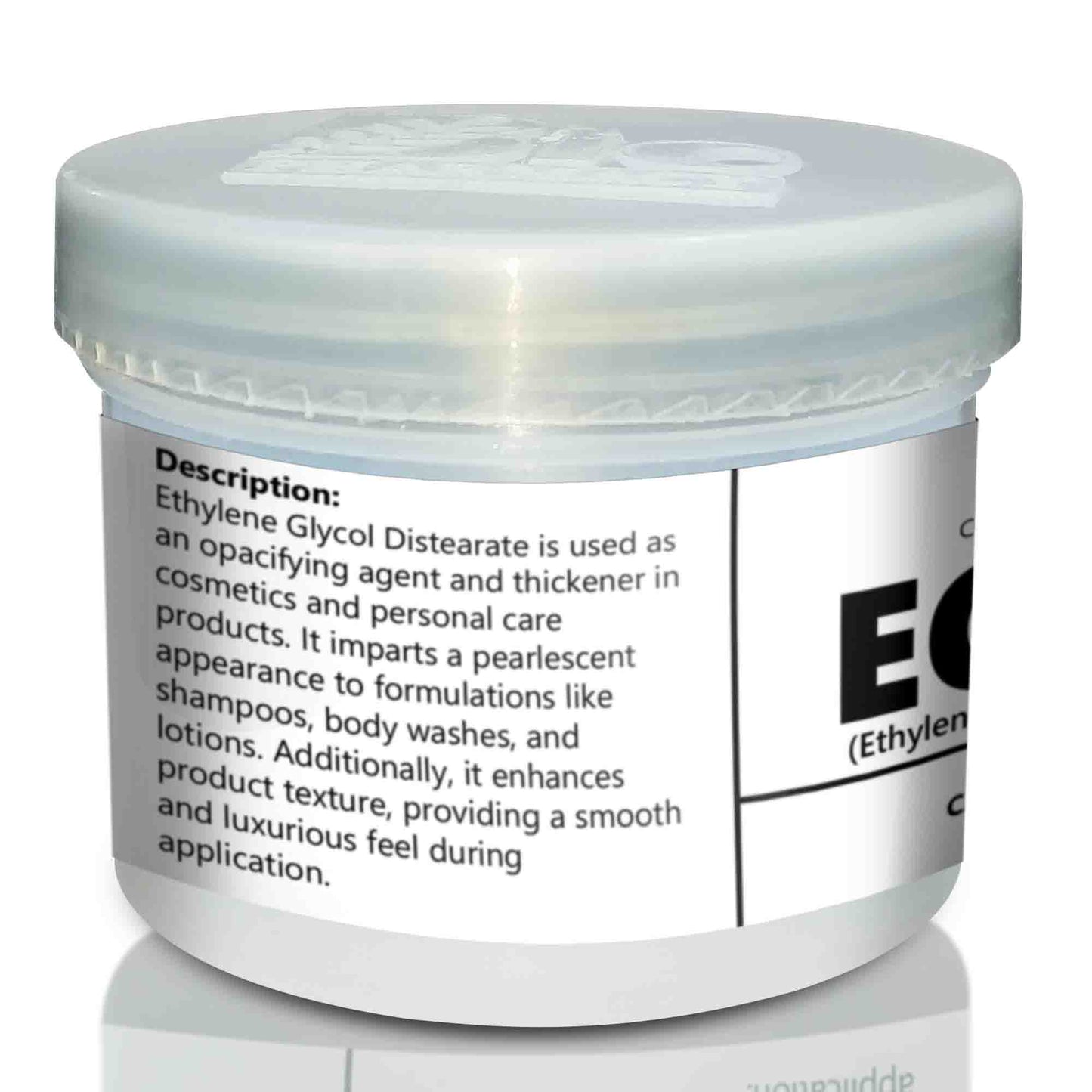
EGDS (Ethylene Glycol Distearate) is a cosmetic-grade, non-ionic opacifier and pearlizing agent, widely used in shampoos, face washes, and body washes. It gives formulations a smooth, white, creamy appearance, enhancing both the look and feel of the product. Derived from stearic acid and ethylene glycol, it also contributes to mild thickening and emulsifying stability in surfactant blends. It is suitable for both adult and baby care products due to its gentle profile.
📊 Technical Data
INCI Name: Ethylene Glycol Distearate
CAS Number: 627-83-8
Solubility: Dispersible in heated surfactant/water mix
Add Phase: Heat phase (65–75°C)
pH Stability: 4.5 – 7.5
Processing Temperature: 65–75°C
Appearance: White, waxy flakes or powder
Odor: Slight fatty odor
Molecular Formula: C38H76O4
Molecular Weight: 597.01 g/mol
Flash Point: > 150°C
Density: ~0.9 g/cm³
Chemical Type: Non-ionic ester
Functional Groups: Ester
Primary Cosmetic Uses: Shampoos, body washes, facial cleansers, baby products
🧪 Recommended Usage
- Usage Rate: 1% – 5%
- Phase: Add to heated phase (preferably surfactant blend)
- Ideal For: Shampoos, Face Washes, Body Washes, Baby Cleansers
💡 Pro Tip
🌟 For best pearlescent effect, premix EGDS with a small portion of surfactant and heat to 70°C, then blend into the batch. Works best in transparent or lightly colored formulas.
👩🔬 Skin Type Compatibility
✔️ Excellent for all skin types
✔️ Gentle enough for sensitive and baby skin
✔️ Does not clog pores or leave residue
🧴 Formulation Ideas
1. Creamy Moisturizing Shampoo
Use 2–3% EGDS with mild surfactants to give rich, pearly shine and viscosity.
2. Baby Body Wash
Add 1.5% with amphoteric surfactants like Cocamidopropyl Betaine for gentle cleansing and beautiful look.
3. Face Cleanser
Include 2% in clear facial wash to give luxurious texture without harshness.
4. Shower Gel / Body Wash
Combine with glycerin and hydrating agents for smooth, creamy shower experiences.
5. 2-in-1 Cleanser & Conditioner
Use in low-foam blends to thicken and soften both skin and hair.
💧 Cosmetic Suitability:
Serums
☆☆☆☆☆ – Not Suitable
🟥⬜⬜⬜⬜ – Not compatible with thin liquid formats.
Creams & Lotions
⭐⭐☆☆☆ – Fair
🟧🟧⬜⬜⬜ – Can slightly enhance cream texture but not common.
Toners
☆☆☆☆☆ – Not Suitable
🟥⬜⬜⬜⬜ – Not used in water-based sprays.
Face Masks
⭐⭐☆☆☆ – Fair
🟧🟧⬜⬜⬜ – Used occasionally in wash-off masks.
Cleansers
⭐⭐⭐⭐☆ – Good
🟩🟩🟩🟩⬜ – Excellent texture and cleansing enhancement.
Hair Masks
⭐⭐☆☆☆ – Fair
🟧🟧⬜⬜⬜ – Can support texture but not a conditioning agent.
Deodorants
⭐☆☆☆☆ – Poor
🟥⬜⬜⬜⬜ – Not compatible with deodorant bases.
Eye Creams
⭐☆☆☆☆ – Poor
🟥⬜⬜⬜⬜ – Not used in eye area formulations.
Shampoos
⭐⭐⭐⭐⭐ – Excellent
🟩🟩🟩🟩🟩 – Main use for pearl shine and creamy feel.
Soaps
☆☆☆☆☆ – Not Suitable
🟥⬜⬜⬜⬜ – Not for cold/hot process soap making.
Conditioners
⭐⭐☆☆☆ – Fair
🟧🟧⬜⬜⬜ – Used for appearance, not conditioning.
Lip Balms
☆☆☆☆☆ – Not Suitable
🟥⬜⬜⬜⬜ – Incompatible with anhydrous systems.
Body Butters
⭐☆☆☆☆ – Poor
🟥⬜⬜⬜⬜ – Not recommended for thick oil-based butters.
Ointments
⭐☆☆☆☆ – Poor
🟥⬜⬜⬜⬜ – Not typically used in pharma-style ointments.
❓ FAQs
Q1: What’s the difference between EGDS and EGMS?
A1: EGDS provides a creamier, more defined pearl effect, while EGMS offers more opacity and texture.
Q2: Can I use EGDS in clear formulas?
A2: EGDS will cloud or pearlize the formula. For clarity, avoid using it.
Q3: Is EGDS safe for daily use?
A3: Yes — it’s mild, biodegradable, and commonly used in daily care.
Q4: Is it vegan and cruelty-free?
A4: Yes — it’s plant-based and not tested on animals.
📂 Documentation
Upon request, we will provide.
Where Can You Safely Use EGDS (Ethylene Glycol Distearate)
Discover how EGDS (Ethylene Glycol Distearate) performs across different products — rated for safety, stability, and effectiveness.


