


Bio Shop
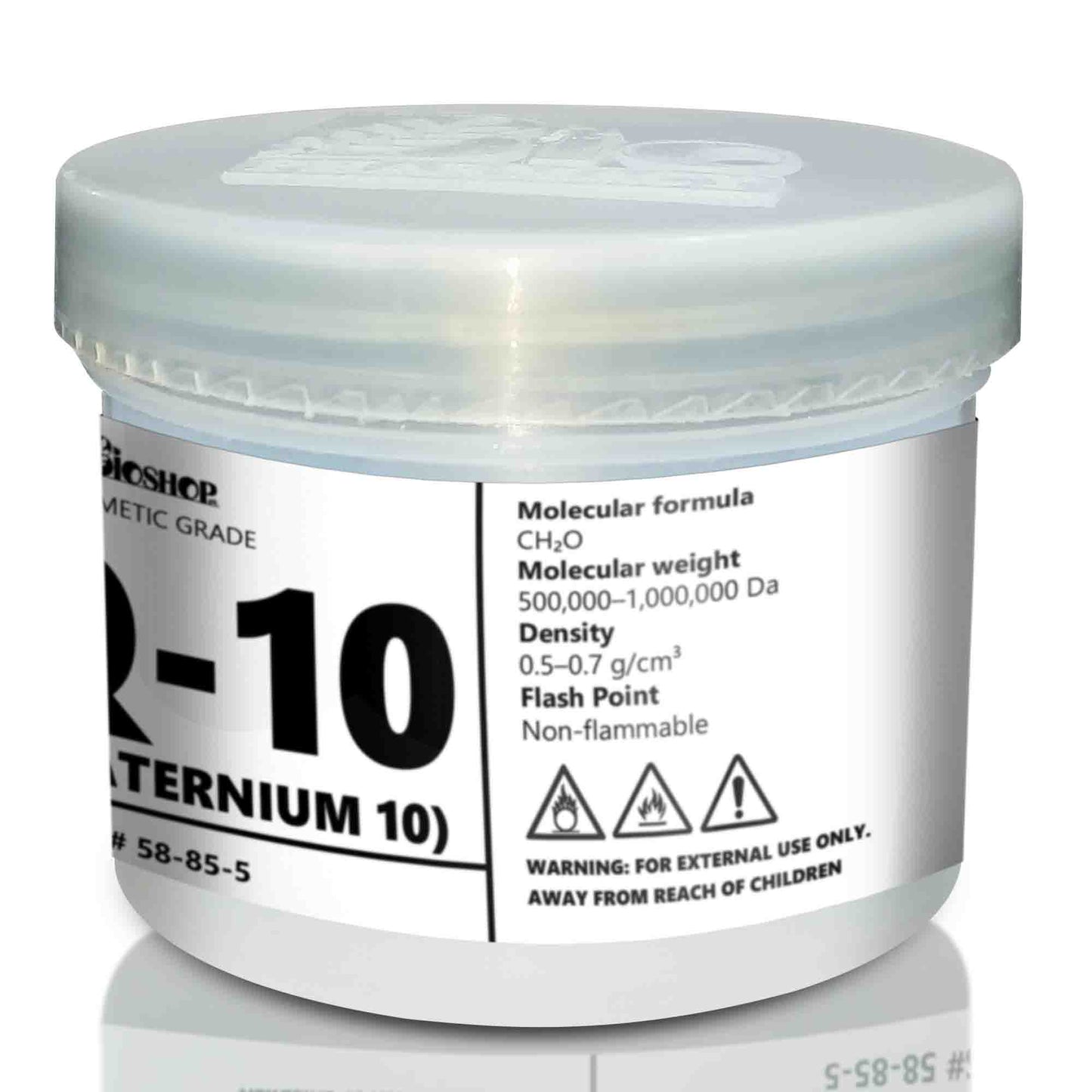
Polyquaternium 10 (PQ-10)
Polyquaternium 10 (PQ-10)
Key Functions: Acts as a film-forming, antistatic, and conditioning polymer ideal for reducing friction in hair care and enhancing texture in skin products.
Couldn't load pickup availability


Explore
Information About Polyquaternium 10 (PQ-10)
✅ Key Features
- Cationic cellulose polymer derived from natural sources
- Improves hair softness, manageability, and combability
- Reduces frizz and flyaways in hair care
- Boosts moisture retention in skin care
- Compatible with surfactants, creams, and lotions
🔬 Description
Polyquaternium-10 (PQ-10) – Conditioning Polymer for Hair & Skin
Polyquaternium-10 (PQ-10) is a high-performance, water-soluble cationic polymer derived from cellulose. Known for its conditioning, anti-static, and film-forming properties, PQ-10 is widely used in shampoos, conditioners, body washes, lotions, and serums. It imparts a smooth, silky texture to hair, improves detangling, and reduces static electricity. In skin care, it forms a lightweight film that enhances skin feel and hydration. Especially beneficial in sulfate-free and mild cleansing systems.
📊 Technical Data
INCI Name: Polyquaternium-10
CAS Number: 68610-92-4
Solubility: Water-soluble
Add Phase: Water phase
pH Stability: 4.0 – 10.0
Processing Temperature: Up to 70°C
Appearance: White to off-white powder
Odor: Odorless to slight natural odor
Molecular Formula: Polymer (no fixed formula)
Molecular Weight: Variable (100,000+ Da)
Flash Point: Not applicable
Density: ~0.5 g/cm³ (powder)
Chemical Type: Cationic cellulose derivative
Functional Groups: Quaternary ammonium, cellulose backbone
Primary Cosmetic Uses: Hair conditioning, frizz control, film forming, skin softening
🧪 Recommended Usage
- Usage Rate: 0.2% – 2%
- Phase: Add to water phase with gentle heating and high-shear mixing
- Ideal For: Shampoos, Conditioners, Body Washes, Creams, Hair Serums
💡 Pro Tip
💧 Always hydrate PQ-10 in warm water with high shear before adding to your formula. Use in sulfate-free systems for best results — it adds a luxurious feel without heavy build-up.
👩🔬 Skin Type Compatibility
✔️ Suitable for all skin types
✔️ Gentle for sensitive or baby skin when used correctly
✔️ Great for damaged, dry, or chemically-treated hair
🧴 Formulation Ideas
1. Frizz-Free Shampoo
Use 0.5% PQ-10 with sulfate-free surfactants and panthenol for improved slip and shine.
2. Leave-In Hair Conditioner
Formulate 1% PQ-10 with jojoba oil and glycerin to detangle and reduce breakage.
3. Curl-Defining Cream
Combine with aloe vera and shea butter to give curls bounce, definition, and control.
4. Anti-Static Hair Mist
Add 0.2% PQ-10 in a hydrosol base with light silicones for a smooth finish.
5. Skin Hydrating Lotion
Use 0.3% PQ-10 with hyaluronic acid and allantoin in moisturizers for improved glide and feel.
💧 Cosmetic Suitability:
Serums
⭐⭐⭐⭐☆ – Good
🟩🟩🟩🟩⬜ – Adds slip and hydration in lightweight serums.
Creams & Lotions
⭐⭐⭐⭐☆ – Good
🟩🟩🟩🟩⬜ – Enhances texture and softening effect.
Toners
⭐⭐☆☆☆ – Fair
🟧🟧⬜⬜⬜ – Useful in thicker toner-gel hybrids.
Face Masks
⭐⭐⭐☆☆ – Moderate
🟧🟧🟧⬜⬜ – Helps improve feel and glide.
Cleansers
⭐⭐⭐⭐☆ – Good
🟩🟩🟩🟩⬜ – Boosts conditioning in face/body washes.
Hair Masks
⭐⭐⭐⭐⭐ – Excellent
🟩🟩🟩🟩🟩 – Essential for detangling and repairing.
Deodorants
⭐☆☆☆☆ – Poor
🟥⬜⬜⬜⬜ – Not applicable.
Eye Creams
⭐⭐⭐☆☆ – Moderate
🟧🟧🟧⬜⬜ – Optional for smooth application.
Shampoos
⭐⭐⭐⭐⭐ – Excellent
🟩🟩🟩🟩🟩 – Conditions, detangles, and protects hair.
Soaps
⭐⭐☆☆☆ – Fair
🟧🟧⬜⬜⬜ – Used in syndet bars.
Conditioners
⭐⭐⭐⭐⭐ – Excellent
🟩🟩🟩🟩🟩 – Key active in cream and spray conditioners.
Lip Balms
☆☆☆☆☆ – Not Suitable
🟥⬜⬜⬜⬜ – Not used in lip care.
Body Butters
⭐⭐☆☆☆ – Fair
🟧🟧⬜⬜⬜ – Improves spreadability.
Ointments
⭐⭐☆☆☆ – Fair
🟧🟧⬜⬜⬜ – Optional for enhanced texture.
❓ FAQs
Q1: What is the difference between PQ-10 and PQ-7?
A1: PQ-10 offers stronger conditioning but may increase viscosity. PQ-7 is lighter and used more in sprays.
Q2: Can I use PQ-10 in clear shampoos?
A2: Yes, but it may reduce clarity. Use at lower levels (0.2–0.5%) if transparency is desired.
Q3: Is it natural or synthetic?
A3: It’s semi-synthetic, derived from natural cellulose modified with cationic groups.
Q4: Does it leave build-up on hair?
A4: No, it’s water-soluble and rinses clean, especially in sulfate-free products.
Q5: Is PQ-10 safe for sensitive skin?
A5: Yes, it’s non-irritating and used even in baby shampoos and gentle formulas.
📂 Documentation
Upon request, we will provide.
Where Can You Safely Use Polyquaternium 10 (PQ-10)
Discover how Polyquaternium 10 (PQ-10) performs across different products — rated for safety, stability, and effectiveness.


