


Bio Shop
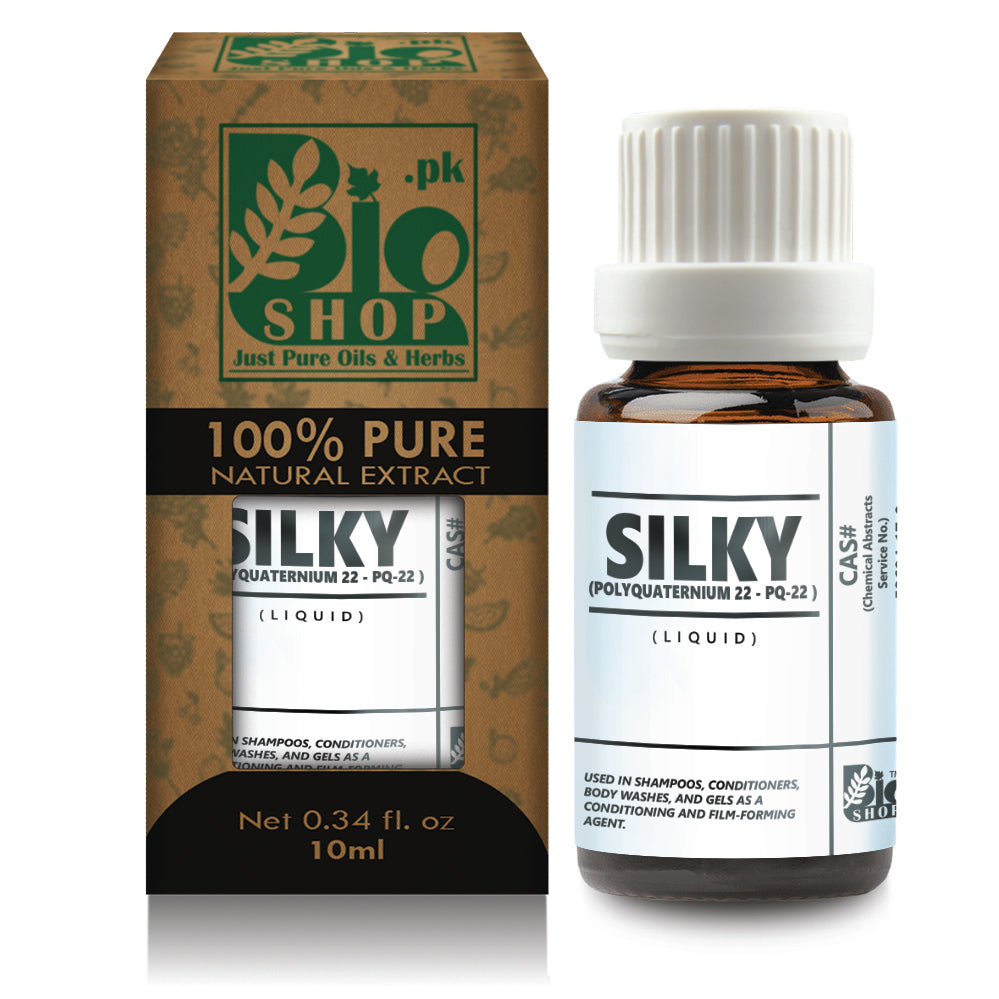
Silky (Polyquaternium 22) PQ-22
Silky (Polyquaternium 22) PQ-22
Key Functions: Conditions hair, reduces frizz, forms protective films, and prevents static.
Couldn't load pickup availability
Explore
Information About Silky (Polyquaternium 22) PQ-22
✅ Key Features
✦ Outstanding film-forming conditioning polymer that delivers smooth, frizz-free, manageable hair with every wash.
✦ Amphoteric charge structure ensures compatibility with both anionic and cationic systems — rare among conditioning polymers and a key formulation advantage.
✦ Creates a lightweight, non-greasy conditioning film on hair and skin without buildup or residue at recommended concentrations.
✦ Delivers superior antistatic performance, significantly reducing flyaways and static charge — especially effective in dry climates.
✦ Suitable for shampoos, conditioners, leave-in sprays, styling products, and lightweight water-based skin serums.
✦ Water-soluble and easy to incorporate at room temperature — no heat phase required for addition.
✦ Fully synthetic and vegan — free from animal-derived ingredients, suitable for vegan-certified cosmetic formulations.
🔬 Description
Polyquaternium-22 is a synthetic amphoteric conditioning polymer produced by copolymerizing acrylic acid with diallyldimethylammonium chloride (DADMAC). It belongs to the polyquaternium family, a well-established group of water-soluble film-forming polymers that have been central to professional haircare chemistry for several decades. Originally developed for industrial and personal care use, PQ-22 gained rapid adoption across shampoo and conditioner formulation due to its exceptional balance of conditioning performance, compatibility, and ease of processing.
What distinguishes Polyquaternium-22 from purely cationic conditioning polymers is its amphoteric charge architecture. PQ-22 carries both positive quaternary ammonium groups and negative carboxylate groups within the same polymer backbone. This dual charge character allows it to adhere substantively to negatively charged hair and skin surfaces for conditioning while remaining stable and fully compatible in anionic surfactant systems — including both sulphate-based and sulphate-free shampoo bases. The result is meaningful conditioning in rinse-off formats that purely cationic polymers often fail to deliver without causing emulsion instability or foam suppression.
Bio Shop Pakistan supplies cosmetic-grade Polyquaternium-22 suitable for DIY haircare formulators, independent beauty brands, and professional cosmetic chemists.
📊 Technical Data
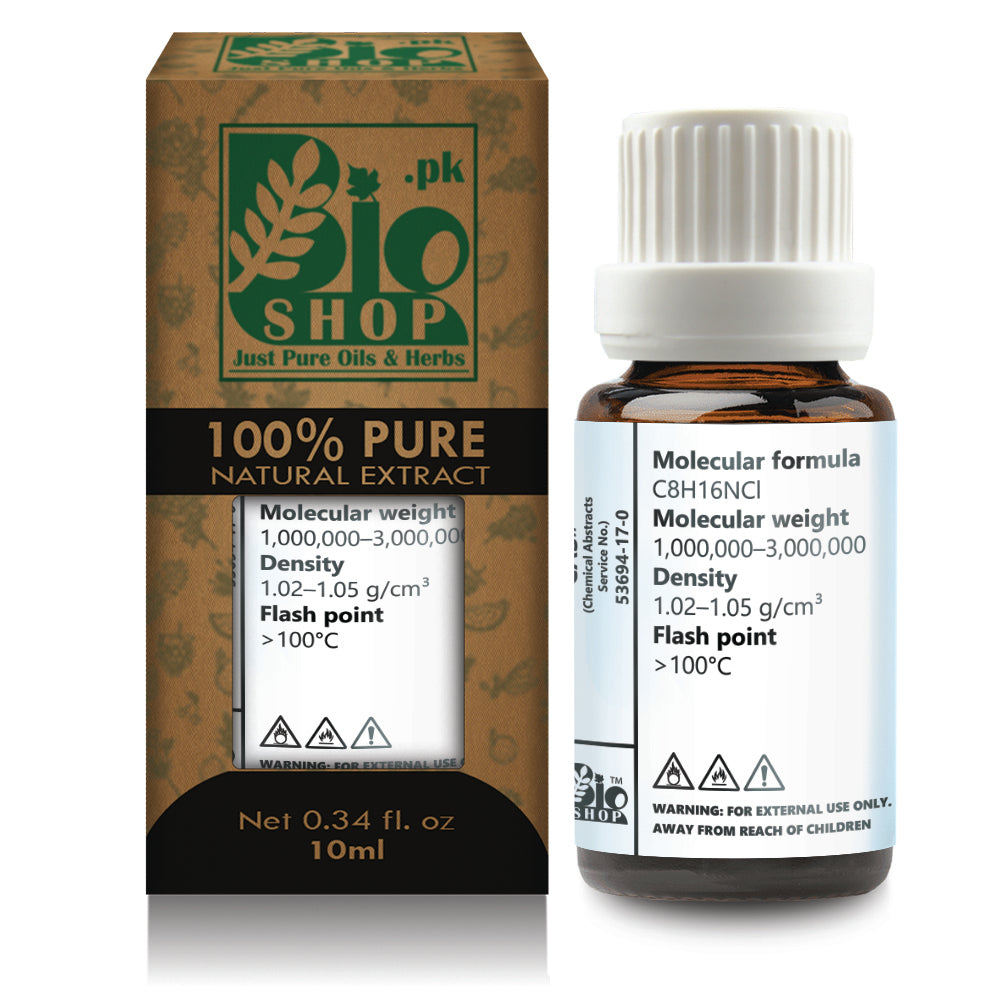
INCI Name : Polyquaternium-22
Chemical Name : Acrylic Acid/Diallyldimethylammonium Chloride Copolymer
CAS Number : 53694-17-0
Molecular Formula : Polymer — no fixed molecular formula
Appearance : Clear to slightly hazy, viscous aqueous liquid
Odor : Odorless to very faint characteristic odor
pH (1% solution) : 4.5 – 6.0
Solubility : Freely soluble in water; insoluble in oils and organic solvents
Specific Gravity : 1.02 – 1.05 at 25°C
Flash Point : >100°C (aqueous solution)
HLB Value : Not Applicable
Recommended Use Level : 0.5 – 3.0%
Type : Amphoteric Conditioning Polymer (Cationic/Anionic Copolymer)
Shelf Life : 24 months when stored sealed under recommended conditions
🧪 Recommended Usage
Haircare (Shampoo, Conditioner, Leave-In) ★★★★★
This is the primary application category where PQ-22 delivers maximum performance — conditioning, detangling, frizz reduction, and antistatic action in a single ingredient. Use at 0.5–1.5% in shampoos and up to 3.0% in conditioners, masks, and leave-in treatments for best results.
Skincare (Serums, Toners, Lotions) ★★★★☆
PQ-22 adds a smooth, silky skin feel to lightweight water-based serums and toners without heaviness or greasiness. Incorporate at 0.5–1.5% in the water phase for a conditioning texture-enhancing effect in lightweight leave-on formulations.
Body Care (Body Sprays, Lotions, Mists) ★★★☆☆
Suitable for water-based body lotions and conditioning body sprays where a lightweight film is desirable. Not recommended for anhydrous body butters or balms as PQ-22 requires an aqueous medium to function and disperse correctly.
Soap Making (Syndet Bars, Cleansing Bars) ★★☆☆☆
PQ-22 is not suitable for traditional cold process or melt-and-pour soap due to the high alkaline pH degrading polymer performance. It can be incorporated into syndet (synthetic detergent) bar formulations at controlled pH ranges of 4.5–6.5.
Functional Cosmetics (Deodorants, Baby Wash) ★★★☆☆
Can be used in water-based deodorant sprays and gentle baby wash formulations to improve conditioning and reduce skin friction. Ensure full compatibility testing is performed in any formula with a high concentration of electrolytes or active ingredients.
💡 Pro Tip
As a formulator, I consider Polyquaternium-22 one of the most practically valuable conditioning polymers available for haircare work. Its amphoteric nature resolves one of the most persistent challenges in shampoo formulation: delivering meaningful conditioning performance in a rinse-off cleansing base without destabilizing the surfactant system or suppressing foam. Unlike purely cationic conditioners, PQ-22 does not compete aggressively with anionic surfactants, meaning it can run effectively alongside SLS, SLES, sodium cocoyl isethionate, or sulphate-free glucoside bases without phase separation or viscosity collapse.
ADVANCED TIP: For a high-performance 2-in-1 conditioning shampoo, combine Polyquaternium-22 at 1.0% with Polyquaternium-10 at 0.3% in the water phase during cold addition. The two polymers act synergistically — PQ-22 delivers surface conditioning, antistatic action, and frizz control, while PQ-10 enhances wet-comb performance and provides greater substantivity to chemically treated or damaged hair. Adjust final formula pH to 5.0–5.5 using citric acid to optimize polymer charge balance and surfactant compatibility. This dual-polymer approach achieves near-conditioner-level conditioning within a rinse-off shampoo format.
👩🔬 Skin Type Suitability
Normal Skin : ★★★★★ — Performs excellently, delivering a smooth conditioning skin feel without any heaviness, greasiness, or residue.
Dry Skin : ★★★★☆ — The conditioning film helps reduce transepidermal moisture loss, though pairing with a humectant like hyaluronic acid or glycerin is recommended for deeper hydration.
Oily Skin : ★★★☆☆ — Lightweight enough for oily skin at 0.5%, but higher concentrations in leave-on formulations may feel slightly occlusive on congestion-prone skin.
Combination : ★★★★☆ — Works well in serums and toners where balanced conditioning is needed across both oily and dry zones without overloading the T-zone.
Sensitive Skin : ★★★★☆ — Generally well-tolerated and non-irritating at standard use levels; patch test is advised for highly reactive or sensitized skin types.
Mature Skin : ★★★★☆ — Adds a plumping, smooth skin feel in lotion formulations that can temporarily improve the appearance of fine lines and surface texture.
Acne-Prone : ★★★☆☆ — Use at the lower end of the concentration range (0.5%) and avoid heavy leave-on applications that could contribute to congestion or pore occlusion.
🧴 Formulation Ideas
CONCEPT 1: Detangling Leave-In Hair Mist
Usage Level : 1.5%
Key Ingredients: Panthenol, Hydrolyzed Wheat Protein, Glycerin, Citric Acid
Result : A lightweight misting spray that detangles, reduces frizz, and imparts long-lasting shine to all hair types without stiffness, greasiness, or product buildup.
CONCEPT 2: Conditioning 2-in-1 Shampoo
Usage Level : 1.0%
Key Ingredients: Sodium Laureth Sulfate, Cocamidopropyl Betaine, Polyquaternium-10, Panthenol
Result : A cleansing yet conditioning shampoo that leaves hair noticeably smoother, more manageable, and tangle-free after a single rinse-off wash.
CONCEPT 3: Silky Conditioning Skin Toner
Usage Level : 1.0%
Key Ingredients: Sodium Hyaluronate (low molecular weight), Niacinamide, Allantoin, Glycerin
Result : A water-light conditioning toner that layers effortlessly, delivers an immediate silky after-feel, and primes skin for subsequent serum or moisturizer absorption.
💧 Safety and Regulatory:
INCI Declared : Yes — required in all finished cosmetic products in the EU and internationally
EU Cosmetics Reg : Permitted — no concentration restrictions under Regulation (EC) No 1223/2009; not listed in Annex II, III, or V
Rinse-Off Limit : No limit established
Leave-On Limit : No limit established
Allergen Alert : No — no known cosmetic sensitizers associated with this polymer at recommended use levels
Skin Safety : Safe at recommended levels (0.5–3.0%); well-tolerated in both rinse-off and leave-on applications
Eye Area Use : Use with caution — avoid direct eye contact with undiluted raw material
Ingestion : Not for internal use
Pregnancy Use : No specific contraindication established at cosmetic use levels; consult physician if uncertain
Child Safety : Safe in rinse-off formulations for children above 3 years of age; use appropriately diluted concentrations
Ventilation : Not required under normal cosmetic manufacturing and handling conditions
Storage : Store between 5–30°C in a sealed container; avoid freezing and direct sunlight exposure
Container : HDPE or PET; avoid reactive metal containers
⚠️ Do not freeze. Polyquaternium-22 is supplied as an aqueous polymer solution and may become turbid, separate, or lose viscosity after a freeze-thaw cycle. If accidental freezing occurs, allow to thaw slowly at room temperature, mix gently, and verify performance and appearance before use in any formulation.
Stability and Compatibility
Working pH Range : 3.0 – 8.0 (optimal conditioning performance between pH 4.5 – 6.5)
Heat Stability : Stable up to 80°C; avoid prolonged exposure above this temperature to prevent polymer degradation
Freeze-Thaw Stable : No — turbidity or viscosity reduction may occur; allow to thaw and remix gently before use
Emulsion Type : O/W compatible; improves skin feel and texture in oil-in-water emulsion systems
Emulsification Phase: Cold or warm — add to water phase at any stage; no dedicated heat phase required
Compatible With : Anionic surfactants, cationic conditioning agents, nonionic emulsifiers, humectants (glycerin, panthenol, hyaluronic acid), hydrolyzed proteins
Incompatible With : High electrolyte concentrations (may reduce solution viscosity and polymer performance); avoid contact with strong oxidizing agents
Oxidation Risk : Low — no antioxidant addition required under standard storage and formulation conditions
Discoloration Risk : None — color-stable under recommended storage temperature and pH conditions
Formulation Notes : Disperse slowly into the water phase with gentle agitation to prevent localized gelling; pre-diluting in a small quantity of water before bulk addition significantly improves polymer incorporation and avoids lumping in high-viscosity bases.
❓ FAQs
Q: What is Polyquaternium-22 and what does it do in haircare formulations?
A: Polyquaternium-22 is an amphoteric conditioning polymer derived from acrylic acid and diallyldimethylammonium chloride. It deposits a lightweight conditioning film onto the hair shaft, reducing frizz, improving detangling, and preventing static charge without contributing to greasiness or buildup. It is favored in professional formulations because it delivers conditioning performance inside both shampoos and conditioners without compromising cleansing efficacy.
Q: At what concentration should I use PQ-22 in a shampoo versus a conditioner?
A: For conditioning shampoos, 0.5–1.0% is the recommended starting range. Leave-on conditioners and rinse-out treatment masks benefit from 1.5–3.0% for stronger film deposition and detangling performance. Leave-in sprays and lightweight serums typically perform well at 1.0–2.0%.
Q: Can Polyquaternium-22 be used in skincare formulations?
A: Yes, PQ-22 can be incorporated into lightweight skin serums, toners, and lotions at 0.5–1.5% to impart a silky conditioning skin feel and improve product texture. It is particularly useful in water-based formulations where a smooth, non-sticky finish is the primary goal. It is not suitable for anhydrous formulations such as balms or oil-based serums.
Q: Does PQ-22 cause product buildup with repeated use?
A: At recommended concentrations of 0.5–3.0%, PQ-22 is designed to condition without significant buildup. Its amphoteric structure prevents the heavy surface overload that purely cationic agents can cause with repeat application. Regular cleansing with a mild shampoo is sufficient to prevent polymer accumulation over time.
Q: How does Polyquaternium-22 compare to Polyquaternium-10?
A: Both are water-soluble conditioning polymers but differ in origin and performance profile. PQ-10 is a cationic cellulose derivative with strong wet-detangling substantivity, particularly effective on damaged or chemically processed hair. PQ-22 is a fully synthetic amphoteric copolymer offering broader surfactant compatibility and superior antistatic performance. Many professional shampoo formulations combine both at complementary concentrations for synergistic conditioning results that neither achieves alone.
Where Can You Safely Use Silky (Polyquaternium 22) PQ-22
Discover how Silky (Polyquaternium 22) PQ-22 performs across different products — rated for safety, stability, and effectiveness.
Perfect ingredient for my DIY shampoo, I trust purity and quality of Bioshop's products
⭐⭐⭐⭐⭐


