Bio Shop
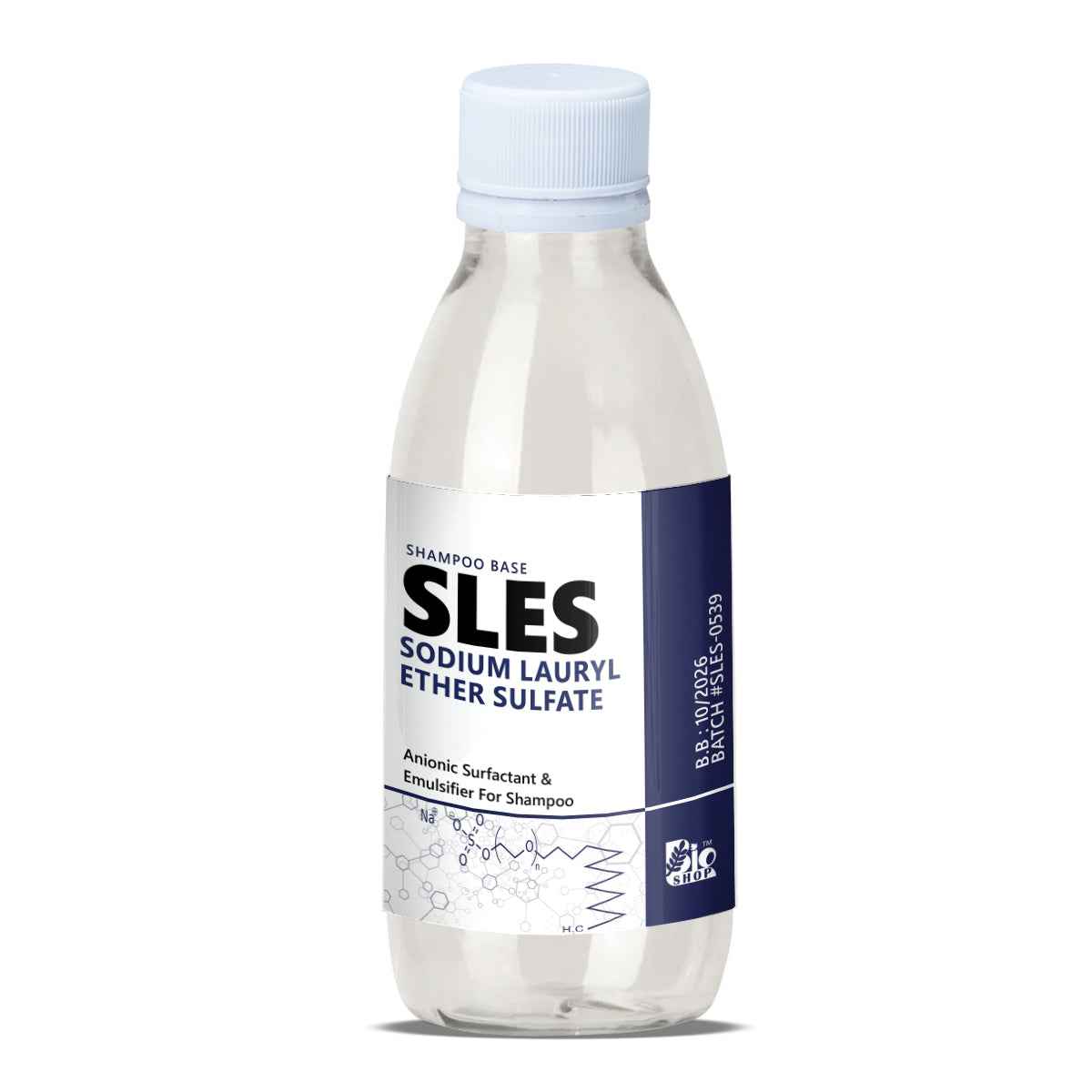
SLES (Sodium Lauryl Ether Sulfate)
Key Functions: Acts as a primary surfactant offering cleansing, foaming, and emulsifying properties in personal care products.
Couldn't load pickup availability

Explore
Information About SLES (Sodium Lauryl Ether Sulfate)
✅ Key Features
- High-performance surfactant with excellent foaming power
- Removes dirt, oil, and buildup effectively
- Widely used in shampoos, facial washes, and shower gels
- Compatible with thickening agents and additives
- Economical and easy to formulate for DIY projects
🔬 Description
SLES (Sodium Lauryl Ether Sulfate) – High Foaming Surfactant for Cleansing Formulations
Sodium Lauryl Ether Sulfate (SLES) is one of the most widely used anionic surfactants in cosmetic formulations. It provides excellent cleansing, foaming, and emulsifying properties, making it a staple in shampoos, facial washes, and body washes. Derived from coconut oil and ethoxylated for mildness, it balances performance and gentleness. DIY formulators prefer SLES for its thickening ability with salt and compatibility with other surfactants.
📊 Technical Data
INCI Name: Sodium Laureth Sulfate
CAS Number: 9004-82-4
Solubility: Water-soluble
Add Phase: Water phase
pH Stability: 5.0 – 8.5
Processing Temperature: Up to 60°C
Appearance: Clear to slightly yellow viscous liquid
Odor: Mild soapy odor
Molecular Formula: C₁₂H₂₅(OCH₂CH₂)nOSO₃Na
Molecular Weight: Variable (depends on ethoxylation, ~420–480 g/mol)
Flash Point: > 100°C
Density: ~1.03 g/cm³
Chemical Type: Anionic surfactant
Functional Groups: Sulfate ester, ether
Primary Cosmetic Uses: Shampoo, facial wash, shower gel, body wash, hand wash
🧪 Recommended Usage
- Usage Rate: 5–30% depending on formulation type
- Thickening Tip: Add sodium chloride to thicken gradually
- Storage: Store in a cool, dry place away from direct sunlight
💡 Pro Tip
For sensitive-skin shampoos or facial washes, combine SLES with Cocamidopropyl Betaine or Polyquaternium-10 to boost gentleness. Add a few drops of fragrance and panthenol for salon-quality results!
👩🔬 Skin Type Compatibility
✔️ Oily
✔️ Normal
✔️ Combination
❌ Not recommended for dry or sensitive skin without conditioning agents
🧴 Formulation Ideas
1.Clarifying Shampoo
SLES Base: 90%
Lemon Extract: 3%
Panthenol (Vitamin B5): 1%
Fragrance: 1%
Preservative (as required)
2. Herbal Hair Fall Control Shampoo
SLES Base: 85%
Aloe Vera Liquid Extract: 3%
Bhringraj Extract: 2%
Rosemary EO: 0.5%
Polyquaternium-10: 0.5%
Preservative: 1%
3. 2-in-1 Conditioning Shampoo
SLES Base: 70%
BTMS-50: 3%
Coconut Milk Extract: 5%
Guar Conditioner: 2%
Fragrance: 1%
💧 Cosmetic Suitability:
Serums
☆☆☆☆☆ – Not Applicable
🟥⬜⬜⬜⬜
Creams & Lotions
☆☆☆☆☆ – Not Applicable
🟥⬜⬜⬜⬜
Toners
☆☆☆☆☆ – Not Applicable
🟥⬜⬜⬜⬜
Face Masks
☆☆☆☆☆ – Not Applicable
🟥⬜⬜⬜⬜
Cleansers
⭐⭐⭐⭐☆ – Good
🟩🟩🟩🟩⬜
Hair Masks
☆☆☆☆☆ – Not Suitable
🟥⬜⬜⬜⬜
Deodorants
☆☆☆☆☆ – Not Suitable
🟥⬜⬜⬜⬜
Eye Creams
☆☆☆☆☆ – Not Applicable
🟥⬜⬜⬜⬜
Shampoos
⭐⭐⭐⭐⭐ – Excellent
🟩🟩🟩🟩🟩
Soaps
⭐⭐⭐⭐☆ – Good
🟩🟩🟩🟩⬜
Conditioners
⭐⭐☆☆☆ – Fair
🟧🟧⬜⬜⬜
Lip Balms
☆☆☆☆☆ – Not Suitable
🟥⬜⬜⬜⬜
Body Butters
☆☆☆☆☆ – Not Applicable
🟥⬜⬜⬜⬜
Ointments
☆☆☆☆☆ – Not Applicable
🟥⬜⬜⬜⬜
❓ FAQs
Q1: Is SLES safe for sensitive scalps?
A: Yes, but may require dilution or blending with milder surfactants like CAPB.
Q2: Can I add fragrance directly?
A: Yes. Add up to 1–2% during the cool-down phase.
Q3: How do I thicken this base if needed?
A: Add 1–2% salt solution slowly while mixing until desired thickness is achieved.
📂 Documentation
Upon request, we will provide.
Where Can You Safely Use SLES (Sodium Lauryl Ether Sulfate)
Discover how SLES (Sodium Lauryl Ether Sulfate) performs across different products — rated for safety, stability, and effectiveness.