


Bio Shop
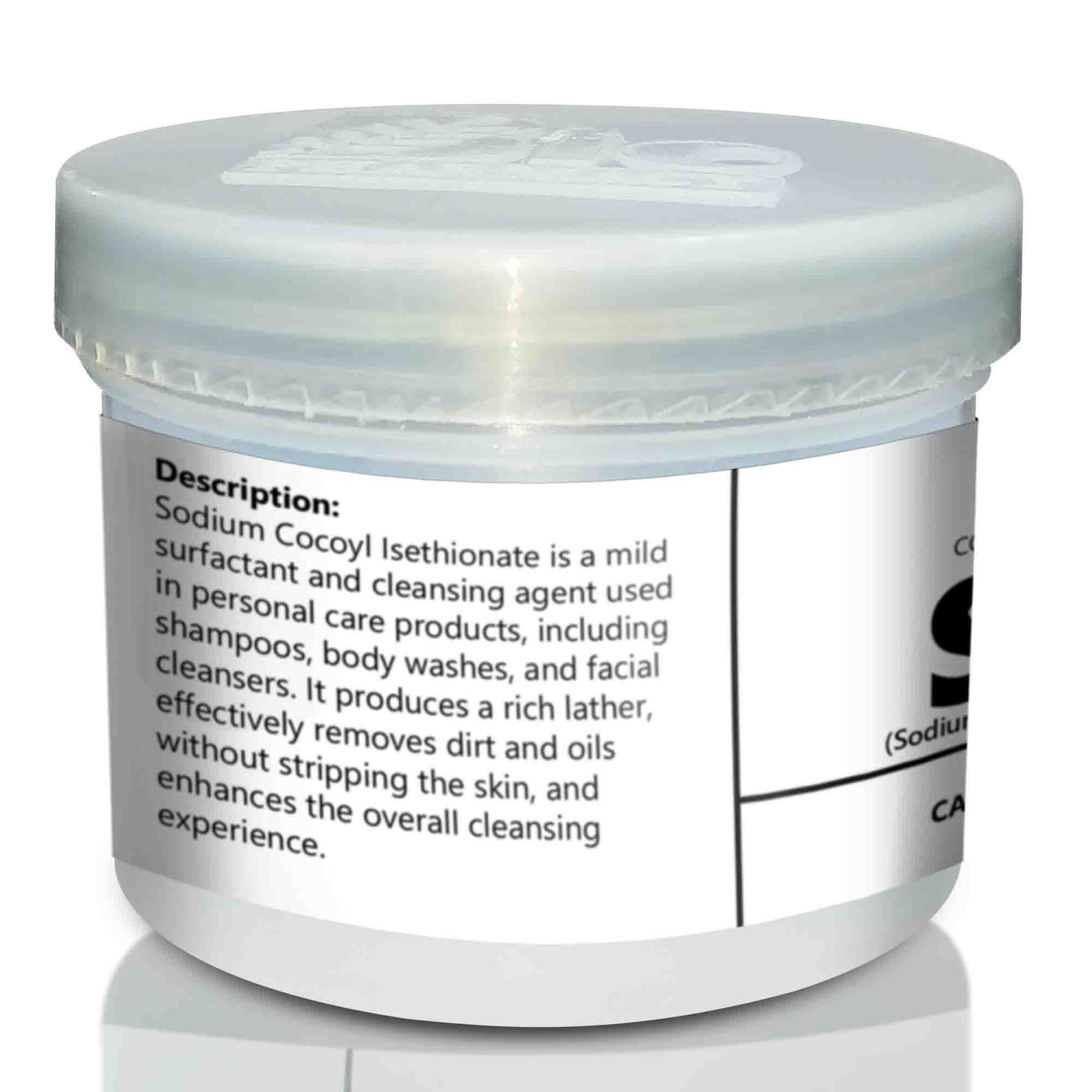
Sodium Cocoyl Isethionate
Sodium Cocoyl Isethionate
Key Functions: Acts as a mild, sulfate-free foaming agent and primary surfactant for creamy cleansers and syndet bars.
Couldn't load pickup availability


Explore
Information About Sodium Cocoyl Isethionate
✅ Key Features
- Sulfate-free, high-foaming surfactant derived from coconut oil
- Produces rich, creamy lather with excellent mildness
- Ideal for solid shampoo bars, face cleansers, and baby washes
- Skin-compatible, biodegradable, and gentle on eyes
- Low-irritation and suitable for sensitive or dry skin types
🔬 Description
Sodium Cocoyl Isethionate (SCI) – Sulfate-Free Foaming Surfactant
Sodium Cocoyl Isethionate (SCI) is a gentle anionic surfactant derived from coconut fatty acids and isethionic acid. It is well known for producing luxurious, creamy foam while being exceptionally mild on skin and eyes. Perfect for sulfate-free formulations, SCI is widely used in facial cleansers, creamy body washes, foaming facial bars, and solid shampoo bars. Its high active content and low pH irritation make it a favorite in natural and eco-conscious product lines.
📊 Technical Data
INCI Name: Sodium Cocoyl Isethionate
CAS Number: 61789-32-0
Solubility: Dispersible in water; not fully soluble
Add Phase: Heated surfactant phase (requires blending)
pH Stability: 4.5 – 7.5
Processing Temperature: 70°C – 85°C
Appearance: White, fine granules or noodles
Odor: Mild to odorless
Molecular Formula: Variable (mixture of fatty acid salts)
Molecular Weight: Approx. 343.5 g/mol
Flash Point: Non-flammable
Density: ~0.25–0.45 g/cm³
Chemical Type: Anionic surfactant
Functional Groups: Carboxylic acid salt
Primary Cosmetic Uses: Syndet bars, shampoo bars, cream cleansers, face wash, baby cleansers
🧪 Recommended Usage
- Usage Rate: 3% – 60%
- Phase: Heat with surfactants or binders
- Ideal For: Shampoo Bars, Syndet Bars, Cream Cleansers, Baby Products, Facial Washes
💡 Pro Tip
🧼 SCI works best when melted gently with binders like stearic acid or glycerin. For extra softness in bars, blend with natural butters and humectants. Always test final pH and preserve if water is used in your formula.
👩🔬 Skin Type Compatibility
✔️ Excellent for all skin types
✔️ Highly recommended for dry, sensitive, and baby skin
✔️ Non-stripping and ultra-mild on skin and eyes
🧴 Formulation Ideas
1. Solid Shampoo Bar
Use 40–50% SCI with BTMS and oils for a mild, foamy bar that cleanses without dryness.
2. Creamy Face Wash
Combine 10–15% SCI with Cocamidopropyl Betaine and glycerin for a silky, non-drying foam.
3. Baby Wash
Use 5–10% in gentle body wash formulas with panthenol and calendula extract.
4. Cleansing Balm-to-Foam
Blend with stearic acid and emulsifiers for a foaming balm cleanser.
5. Syndet Soap Bar
SCI at 60% with soft oils and mild surfactants creates a long-lasting, non-alkaline cleansing bar.
💧 Cosmetic Suitability:
Serums
☆☆☆☆☆ – Not Suitable
🟥⬜⬜⬜⬜ – Not compatible with leave-on treatments.
Creams & Lotions
⭐⭐☆☆☆ – Fair
🟧🟧⬜⬜⬜ – Only applicable in wash-off emulsions.
Toners
☆☆☆☆☆ – Not Suitable
🟥⬜⬜⬜⬜ – Not used in watery leave-on formulas.
Face Masks
⭐⭐⭐☆☆ – Moderate
🟧🟧🟧⬜⬜ – Works well in rinse-off foaming masks.
Cleansers
⭐⭐⭐⭐⭐ – Excellent
🟩🟩🟩🟩🟩 – One of the best mild surfactants for facial cleansers.
Hair Masks
⭐⭐☆☆☆ – Fair
🟧🟧⬜⬜⬜ – May be used in cleansing hair masks.
Deodorants
⭐☆☆☆☆ – Poor
🟥⬜⬜⬜⬜ – Not applicable.
Eye Creams
☆☆☆☆☆ – Not Suitable
🟥⬜⬜⬜⬜ – Not used in eye-area formulations.
Shampoos
⭐⭐⭐⭐⭐ – Excellent
🟩🟩🟩🟩🟩 – Key ingredient in sulfate-free shampoo bars.
Soaps
⭐⭐⭐⭐☆ – Good
🟩🟩🟩🟩⬜ – Used in modern syndet alternatives to soap.
Conditioners
⭐☆☆☆☆ – Poor
🟥⬜⬜⬜⬜ – Not suitable for leave-on conditioners.
Lip Balms
☆☆☆☆☆ – Not Suitable
🟥⬜⬜⬜⬜ – Not appropriate for lip care.
Body Butters
☆☆☆☆☆ – Not Suitable
🟥⬜⬜⬜⬜ – Not used in anhydrous systems.
Ointments
☆☆☆☆☆ – Not Suitable
🟥⬜⬜⬜⬜ – Incompatible with healing balm systems.
❓ FAQs
Q1: Is Sodium Cocoyl Isethionate natural?
A1: It is naturally derived from coconut oil and isethionic acid, but not fully natural by definition.
Q2: Can I use it in liquid formulas?
A2: Yes, but it needs to be blended and thickened properly; it’s more common in solid formats.
Q3: Does it irritate the eyes or skin?
A3: No — it's considered one of the mildest surfactants available for both.
Q4: Can I use it in sulfate-free claims?
A4: Absolutely. It is sulfate-free, PEG-free, and biodegradable.
Q5: Is it better than SLS or SLES?
A5: Yes, in terms of mildness, biodegradability, and skin compatibility, SCI is significantly gentler.
📂 Documentation
Upon request, we will provide.
Where Can You Safely Use Sodium Cocoyl Isethionate
Discover how Sodium Cocoyl Isethionate performs across different products — rated for safety, stability, and effectiveness.


