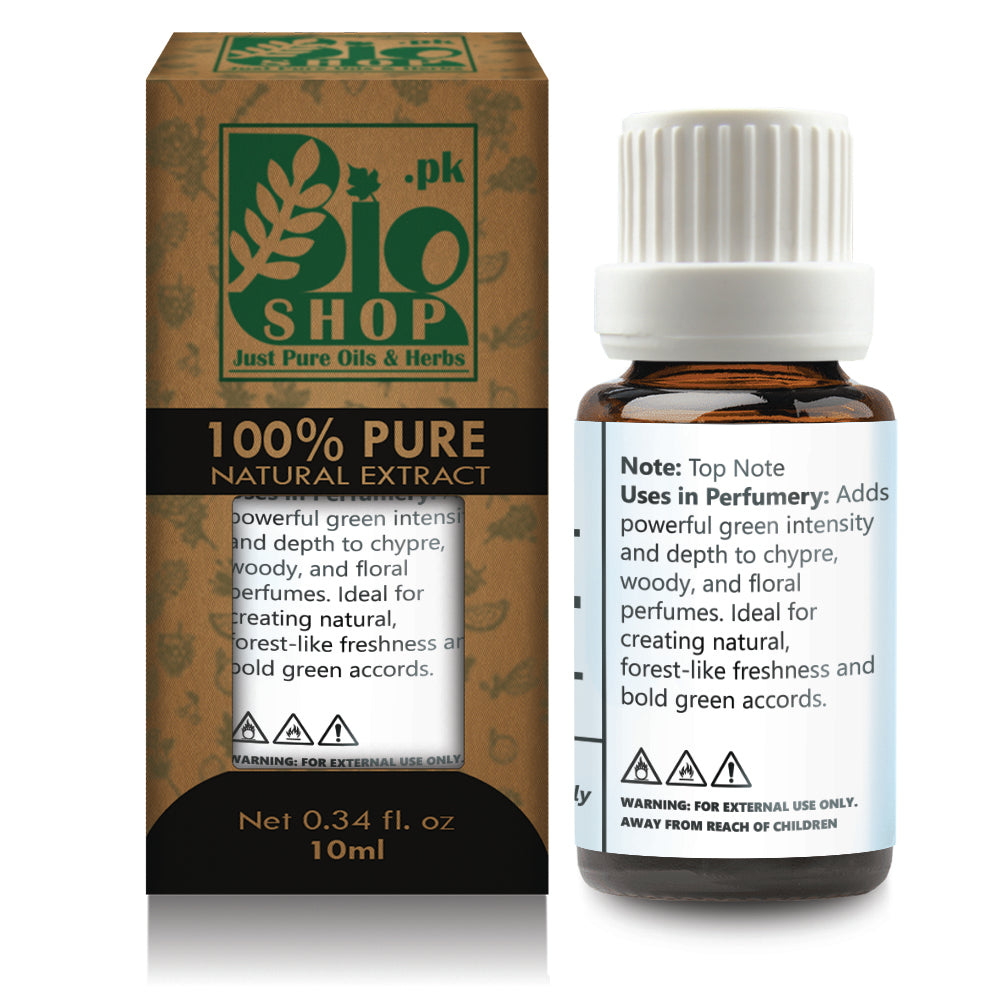
Bio Shop
Galbanum (10% in DPG)
Olfactory Notes: Intense, bitter, resinous "green" leaf note.
Couldn't load pickup availability

Explore
Information About Galbanum (10% in DPG)
Key Features
- Pre-diluted to 10% in DPG for ease of use in oil and alcohol systems
- Adds sharp green energy and earthy realism to natural compositions
- Ideal for chypre, fougère, incense, and aromatic perfumes
- Works beautifully in oil perfumes, solid perfumes, bakhoor, and attars
- A classic choice for forest, stemmy-green, or mossy styles
About Galbanum (10% in DPG)
Galbanum (10% in DPG) is a pre-diluted form of this intensely green, resinous essential oil known for its sharp, herbal, forest-like aroma with earthy and slightly bitter undertones. Extracted from the gum resin of Ferula galbaniflua, this 10% dilution in DPG (Dipropylene Glycol) makes it easier to incorporate into attars, solid perfumes, incense oils, and natural green compositions.
Often used in chypre, fougère, and vintage-style florals, Galbanum provides a raw green lift to top and heart notes. It blends perfectly with woody, smoky, and earthy ingredients like Vetiver, Oakmoss, and Labdanum, giving structure and richness to your fragrance base.
Olfactory Profile
SCENT DESCRIPTION
Galbanum opens with a piercing, resinous green blast — sharp, almost medicinal, like crushed pine needles and fresh sap. As it settles, a warm, earthy woodiness emerges with balsamic undertones and a faint musty depth reminiscent of wet forest floor after rain. The dry-down is smooth, resinous, and quietly warm — grounding without being heavy. It is a scent that feels ancient, raw, and unmistakably natural.
NOTE POSITION : Top-Mid
FRAGRANCE FAMILY : Green · Woody · Resinous / Balsamic
FACETS : Green · Piney · Earthy · Balsamic · Resinous
TENACITY : High — 8 to 12 hours on skin, longer on fabric
SILLAGE : Medium-High — projects well in opening, dries down to a close resinous halo
Technical Specifications
Chemical Name : Ferula galbaniflua Boiss. & Buhse essential oil
CAS Number : 8023-91-4
Synonyms : Galbanum oil, Persian galbanum, Ferula gummosa oil, galbanum resin oil
Purity % : 100% pure, undiluted essential oil
Appearance : Pale yellow to amber, slightly viscous liquid
Odor Threshold : Very low — detectable at 0.05–0.1% in composition
Solubility : Fully soluble in alcohol and fixed oils; insoluble in water
Specific Gravity : 0.870 – 0.920 at 20°C
Flash Point : Approx. 50–55°C (verify with supplier CoA)
Type : Natural — steam-distilled from plant resin
IFRA & Usage Rate
Typical Usage Rates by Application
EDP : 5.0 – 12.0%
EDT : 3.0 – 8.0%
Body Lotion : 0.5 – 1.5%
Shampoo/Body Wash : 0.5 – 1.0%
Candle : 3.0 – 6.0%
Reed Diffuser : 8.0 – 18.0%
Soap (Cold Process) : 1.0 – 2.5%
IFRA 51st Amendment Limits (Selected Categories)
These limits apply to galbanum resin/oil and are based on sensitization standards.
Category 1 (Lip, rinse-off oral) : 0.01%
Category 4 (Body lotion, leave-on skin) : 0.5%
Category 5a (Body spray, sprayed on) : 0.5%
Category 9 (Rinse-off, bath/shower) : 1.5%
Category 11a (Candles, home fragrance) : No restriction listed — verify with IFRA database
Category 12 (Non-skin contact, diffuser): No restriction listed — verify with IFRA database
⚠️ Galbanum contains sensitizing constituents. Always adhere to IFRA limits and perform patch testing for leave-on skin products.
⚠️ Some sources indicate potential phototoxic risk from trace furanocoumarin content. Avoid high concentrations in UV-exposed leave-on products.
⚠️ IFRA limits are subject to amendment. Always verify the current 51st Amendment guidelines at ifrafragrance.org before commercial production.
Blending Guide
Usage Method 1 — As a Green Modifier
Use galbanum at 0.1–0.5% of total formula to add a naturalistic green quality to florals, citrus, or chypre compositions without it becoming the dominant note. At this rate it elevates and freshens surrounding materials without announcing itself overtly.
Usage Method 2 — As a Structural Mid-Base Note
In oriental or resinous blends, use galbanum at 1–3% to act as a green bridge between light top notes and heavy bases. It prevents compositions from smelling too dark or sweet and adds dimensional naturalness to synthetic-heavy blends.
Usage Method 3 — Incense and Bakhoor Blending
Use galbanum resin or oil at 3–8% in bakhoor, incense sticks, or dhoop as a core resinous green note alongside frankincense and myrrh. It adds historical authenticity and helps fix lighter aromatic materials.
BEST PAIRINGS
Frankincense → Adds sacred resinous depth, enhances the ancient incense character
Labdanum → Creates a warm chypre base, rounds out the green harshness
Oakmoss absolute → Classic chypre pairing — green, mossy, deeply natural
Rose absolute → Contrast pairing — green sharpness against floral richness (Chanel No. 19 effect)
Vetiver → Earthy green combination with excellent tenacity
Bergamot → Lifts galbanum's heaviness, adds citrus sparkle to green accords
Cedarwood → Shared woodiness, smooth transition from mid to base
Benzoin / Styrax → Warm sweet resinous softening of galbanum's sharp edge
Oud oil → Creates complex oriental base with green resinous tension
AVOID
Use caution when blending with strongly aldehydic materials at high concentrations — the combination can become sharp and unpleasant. Test all blends at low concentration before scaling up.
Perfumer's Note
💡 To build a forest-inspired green base 🌲🌿, use 1–3% Galbanum (10% in DPG) in roll-ons, attars, or incense pastes.
🌾 Pair with Vetiver to enhance the dry grassy tone.
🌳 Add Oakmoss for a true chypre-style richness and structure.
🔥 Replace florals with Labdanum to maintain a dark, resinous character without becoming sweet.
🔄 Mix well in alcohol or oil for even diffusion.
⚠️ As always, patch test when using in skin-contact products.
Safety & Storage
Physical State : Pale yellow to amber liquid, slightly viscous
Skin Safety : Potential sensitizer — use within IFRA limits; patch test recommended before leave-on use
Eye Contact : Avoid contact; rinse thoroughly with water if contact occurs; seek medical advice if irritation persists
Ingestion : Not for internal use; if ingested, seek immediate medical attention
Ventilation : Work in a well-ventilated area; avoid prolonged inhalation of concentrated vapour
Storage : Store in a cool, dark place away from direct sunlight and heat sources; keep tightly sealed
Shelf Life : 2–3 years from production date if stored correctly; resinous thickening may occur over time — warm gently before use
Container : Amber glass preferred; avoid direct contact with plastics for extended storage
Flammability : Combustible — flash point approx. 50–55°C; keep away from open flame
FAQ
Q1: What does Galbanum smell like?
It smells intensely green and bitter—like crushed stems, resin, and forest moss. It’s earthy, sharp, and herbal.
Q2: What types of fragrances suit Galbanum?
Best used in chypre, fougère, herbal, and forest-themed compositions. It provides naturalistic lift and realism to top and heart notes.
Q3: Can it be used in attars and oil perfumes?
Yes, this 10% dilution is excellent for oil-based systems, incense blends, and attar-style applications.
Q4: What does it pair well with?
Vetiver, Oakmoss, and Labdanum are ideal complements—creating an earthy, resinous structure for your perfume.
Q5: Is Galbanum a fixative or top note?
It acts mainly as a top/heart note modifier, but also has mild fixative properties due to its resin content.
Where Can You Safely Use Galbanum (10% in DPG)?
Discover how Galbanum (10% in DPG) performs across different applications—rated for safety, stability, and effectiveness.