Skip to product information
1 of 4

Bio Shop

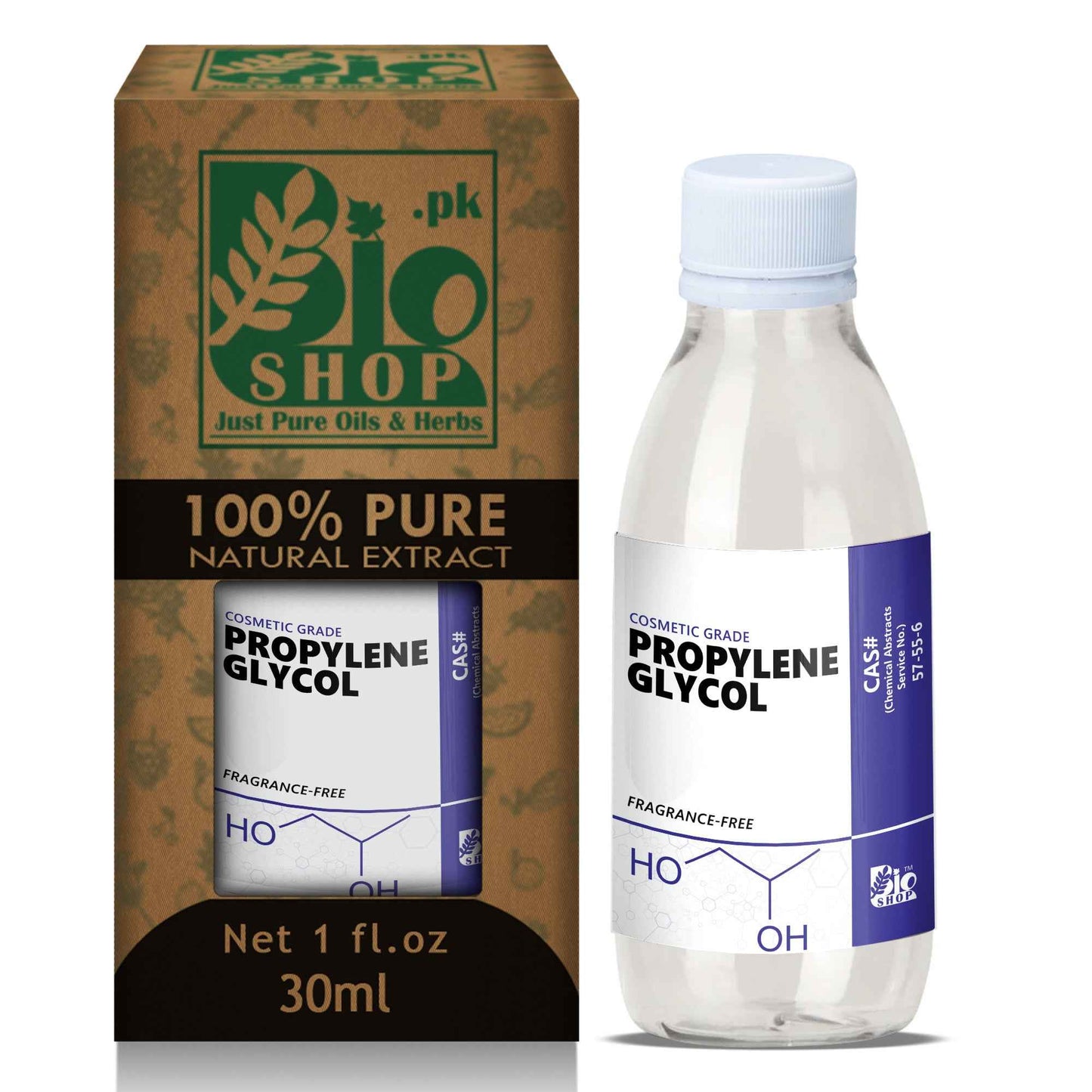
PG (Propylene Glycol)

PG (Propylene Glycol)

Regular price Rs.150.00
Regular price Sale price Rs.150.00
Sale Sold out
Shipping calculated at checkout.

Key Functions: Humectant, solvent, penetration enhancer, preservative booster.

Volume
Quantity
🚚 Estimated delivery time:
Learn More About This Ingredient View full details

Explore

Information About PG (Propylene Glycol)

✅ Key Features

✦ Potent humectant that draws and binds moisture into skin and hair for lasting hydration
✦ Effective multi-purpose solvent that dissolves fragrances, extracts, and water-soluble actives
✦ Enhances penetration of active ingredients through the stratum corneum
✦ Acts as a preservative booster, extending product shelf life and improving microbial resistance
✦ Compatible with both oil-in-water and water-in-oil emulsion systems across a broad pH range
✦ Widely used across skincare, haircare, soap, and functional cosmetic applications
✦ Synthetically derived, vegan, and free from animal by-products

🔬 Description

Propylene Glycol (PG) is a synthetic, water-miscible diol belonging to the alcohol family, chemically identified as 1,2-propanediol. It has been a staple of cosmetic, pharmaceutical, and food manufacturing for decades, valued for its unique ability to perform multiple formulation roles simultaneously. Its history in cosmetics dates to the mid-20th century, when it quickly became a standard ingredient across every major product category from skincare to haircare and beyond.

What makes Propylene Glycol particularly valuable to cosmetic formulators is its multifunctionality within a single ingredient. As a humectant, it binds water molecules and draws atmospheric moisture into the skin, improving hydration levels measurably. As a solvent, it creates homogenous dispersions of actives and fragrance materials throughout the formula. Its preservative-boosting capacity also allows formulators to reduce the concentration of primary preservatives without compromising microbial safety, resulting in better-tolerated finished products.

Bio Shop Pakistan supplies cosmetic-grade Propylene Glycol suitable for DIY beauty formulators, soap makers, perfumers, and professional cosmetic manufacturers seeking a reliable humectant and solvent base.

📊 Technical Data

INCI Name : Propylene Glycol
Chemical Name : 1,2-Propanediol
CAS Number : 57-55-6
Molecular Formula : C3H8O2
Appearance : Clear, colorless, viscous liquid
Odor : Practically odorless with a faint sweet note
pH (1% solution) : 6.5 – 7.5
Solubility : Miscible with water, ethanol, and acetone; not miscible with fixed oils
Specific Gravity : 1.035 – 1.040 at 20°C
Flash Point : 99°C (210°F)
HLB Value : Not Applicable
Recommended Use Level : 1 – 15% in standard cosmetic formulations; up to 30% in specialized applications
Type : Humectant, Solvent, Penetration Enhancer, Preservative Booster
Shelf Life : 2 years when stored in a sealed container away from heat and light

🧪 Recommended Usage

Skincare (Creams, Serums, Lotions) ★★★★★
Propylene Glycol is a staple across all leave-on skincare categories, delivering reliable humectancy and solvent action at 2–5%. Add it to the water phase during formulation and adjust concentration based on skin type sensitivity.

Haircare (Shampoo, Conditioner, Masks) ★★★★☆
PG improves spreadability of conditioning agents and enhances moisture retention in the hair shaft. Use at 1–3% in shampoos and up to 5% in conditioners and deep treatment masks.

Soap Making (Cold Process, Melt and Pour) ★★★☆☆
PG is suited for melt and pour soap bases where it functions as a humectant and clarity agent, but it is not a standard cold process ingredient. Limit use to M&P applications where transparent or moisturizing bars are the goal.

Body Care (Scrubs, Butters, Balms) ★★★★☆
Performs well in body lotions and emollient balms as a hydrating and penetration-enhancing agent. Use at 2–5% for a smooth, non-tacky finish that aids absorption of heavier oils and butters.

Functional Cosmetics (Deodorants, Sunscreen, Baby Care) ★★★★☆
PG is widely used in deodorant sticks, roll-ons, and sunscreens as a reliable solvent for actives and a humectant. Reduce to a maximum of 1–2% in baby care products and always patch test on sensitive or pediatric skin.

💡 Pro Tip

In my formulation practice, Propylene Glycol is one of the first ingredients I reach for when I need simultaneous humectancy and solvent performance without disrupting emulsion stability. I add it directly to the water phase in both hot and cold process emulsions and it performs consistently at 3–5% across formulation types. For leave-on products intended for sensitive skin, I keep it at or below 2% and always pair it with glycerin to balance moisture delivery and reduce any potential for irritation.

ADVANCED TIP: To build a cost-effective broad-spectrum preservation system, combine Propylene Glycol at 4–5% with phenoxyethanol at 0.8% and ethylhexylglycerin at 0.3%. This combination leverages PG's ability to disrupt microbial cell membranes synergistically with phenoxyethanol's cellular toxicity and ethylhexylglycerin's surfactant-like antimicrobial action. The result is a preservation system that outperforms phenoxyethanol alone at a lower total preservative load, which translates directly to better skin tolerance and cleaner label positioning.

👩‍🔬 Skin Type Suitability

Normal Skin : ★★★★★ — Performs excellently as a humectant and solvent without congestion or sensitivity concerns.
Dry Skin : ★★★★★ — Draws and retains atmospheric moisture effectively, reducing tightness and improving skin feel.
Oily Skin : ★★★☆☆ — Tolerated at low concentrations of 1–2%, but higher levels may feel unnecessarily heavy on oily skin.
Combination : ★★★★☆ — Works well at moderate concentrations, supporting dry zones while remaining light enough for oily areas.
Sensitive Skin : ★★★☆☆ — May cause contact dermatitis or irritation in susceptible individuals; patch test strongly advised.
Mature Skin : ★★★★★ — Supports moisture retention in aging skin and improves penetration of actives into thinning epidermis.
Acne-Prone : ★★★☆☆ — Generally non-comedogenic but may trigger reactions in some acne-prone individuals; limit to 1–2% maximum.

🧴 Formulation Ideas

CONCEPT 1: Hydrating Facial Serum
Usage Level : 5%
Key Ingredients: Hyaluronic Acid, Niacinamide, Panthenol, Aloe Vera Juice
Result : A lightweight, fast-absorbing serum that delivers layered hydration, improves skin tone, and supports barrier function.

CONCEPT 2: Moisturizing Body Lotion
Usage Level : 3%
Key Ingredients: Glycerin, Emulsifying Wax NF, Sweet Almond Oil, Vitamin E (Tocopherol)
Result : A smooth, non-greasy lotion that hydrates effectively and absorbs cleanly without leaving a sticky residue.

CONCEPT 3: Alcohol-Free Facial Toner
Usage Level : 4%
Key Ingredients: Rose Hydrosol, Allantoin, Sodium PCA, Witch Hazel Extract
Result : A refreshing hydrating toner that soothes and balances skin while improving absorption of subsequent serum layers.

💧 Safety and Regulatory:

INCI Declared : Yes — must appear on all finished cosmetic product labels
EU Cosmetics Reg : Permitted — not listed in Annex II, III, or V as a restricted or prohibited substance at standard cosmetic use levels
Rinse-Off Limit : No established restriction at typical cosmetic use levels
Leave-On Limit : No established restriction; CIR Expert Panel deems safe up to 50%, though typical cosmetic use is 1–15%
Allergen Alert : Yes — documented contact sensitizer in susceptible individuals, more common at concentrations above 5% in leave-on products
Skin Safety : Safe at recommended levels; patch test advised for sensitive skin types
Eye Area Use : Use with caution — limit to 1–2% maximum in eye area leave-on formulations
Ingestion : Not for internal use
Pregnancy Use : Consult physician before use in high-concentration topical applications during pregnancy
Child Safety : Use diluted at a maximum of 1–2% in products intended for children under 3 years
Ventilation : Not required under normal handling conditions
Storage : Cool, dry place away from direct heat, sunlight, and open flame; seal tightly after use
Container : HDPE or glass preferred — avoid prolonged storage in reactive metal containers

⚠️ Warning: Propylene Glycol has a documented potential to cause contact dermatitis and skin sensitization in susceptible individuals, particularly in leave-on formulations above 2–5%. Always conduct a patch test before inclusion in sensitive skin or pediatric formulations. Individuals with known PG sensitivity should avoid products containing this ingredient.

Stability and Compatibility

Working pH Range : 3 – 10
Heat Stability : Stable up to 160°C; suitable for both hot and cold process formulation
Freeze-Thaw Stable : Yes
Emulsion Type : Both (O/W and W/O)
Emulsification Phase: Either — add to water phase in hot process or dissolve actives in PG before cold blending
Compatible With : Humectants (glycerin, sorbitol, sodium PCA), preservatives (phenoxyethanol, ethylhexylglycerin), water-soluble actives, botanical extracts, fragrances and essential oils
Incompatible With : Strong oxidizing agents; excessive concentrations of anionic surfactants may reduce overall formula mildness
Oxidation Risk : Low — no antioxidant required under standard storage and formulation conditions
Discoloration Risk : None under standard storage temperatures and normal formulation conditions
Formulation Notes : Always add to the water phase before emulsification. When using PG as a solvent for actives or fragrances, pre-dissolve the active ingredient in PG before incorporating into the bulk formula for even distribution.

❓ FAQs

Q: What is Propylene Glycol used for in cosmetics?
A: Propylene Glycol is used primarily as a humectant, solvent, and preservative booster. It attracts and retains moisture in the skin, dissolves actives and fragrances, and extends product shelf life by enhancing microbial resistance.

Q: Is Propylene Glycol safe for daily use on skin?
A: At recommended concentrations of 1–5%, Propylene Glycol is considered safe for daily topical use by major regulatory bodies including the EU and US FDA. Individuals with sensitive skin or a known PG sensitivity should perform a patch test before regular use.

Q: At what percentage should I use Propylene Glycol in a face serum?
A: For a leave-on facial serum, 2–5% is the recommended range. Use at the lower end for sensitive or reactive skin types and up to 5% for normal to dry skin where enhanced humectancy is the primary goal.

Q: Can Propylene Glycol cause skin irritation?
A: Yes, it can cause contact dermatitis or irritation in sensitive individuals, particularly in leave-on formulations above 5%. Rinse-off products are generally better tolerated at slightly higher concentrations due to reduced exposure time.

Q: How does Propylene Glycol compare to Glycerin as a humectant?
A: Both are effective humectants but differ in texture and skin feel. Glycerin is thicker and stickier, providing a richer moisture sensation, while PG is thinner and absorbs more cleanly, making it preferred in lightweight serums and toners. PG also offers stronger solvent and preservative-boosting properties, which Glycerin does not. Many professional formulators combine both for balanced hydration and optimized texture.

Where Can You Safely Use PG (Propylene Glycol)

Discover how PG (Propylene Glycol) performs across different products — rated for safety, stability, and effectiveness.

Skincare
Serums
9
Very Good
Creams & Lotions
9
Very Good
Eye Creams
7
Reasonable
Face Masks
8
Good
Cleansers
8
Good
Toners
9
Very Good
Lip Balms
6
Fair
Ointments
6
Fair
Body & Hair Care
Body Butters
7
Reasonable
Shampoos
8
Good
Conditioners
8
Good
Hair Masks
8
Good
Soap & Specialty
Soaps
5
Mediocre
Deodorants
9
Very Good