


Bio Shop
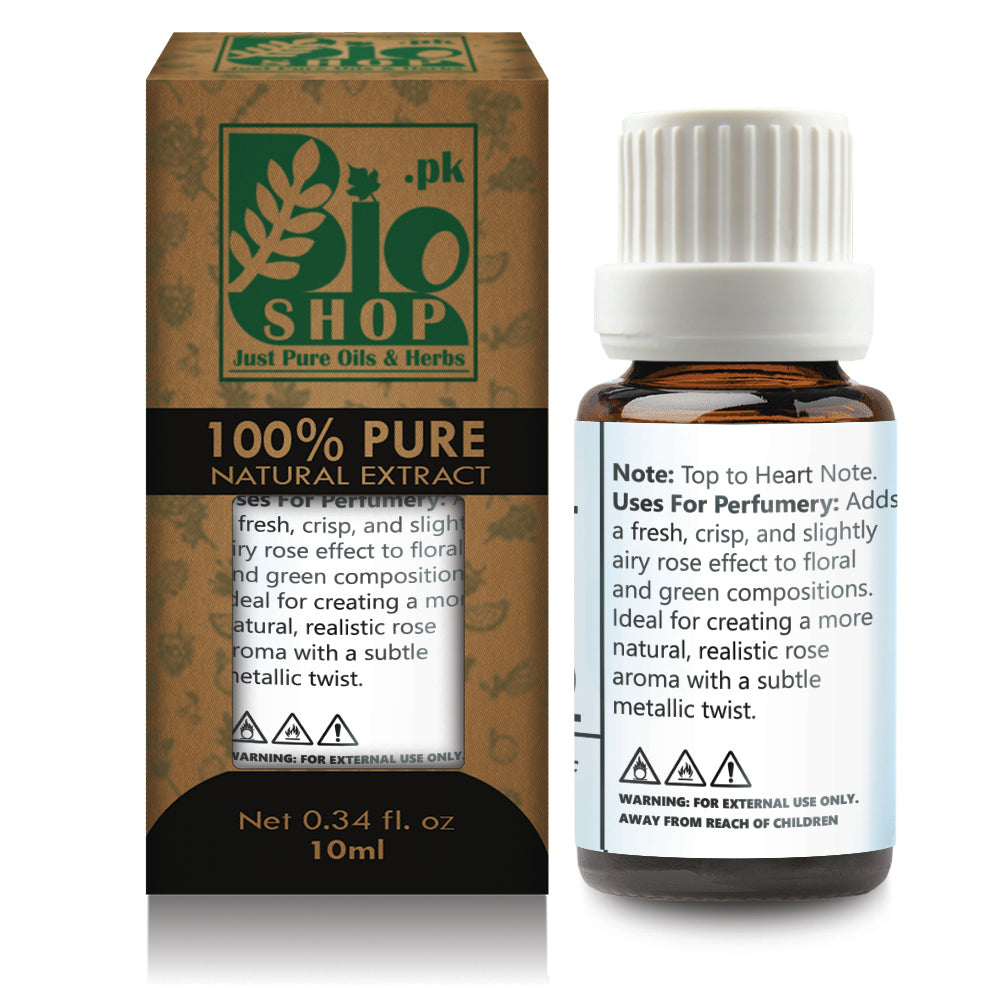
Rose Oxide (10% in DPG)
Rose Oxide (10% in DPG)
Olfactory Notes: Metallic · Rosy · Green · Fresh · Sharp · Slightly Fruity
Couldn't load pickup availability

Explore
Information About Rose Oxide (10% in DPG)
Key Features
- 10% pre-diluted in DPG for safe, accurate blending
- Adds metallic green-freshness to rose and fruity-floral accords
- Extremely diffusive and potent – great for modern floral compositions
- Enhances projection, brightness, and top-to-heart transitions
- Ideal for attars, fine perfumes, mists, and fruity-spring themes
About Rose Oxide (10% in DPG)
Rose Oxide (10% in DPG) is a pre-diluted version of the vibrant, green-floral aroma chemical Rose Oxide, known for its sharp, metallic-rosy scent with geranium and litchi-like nuances. This 10% dilution in DPG (Dipropylene Glycol) makes it easy to incorporate into modern rose accords, fruity-floral perfumes, body sprays, and attars, especially where a fresh, dewy, and litchi-flavored floral lift is desired.
Rose Oxide is extremely powerful—even in small doses—and is commonly used to give rose compositions brightness, diffusion, and modernity. It pairs beautifully with Citronellol, Geraniol, Rhodinol, and Linalool for vivid rose and fruity-green blends.
Olfactory Profile
SCENT DESCRIPTION : Rose Oxide opens with an intensely metallic, green-rosy character that immediately recalls the airy, dewy quality of freshly cut rose petals rather than a processed floral oil. There is a pronounced geranium-like clarity underneath, alongside a subtle watery and mineral edge that distinguishes it completely from sweeter rosy materials like geraniol or citronellol. At lower concentrations the metallic facet softens into a clean, naturalistic floral quality that reads as remarkably true-to-flower and alive. Its diffusion is extraordinary — a trace quantity in a blend is perceptible far beyond what the concentration would suggest, making precise dosage control essential for every application.
NOTE POSITION : Top-Mid
FRAGRANCE FAMILY : Floral, Green, Chypre
FACETS : Rosy · Metallic · Green · Geranium · Watery
TENACITY : Medium — 4 to 8 hours at standard usage rates; perceptibly longer when used in dense Oriental or resinous bases
SILLAGE : High — projects strongly and remains detectable well beyond close proximity even at trace concentration levels
Technical Specifications
Chemical Name : Tetrahydro-4-methyl-2-(2-methylpropenyl)-2H-pyran
CAS Number : 16409-43-1 (mixed isomers); cis isomer 876-44-8; trans isomer 3033-23-6
Synonyms : Rose Oxide, Rosenoxide, Rose Ether, Oxane Rose, Rose Oxide cis/trans mixture
Purity : 90–95% (commercial mixed-isomer grade)
Appearance : Colorless to pale yellow clear mobile liquid
Odor Threshold : 0.5–2 ppb (extremely low; among the most potent rosy aroma chemicals known)
Solubility : Freely soluble in ethanol and fragrance oils; insoluble in water
Specific Gravity : 0.875–0.885 g/mL at 25°C
Flash Point : Approximately 52–58°C (confirm with supplier batch SDS)
Type : Semi-synthetic (derived from geraniol via acid-catalyzed cyclization)
IFRA & Usage Rate
Recommended Usage Rates
EDP : 0.1–0.8%
EDT : 0.05–0.5%
Body Lotion : 0.05–0.15%
Shampoo/Body Wash : 0.05–0.1%
Candle : 0.1–0.5%
Reed Diffuser : 0.2–1.5%
Soap (Bar) : 0.1–0.4%
IFRA 51st Amendment Limits (approximate — always verify against current IFRA publication)
Category 1 (Lip products) : 0.04% maximum
Category 4 (Fine fragrance) : 1.0% maximum
Category 5A (Body lotion, leave-on) : 0.2% maximum
Category 5C (Hand cream) : 0.2% maximum
Category 9 (Rinse-off body) : 0.5% maximum
Category 11A (Fabric softener) : 1.0% maximum
Category 12 (Air freshener sprays) : 1.5% maximum
⚠ Rose Oxide is a QRA-restricted ingredient under IFRA. Confirm exact limits from the current IFRA 51st Amendment certificate before any commercial production.
⚠ Extremely potent — always weigh using a precision analytical scale. Measuring by drops will cause significant dosage errors.
⚠ Potential skin sensitizer at elevated concentrations. Remain within recommended usage limits for all skin-contact applications.
Blending Guide
Method 1 — Rose Accord Construction
Combine Rose Oxide at 0.1 to 0.3 percent with geraniol (10–20%), citronellol (15–25%), and phenylethyl alcohol (20–30%) to build a balanced multi-faceted rose accord. Rose Oxide provides the lift and credibility that distinguishes the blend from a flat synthetic rose. Add rose absolute or rose otto at 1–5 percent to anchor and deepen the accord with natural complexity.
Method 2 — Green Floral Enhancement
Add Rose Oxide at 0.05 to 0.2 percent to violet leaf, galbanum, or hedione-driven green floral structures to introduce a natural flower-facet quality. This technique mimics the brief, sharp green moment found in a rose garden at early morning. It pairs particularly well with cucumber-type aroma chemicals and light clean musks for modern floral applications.
Method 3 — Oriental and Attar Anchoring
In attar-style compositions, use Rose Oxide at 0.1 to 0.4 percent in a sandalwood base alongside oud aroma chemicals, rose otto, and labdanum. The metallic-rosy quality of Rose Oxide adds brightness and freshness to dense resinous Oriental structures, preventing them from reading as heavy or overly dark.
BEST PAIRINGS
Geraniol → Amplifies rose character; creates a warm, full-bodied rose core
Citronellol → Adds fresh rosy sweetness; rounds off and softens the metallic edge
Rose Absolute → Grounds the oxide; adds natural depth and full floral complexity
Phenylethyl Alcohol → Provides classic rose sweetness and helps stabilize the entire accord
Linalool → Softens the metallic facet; introduces clean, airy floral quality
Sandalwood → Anchors rosy brightness; ideal for attar and Oriental compositions
Geranium Essential Oil → Mirrors the natural source of rose oxide; adds earthy-rosy greenness
Hedione → Increases diffusion and adds a jasmine-floral lift to rose structures
Bergamot/Citrus → Creates a bright contrast to the metallic rose; ideal for fresh florals
AVOID
Stacking Rose Oxide with other strong metallic materials such as violet leaf absolute or macro-cyclic metallic aroma chemicals at elevated concentrations unless the metallic effect is a deliberate design choice. The combined metallic character can rapidly overpower all other notes in the blend.
Perfumer's Note
💡 Want a bright, juicy litchi-rose accord? 🌹🍇 Add 1% of this 10% Rose Oxide blend with Citronellol and Geraniol to make your rose perfumes sparkle with a fruity, modern edge—perfect for mists and signature florals! ✨💐
Safety & Storage
Physical State : Clear mobile liquid at room temperature; no solidification under normal conditions
Skin Safety : Always dilute before any skin contact; never apply neat; potential sensitizer at concentrations above recommended levels
Eye Contact : Avoid direct contact; flush immediately and thoroughly with clean water for a minimum of 15 minutes if contact occurs; seek medical advice
Ingestion : Not for internal use under any circumstances; keep away from food, beverages, and out of reach of children
Ventilation : Work in a well-ventilated space; avoid vapor accumulation in small enclosed areas during weighing and blending
Storage : Store in a tightly sealed container away from direct heat, light, and moisture; maintain storage temperature below 25°C
Shelf Life : 24–36 months from manufacturing date when stored correctly in a sealed and properly labeled container
Container : Amber glass or HDPE plastic; avoid metal containers and PVC packaging
Flammability : Combustible liquid; keep away from open flame and all ignition sources; flash point approximately 52–58°C
FAQ
Q1: What does Rose Oxide smell like?
It smells like metallic-fresh rose with litchi, geranium, and green notes—sharp, vibrant, and very diffusive.
Q2: Is this natural or synthetic?
Rose Oxide is a synthetic aroma molecule, though it occurs in trace amounts in rose oil.
Q3: Is it strong?
Yes! Even at 10% dilution, it's extremely potent. Use it in small amounts to avoid overpowering your formula.
Q4: Can I use it in attars or body sprays?
Absolutely. This DPG version is ideal for roll-ons, oil blends, and alcohol-based sprays.
Q5: What fragrance styles does it enhance best?
It shines in rose, fruity-floral, litchi, green-floral, and dewy-spring-themed perfumes.
Where Can You Safely Use Rose Oxide (10% in DPG)?
Discover how Rose Oxide (10% in DPG) performs across different applications—rated for safety, stability, and effectiveness.


