Bio Shop
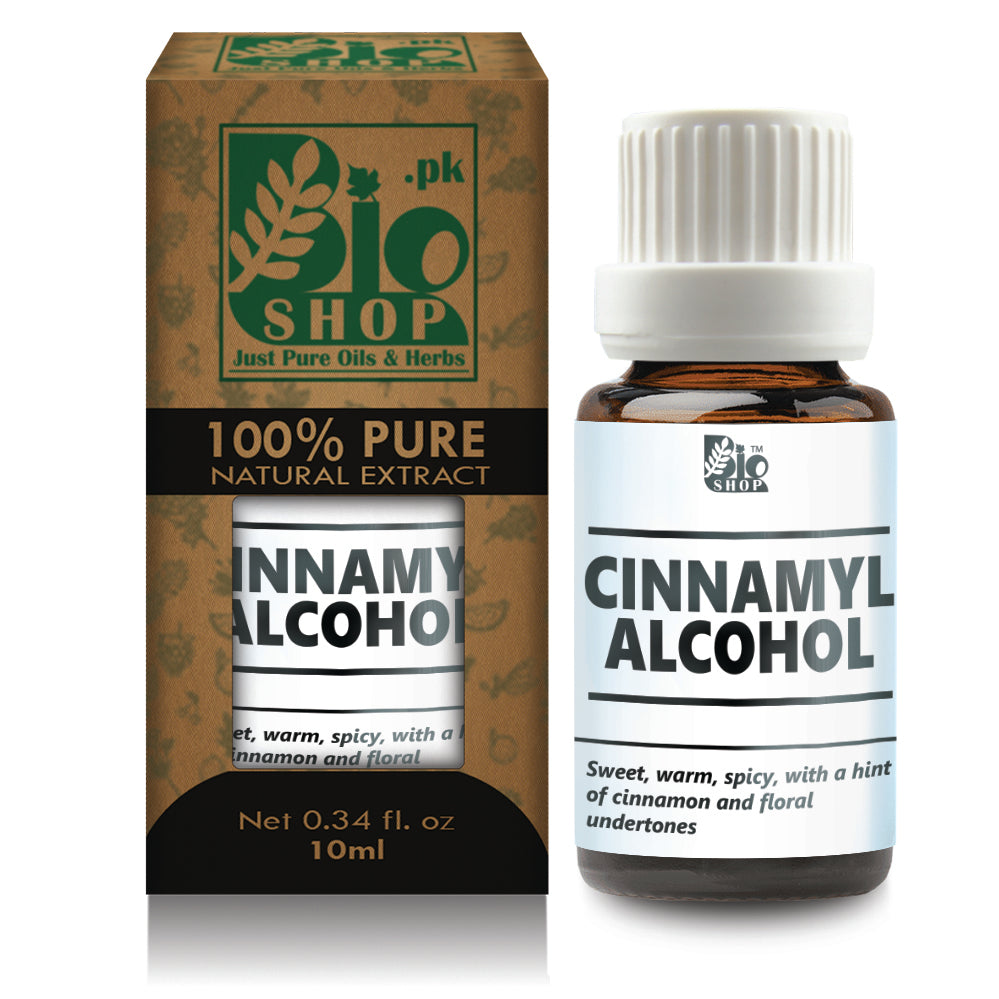
Cinnamyl Alcohol
Cinnamyl Alcohol
Olfactory Notes: Sweet, balsamic, spicy, and cinnamon-like.
Couldn't load pickup availability
Explore
Information About Cinnamyl Alcohol
Key Features
✦ Sweet, warm, balsamic-floral aroma chemical with hyacinth and soft spice facets — a classic mid-to-base note modifier
✦ Naturally present in cinnamon bark oil and storax; available in high-purity synthetic form for consistent formulation
✦ Widely used in fine fragrance, oriental attars, floral soaps, and balsamic accord construction
✦ Acts as a fixative and softener — rounds sharp spice notes and extends warmth in oriental and chypre bases
✦ Listed EU allergen requiring mandatory label disclosure above threshold concentrations in cosmetics
✦ IFRA 51st Amendment restricted ingredient — use within stated limits for each application category
✦ Vegan and cruelty-free in synthetic form; solid at room temperature, requiring mild warming before use
About Cinnamyl Alcohol
Cinnamyl Alcohol is a naturally occurring aromatic alcohol found in several botanical sources including cinnamon bark oil (Cinnamomum zeylanicum), storax resin (Liquidambar orientalis), and hyacinth absolute. It has been used in perfumery and flavour applications for well over a century and remains a standard material in the classical perfumer's palette. The compound was first isolated from storax balsam in the nineteenth century and has since been produced synthetically at commercial scale to meet demand across the fragrance and cosmetic industries.
What makes Cinnamyl Alcohol distinctive is its dual character — it bridges the warmth of spice-family materials with the softness of florals. Unlike Cinnamaldehyde, which carries a sharp, intense cinnamon bite, Cinnamyl Alcohol is gentler, rounder, and inherently more powdery. It behaves as a fixative in complex bases, slowing the diffusion of volatile top notes and adding tenacity to balsamic and oriental accords. Its affinity with musks, labdanum, benzyl benzoate, and eugenol-type materials makes it an essential construction element in fougère, oriental, and amber fragrance families.
Bio Shop Pakistan supplies cosmetic-grade Cinnamyl Alcohol suitable for fine fragrance development, attar blending, handmade soap, reed diffusers, incense, and cosmetic formulation by Pakistani DIY crafters and professional formulators.
Olfactory Profile
SCENT DESCRIPTION : Cinnamyl Alcohol opens with a warm, sweet, balsamic character that is distinctly softer and more floral than cinnamon bark oil. The heart reveals powdery hyacinth-like nuances with a faint green-floral undertone. As it dries down, a gentle spicy warmth emerges, reminiscent of dried cinnamon wood rather than fresh bark. The overall effect is smooth, rich, and diffusive — a classic balsamic modifier that blends rather than dominates.
NOTE POSITION : Mid-Base
FRAGRANCE FAMILY : Oriental · Floral · Balsamic
FACETS : Sweet · Balsamic · Hyacinth · Powdery · Spicy
TENACITY : Medium-High — lasts approximately 8 to 12 hours on a fragrance strip at working concentrations
SILLAGE : Medium — projects warmth at moderate distances; contributes to body and roundness in composition rather than sharp projection
Technical Specifications
Chemical Name : (E)-3-Phenylprop-2-en-1-ol
CAS Number : 104-54-1
Synonyms : Cinnamic Alcohol · Styryl Carbinol · 3-Phenylallyl Alcohol · Phenylpropenol
Purity : 98% minimum (cosmetic and fragrance grade)
Appearance : White to off-white crystalline solid; becomes a pale yellow to colorless liquid above 33°C
Odor Threshold : Approximately 0.1 to 1 ppm (low — active at trace levels)
Solubility : Poorly soluble in water; freely soluble in ethanol, DPG, IPM, and most fixed oils
Specific Gravity : 1.044 – 1.048 at 20°C
Flash Point : 71°C (160°F) approximately — confirm with supplier SDS
Type : Synthetic (naturally also present in cinnamon bark oil, storax, and hyacinth)
Applications & Usage Guidelines
Fine Fragrance : ★★★★★
Cinnamyl Alcohol is a longstanding fine fragrance ingredient used in oriental, chypre, floral, and fougère compositions. It softens spice notes, extends balsamic warmth, and adds powdery depth to mid and base accords. Suitable for EDP, EDT, and perfume oil formats within IFRA limits.
Attar and Oriental Blending : ★★★★★
Highly compatible with traditional Pakistani and Middle Eastern attar construction. Its balsamic-sweet character blends naturally with oud bases, rose absolute, sandalwood, and musk materials. Excellent for warm, resinous oriental attars and bakhoor-inspired compositions.
Functional Fragrance : ★★★
Usable in rinse-off functional fragrance applications such as scented soap and shower gel at moderate concentrations. IFRA and EU allergen limits apply and must be respected. Less appropriate for leave-on deodorant applications due to sensitisation risk at higher dosage.
Cosmetics : ★★★
Cinnamyl Alcohol is a recognized EU allergen and must be disclosed on product labels when present above 0.01% in leave-on products and 0.001% in rinse-off products. Usage in creams, lotions, and lip products is restricted by IFRA Category limits. Formulate with care and conduct stability and patch testing.
Home Fragrance : ★★★★
Performs well in reed diffusers, wax melts, and incense compositions where allergen labeling requirements are less stringent. Contributes warm balsamic depth and fixative character to home fragrance blends. Flash point should be respected in candle applications.
IFRA & Usage Rate
RECOMMENDED USAGE RATES
Application : Suggested Working Rate
EDP (Eau de Parfum) : 0.5 – 2.0%
EDT (Eau de Toilette) : 0.3 – 1.5%
Body Lotion : 0.1 – 0.5%
Shampoo / Body Wash : 0.3 – 1.0%
Bar Soap : 0.5 – 1.5%
Reed Diffuser : 1.0 – 4.0%
Candle : 1.0 – 3.0%
IFRA 51st AMENDMENT LIMITS (Cinnamyl Alcohol)
IFRA Category : Limit : Typical Product Type
Category 1 : 0.05% : Lip products
Category 2 : 0.30% : Deodorant and antiperspirant sprays
Category 3 : 0.10% : Eye area and face make-up (leave-on)
Category 4 : 2.50% : Fine fragrance, EDP, EDT, cologne
Category 5A : 0.50% : Body lotion, body cream (leave-on)
Category 5B : 0.10% : Face moisturizer (leave-on)
Category 5C : 0.50% : Hand cream (leave-on)
Category 5D : 0.00% : Baby leave-on products (not permitted)
Category 6 : 0.00% : Mouthwash and oral products (not permitted)
Category 7A : 0.50% : Rinse-off hair products (shampoo)
Category 7B : 0.10% : Leave-on hair products
Category 8A : 0.01% : Intimate area wipes (rinse-off)
Category 9 : 1.50% : Bar soap, shower gel, bath products (rinse-off)
Category 11A : Not restricted by IFRA : Candles and air fresheners (verify EU rules)
⚠️ Cinnamyl Alcohol is a listed EU allergen under EU Cosmetics Regulation. Mandatory label disclosure is required above 0.01% in leave-on products and above 0.001% in rinse-off products. Always verify final usage rates against current IFRA 51st Amendment guidelines and consult your formulation chemist for regulated markets.
⚠️ This ingredient is a solid at room temperature (melting point approximately 33°C). Gently warm before weighing and incorporating into blends.
Blending Guide
METHOD 1 — DIRECT MELT AND WEIGH
Cinnamyl Alcohol solidifies below 33°C. Before use, place the sealed container in a warm water bath at 40 to 45°C until fully melted. Weigh immediately while liquid. For fragrance oil work, pre-dissolve in warm DPG or IPM at a 50:50 ratio to create a pourable working stock that remains liquid at room temperature.
METHOD 2 — DILUTION IN CARRIER FOR COSMETIC USE
For cosmetic and body care applications, pre-dissolve Cinnamyl Alcohol in a light carrier oil such as isopropyl myristate or fractionated coconut oil at 10 to 20% concentration. This allows precise low-percentage addition to emulsions and lotions while eliminating the risk of crystallization in the finished product.
METHOD 3 — ACCORD ANCHOR IN ORIENTAL BASE
Use Cinnamyl Alcohol as a balsamic anchor in oriental and spice-forward accords. Combine with eugenol or iso-eugenol for spice depth, then layer benzyl benzoate and labdanum absolute for resinous warmth. Cinnamyl Alcohol will smooth and round the entire base, extending longevity and adding a powdery floralcy to the dry-down.
BEST PAIRINGS
Eugenol → Deepens the spice character; creates a full cinnamon-clove accord
Benzyl Benzoate → Adds balsamic diffusion and softens the base; classic oriental construction
Labdanum Absolute → Resinous, ambery warmth; pairs beautifully for chypre and oriental bases
Rose Absolute → Enhances the floral facet; lifts into a warm rose-balsamic heart
Sandalwood (natural or synthetic) → Adds creamy woody depth and smooths the transition to dry-down
Iso E Super → Adds abstract woody-cedar lift; stops the blend from feeling heavy
Galaxolide / Habanolide → Musk layer that amplifies sillage and gives a clean base to the balsamic note
Coumarin → Creates a tonka-balsamic effect reminiscent of classical fougère bases
Oud (synthetic or natural) → Excellent for attar-style Middle Eastern compositions
AVOID
Do not combine at high concentrations with strong aldehydes (C-10 to C-12) as the contrast of sharp citrus-metal with warm balsamic can feel dissonant at opening. Avoid using at maximum IFRA rates alongside other EU-listed allergens such as eugenol, isoeugenol, or cinnamaldehyde in the same leave-on formulation — combined allergen load must be considered for regulatory compliance.
Perfumer's Note
I return to Cinnamyl Alcohol often precisely because of what it does quietly. It rarely announces itself — you do not smell it as a single note so much as feel its effect on everything around it. In oriental bases it acts almost like a binder, pulling together spice, resin, and musk into a coherent warmth. In soap and detergent work it is one of the few balsamic materials that holds through saponification without turning sour. And in classical chypre construction, its hyacinth quality introduces a floralcy that feels classical and grounded rather than fresh and airy. Perfumers who underestimate it tend to over-spice their oriental accords — adding more eugenol or cinnamaldehyde when what the formula actually needs is a softer, more diffusive balsamic bridge.
ADVANCED TIP
Build a cinnamyl alcohol micro-accord before adding it to your main formula. Combine Cinnamyl Alcohol at 40 parts with Benzyl Benzoate at 35 parts and Labdanum Absolute at 25 parts. Age this pre-blend for 48 hours at room temperature. The result is a smooth, dense balsamic accord that functions as a single base ingredient — it integrates faster into the main formula, delivers more consistent dry-down behavior, and allows you to adjust balsamic intensity as a single variable rather than chasing three moving parts simultaneously.
Safety & Storage
Physical State : Solid crystalline at room temperature; liquid above 33°C
Skin Safety : Known sensitizer and listed EU allergen — use within IFRA limits; patch test recommended for leave-on products; avoid on broken or sensitive skin
Eye Contact : Avoid direct contact; if contact occurs, rinse thoroughly with clean water for 15 minutes and seek medical attention
Ingestion : Not for internal use; keep away from children
Ventilation : Use in a well-ventilated workspace; avoid prolonged inhalation of vapors when handling in molten state
Storage : Store in a cool, dry location away from direct sunlight and heat sources; keep container tightly sealed to prevent oxidation
Shelf Life : 24 to 36 months from manufacture when stored correctly; check for off-notes or discoloration before use
Container : Store in original amber glass or HDPE container; avoid metal containers
Flammability : Combustible — flash point approximately 71°C; keep away from open flame and high heat sources during handling
FAQ
Q: What does Cinnamyl Alcohol smell like?
A: It has a warm, sweet, balsamic-floral scent with hyacinth-like softness and a faint spicy cinnamon drydown. It is noticeably gentler and more powdery than cinnamon bark oil or cinnamaldehyde.
Q: Can I use Cinnamyl Alcohol in handmade soap?
A: Yes, it performs well in cold process and hot process soap within IFRA Category 9 limits (up to approximately 1.5%). It survives saponification better than most spice materials and contributes warm balsamic depth to soap fragrance.
Q: Is Cinnamyl Alcohol safe for skin products?
A: It is a recognized EU allergen and an IFRA-restricted ingredient. It can be used in cosmetics within the prescribed limits, but mandatory labeling applies. It is not suitable for baby leave-on products or oral products. Always formulate within IFRA guidelines and consider cumulative allergen exposure.
Q: Do I need to melt it before use?
A: Yes. Cinnamyl Alcohol is a crystalline solid at room temperature with a melting point of approximately 33°C. Warm gently in a water bath before weighing, or pre-dissolve in DPG or IPM at a 1:1 ratio to create a liquid working stock that is easier to measure and incorporate.
Q: How does Cinnamyl Alcohol compare to Cinnamaldehyde?
A: They are structurally related but behave very differently. Cinnamaldehyde is sharp, intensely spicy, and dominant — it reads as raw cinnamon bark. Cinnamyl Alcohol is softer, sweeter, and more floral, functioning as a modifier and fixative rather than a featured note. Cinnamaldehyde has significantly lower IFRA limits due to higher sensitisation potential, whereas Cinnamyl Alcohol allows somewhat more flexibility in fine fragrance and soap applications. For blending, Cinnamyl Alcohol is the safer and more versatile choice when balsamic warmth rather than sharp spice is the goal.
Where Can You Safely Use Cinnamyl Alcohol?
Discover how Cinnamyl Alcohol performs across different applications—rated for safety, stability, and effectiveness.