Bio Shop
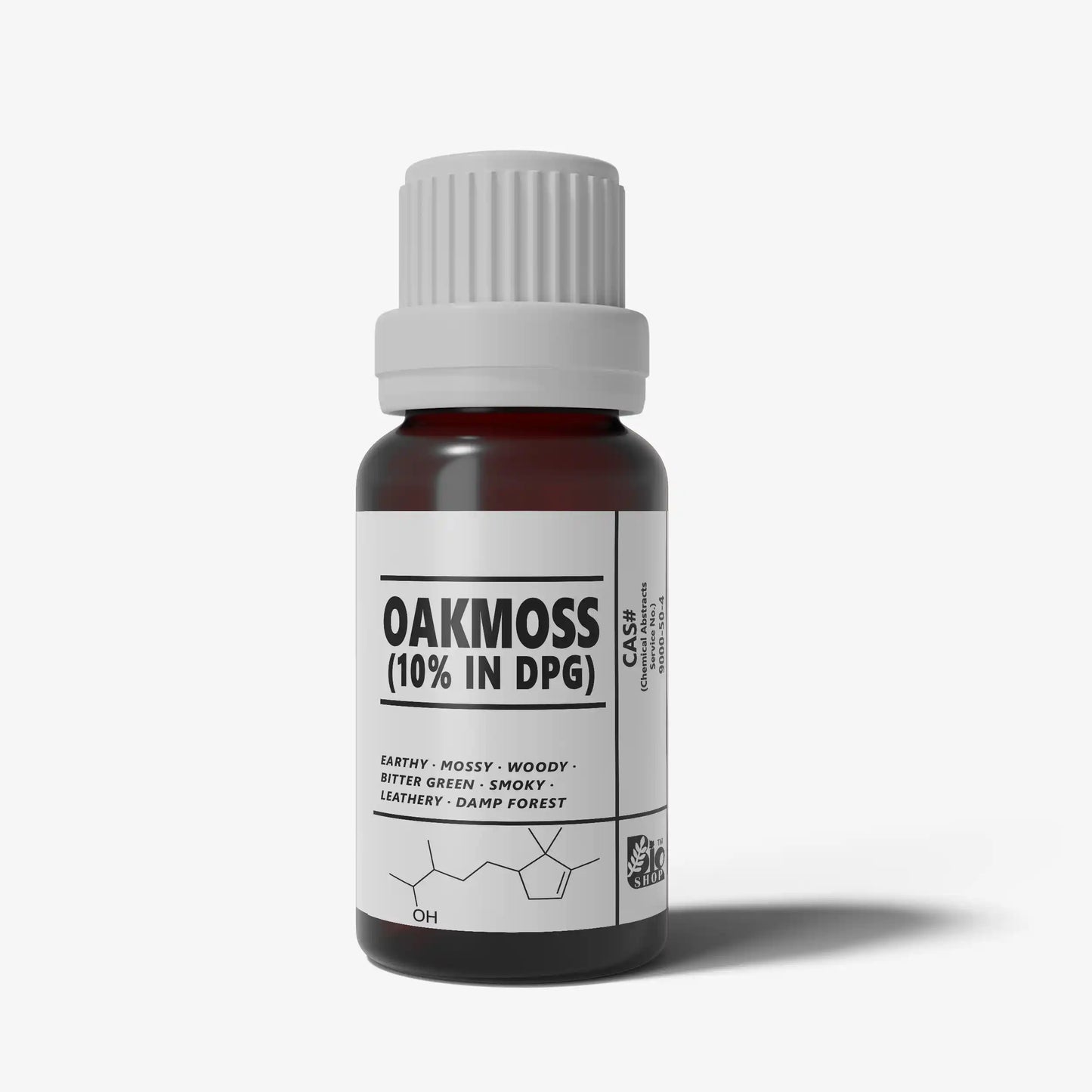
Oakmoss (10% in DPG)
Oakmoss (10% in DPG)
Olfactory Notes: Earthy · Mossy · Woody · Damp · Green · Slightly Bitter
Couldn't load pickup availability
Explore
Information About Oakmoss (10% in DPG)
Key Features
- 10% dilution in DPG for accurate and safe blending
- Adds depth, fixation, and earthy richness to perfume bases
- Perfect for chypre, fougere, leather, amber, and forest-inspired perfumes
- Used in attars, mists, incense pastes, and traditional oil perfumes
- Supports top and heart notes by grounding them into a mossy foundation
About Oakmoss (10% in DPG)
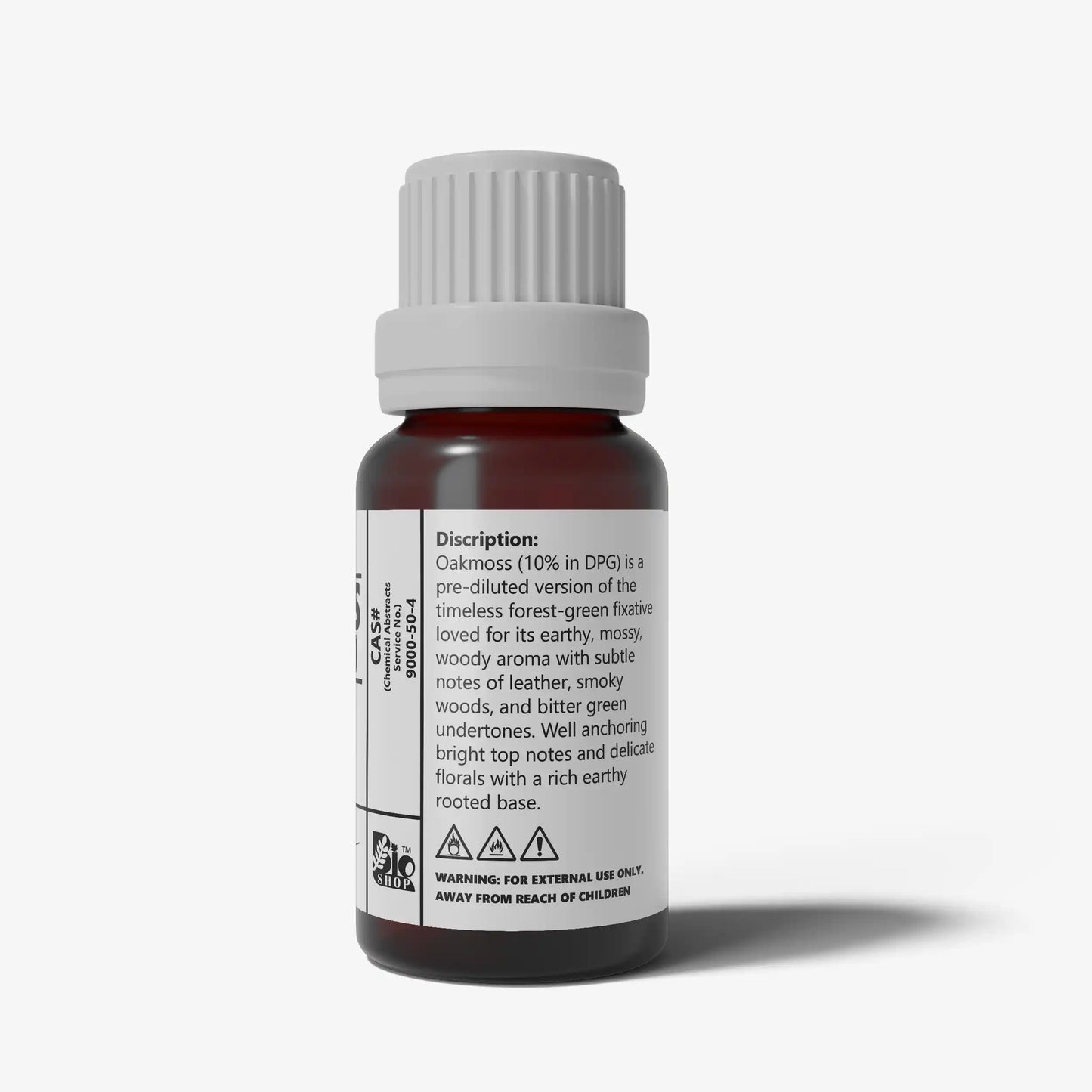
Oakmoss (10% in DPG) is a pre-diluted version of the timeless forest-green fixative loved for its earthy, mossy, woody aroma with subtle notes of leather, smoky woods, and bitter green undertones. Diluted in DPG (Dipropylene Glycol), this blend is ideal for use in attars, chypre perfumes, incense, mists, and oriental compositions where lasting green depth is desired.
Oakmoss is a cornerstone of chypre and fougère perfumes, anchoring bright top notes and delicate florals with a rich earth-rooted base. It blends especially well with Vetiver Essential Oil, Civet, and Patchouli Oil to build traditional or avant-garde base structures.
Olfactory Profile
SCENT DESCRIPTION : Oakmoss Absolute opens with a damp, cool impression of forest floor and wet bark, as though you are standing beneath oak trees after rainfall. The heart reveals a complex mossy earthiness that is simultaneously green, woody, and faintly animalic — rich without being heavy. A subtle leathery undertone emerges over time, giving the material a lived-in, ancient quality that feels both natural and deeply sophisticated. At full dry-down it settles into a warm, resinous, almost marine-mineral base that clings persistently to skin and fabric.
NOTE POSITION : Base (occasionally used to anchor mid notes)
FRAGRANCE FAMILY : Chypre · Fougère · Woody Earthy
FACETS : Mossy · Earthy · Woody · Leathery · Animalic
TENACITY : Very High — 24 to 72 hours on blotter, 12 to 24 hours on skin
SILLAGE : Medium — intimate and close-wearing, projects softly but clings deeply to surfaces and fabric
Technical Specifications
Chemical Name : Evernia prunastri (Oakmoss) Extract — complex mixture of evernin, methyl everninate, atranol, chloratranol, and orcinol derivatives
CAS Number : 90028-68-5
Synonyms : Evernia prunastri Absolute · Mousse de Chêne · Oakmoss Extract · Oak Moss Absolute
Purity : 100% (undiluted natural absolute — verify with current batch CoA)
Appearance : Dark olive-green to brown viscous liquid or semi-solid at room temperature
Odor Threshold : Approximately 0.001 ppm (extremely detectable at very low concentrations)
Solubility : Fully soluble in ethanol and DPG · Partially soluble in fixed oils · Insoluble in water
Specific Gravity : 0.96 – 1.02 at 20°C (verify with supplier CoA)
Flash Point : Above 100°C (verify with current SDS)
Type : Natural Absolute
Applications & Usage Guidelines
Use 1–3% of this dilution to anchor florals, citrus, or spice notes into a grounded earthy base. Combine with Vetiver Essential Oil for dry woodiness, Patchouli Oil for vintage complexity, or Civet for animalic richness.
IFRA & Usage Rate
RECOMMENDED USAGE RATES
EDP (Eau de Parfum) : 0.05% – 0.10% of finished fragrance concentrate
EDT (Eau de Toilette) : 0.03% – 0.08%
Body Lotion / Cream : 0.01% maximum (IFRA Category 5A)
Shampoo / Body Wash : 0.01% maximum (rinse-off, IFRA Category 9)
Candle : 0.05% – 0.3% in finished wax (no skin contact limit)
Reed Diffuser : 0.1% – 0.5% in diffuser base (no skin contact limit)
Soap (tablet) : 0.01% – 0.02% maximum (IFRA Category 9)
IFRA 51ST AMENDMENT LIMITS (Evernia prunastri Absolute)
Category 1 (Lip and oral) : 0.001%
Category 2 (Deodorant spray) : 0.001%
Category 4 (Fine fragrance) : 0.1%
Category 5A (Body lotion) : 0.01%
Category 5B (Face cream) : 0.01%
Category 7A (Rinse-off hair) : 0.01%
Category 9 (Rinse-off skin) : 0.01%
Category 11A (Fabric, textile) : 0.01%
Category 12 (Non-skin contact) : No restriction stated
⚠️ Oakmoss Absolute contains atranol and chloratranol, classified as potent contact allergens. Always work within IFRA limits. Patch test recommended for any leave-on formulation.
⚠️ Not suitable for products used around eyes, lips, or on infant skin under any circumstances.
⚠️ IFRA limits are based on the percentage of oakmoss absolute in the finished product — not in the fragrance concentrate alone. Calculate accordingly.
Blending Guide
METHOD 1 — Chypre Base Construction
Dissolve oakmoss absolute in a small quantity of perfumer's alcohol or DPG before adding to your blend. Build a classical chypre base by combining oakmoss (0.05–0.1%), labdanum absolute (1–3%), bergamot (5–10%), and patchouli (1–2%). This three-way accord forms the skeleton on which rose, jasmine, or fruity notes can be layered above.
METHOD 2 — Attar Anchoring
In oil-based attar work, add oakmoss absolute at 0.1–0.3% of the total oil blend (in non-skin-contact attar used as incense or diffuser material). It bridges oud and sandalwood with green, earthy transparency. For skin-contact attars, respect IFRA limits strictly.
METHOD 3 — Trace Naturalistic Grounding
Even at 0.02–0.05% in an alcoholic fragrance, oakmoss absolute adds a perceptible naturalistic depth that lifts synthetic constructions. Use it as a secret trace note under cedarwood, vetiver, or iso E super constructions to give the impression of genuine forest-floor naturalness.
BEST PAIRINGS
Bergamot → Creates the classic chypre opening — fresh, green, and structured
Labdanum Absolute → Deepens the animalic-resinous quality and extends tenacity dramatically
Vetiver → Adds smoky, rooty earthiness that harmonises with the mossy facets
Patchouli → Complements the earthy depth and adds warmth to the mossy accord
Cedarwood Atlas → Bridges the woody and mossy facets with dry, pencil-shaving warmth
Iso E Super → Amplifies the woody-mossy presence and adds diffusive transparency
Rose Absolute → Classic chypre pairing — floral softness over the mossy-earthy base
AVOID
Oakmoss absolute in concentrations above IFRA limits in any leave-on product.
Avoid combining with other known sensitizers (Peru Balsam, cinnamon bark, HICC) in the same formulation without careful safety assessment.
Perfumer's Note
💡 To create a deep forest or vintage chypre base 🌲, use 1–3% Oakmoss (10% in DPG) in your oil perfumes, incense blends, or oriental fragrances.
🌿 Combine with Vetiver Essential Oil and Patchouli Oil to add earthy sophistication and texture.
🧴 Add Civet for a traditional animalic note that transforms florals or spices into rich, long-wearing blends.
🔄 Stir well before blending to ensure consistent distribution in oil or alcohol bases.
⚠️ Always patch test for compatibility when used in skin-contact formulas.
Safety & Storage
Physical State : Dark viscous liquid or semi-solid — may require gentle warming to pour
Skin Safety : Strong sensitizer — atranol and chloratranol content. Always stay within IFRA limits. Avoid skin contact with undiluted material. Not suitable for lip or eye-area products.
Eye Contact : Rinse immediately with water for 15 minutes. Seek medical attention if irritation persists. Do not formulate into eye-area products.
Ingestion : Not for consumption. If swallowed, seek immediate medical attention.
Ventilation : Work in a well-ventilated space. Prolonged inhalation of vapours from heated or undiluted material should be avoided.
Storage : Store in a tightly sealed dark glass or aluminium container away from direct sunlight, heat, and humidity. Keep below 20°C for optimal preservation.
Shelf Life : 2 to 3 years when stored correctly. Older material may thicken and develop slightly sharper facets but remains usable if within specification.
Container : Dark glass (amber or cobalt) or aluminium — avoid plastic for long-term storage
Flammability : Flash point above 100°C — low flammability under normal storage conditions. Keep away from open flames when heating to aid pouring.
FAQ
Q1: What does Oakmoss smell like?
It has an earthy, forest-floor scent—mossy, woody, slightly leathery, and bitter-green with smoky undertones.
Q2: Is this suitable for roll-ons and oil perfumes?
Yes! This 10% DPG dilution is perfect for use in attars, roll-ons, solid perfumes, and incense without needing to pre-melt or process.
Q3: What fragrance styles is it best for?
Perfect for chypre, fougère, oriental, leather, woodsy, and incense-themed perfumes.
Q4: What ingredients does Oakmoss blend best with?
Blends excellently with Vetiver, Patchouli, Civet, and floral aldehydes.
Q5: Can it be used in incense or bakhoor?
Yes! Oakmoss adds natural forest richness and fixation to incense sticks, bakhoor, and dhoop blends.
Where Can You Safely Use Oakmoss (10% in DPG)?
Discover how Oakmoss (10% in DPG) performs across different applications—rated for safety, stability, and effectiveness.
blended with ethyl vanillin giving best base note support, aroma of both becomes
magic for supporting mid to top notes